
Mediterranean Egg and Chickpea Mezze Plate
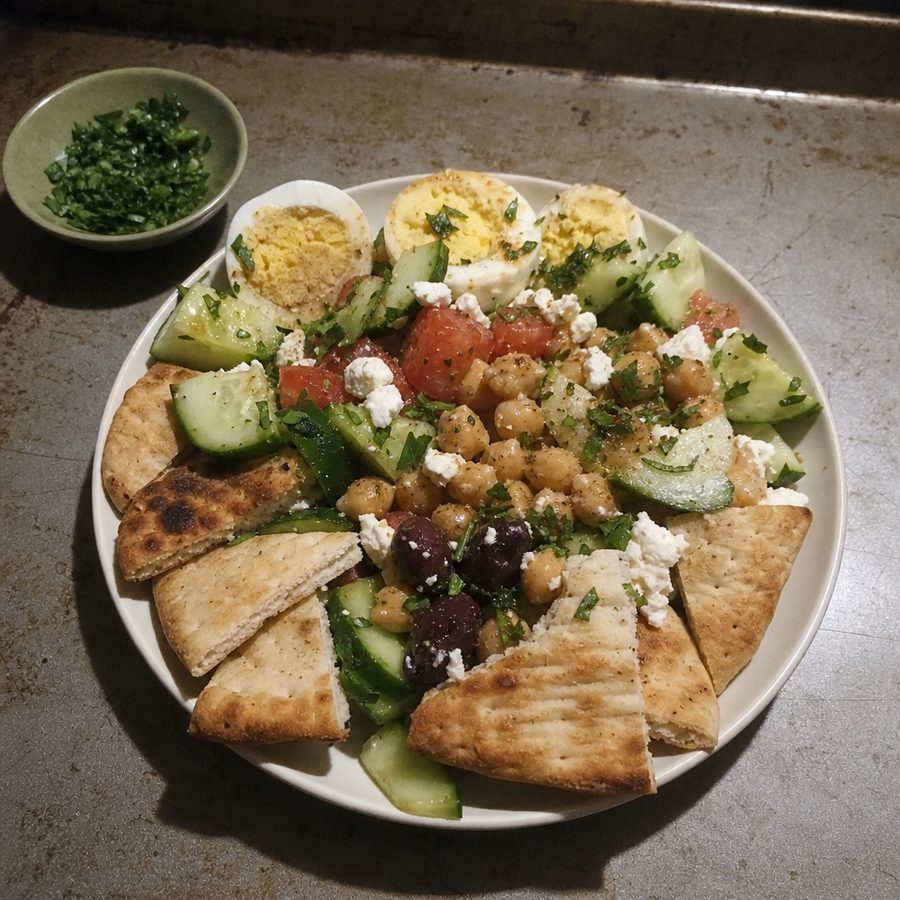
A no-cook lunch platter of halved jammy-yolk eggs and lemon-and-parsley-dressed chickpeas alongside sliced cucumber, cherry tomatoes, cubed feta, kalamata olives, and warm whole wheat pita.
Why You'll Love This Recipe
This is a cool, put-together lunch for anyone who wants something filling without turning on the stove for more than a few minutes. The only real cooking is boiling eggs and warming pita, so it comes together quickly and travels well to a desk or a picnic. It suits people who like grazing over a plate of separate, distinct bites rather than one mixed dish, and it works just as well for feeding a table as it does for a single quiet lunch.
Textures that differ, and one simple dressing over all of them. Jammy, tender egg yolks and creamy chickpeas sit against crisp cucumber and juicy tomatoes, while briny olives and salty feta punch up every bite. Tossing the chickpeas in olive oil, lemon juice, and parsley before plating means they carry real flavor instead of tasting flat, and a final drizzle of oil over the whole plate pulls the separate components into one meal.
The plate is satisfying because it layers protein from the eggs, chickpeas, and feta with plenty of fiber from the beans and vegetables, so it holds you through the afternoon. The olive oil and feta add richness that makes it feel like a treat rather than a diet lunch, and the warm pita gives you something to scoop and wrap everything in. It is fresh and bright but substantial, the kind of meal that leaves you comfortably full rather than heavy.
Ingredients
- 8 eggs, hard-boiled and halved
- 2 1/4 cups chickpeas, rinsed
- 4 small whole wheat pitas, toasted
- 1 cucumber, sliced
- 1 cup cherry tomatoes
- 1/2 cup feta, cubed
- 1/3 cup kalamata olives
- 2 1/2 tbsp olive oil
- 1 1/2 tbsp lemon juice
- 1/2 cup parsley, chopped
Instructions
- Boil the eggs: Place the eggs in a single layer in a saucepan and cover with cold water by about an inch. Bring to a rolling boil over high heat, then turn off the heat, cover, and let stand until the whites are firm and the yolks are just set at the center, about 9 to 10 minutes. Transfer the eggs to a bowl of ice water, since the shell shrinks away from the white as it chills and the eggs peel cleanly rather than in flakes, then peel and halve each one lengthwise.
- Toast the pita: Warm the whole wheat pitas directly in a dry skillet over medium heat, or in a toaster or hot oven, until they are warm and lightly crisp at the edges, about 1 to 2 minutes per side, because a pita straight from the bag is leathery and a warmed one tears the way it should. Cut each into wedges.
- Prep the vegetables: Slice the cucumber into rounds. Leave the cherry tomatoes whole or halve the larger ones. Cube the feta and roughly chop the parsley, keeping the cubes larger than you think, since feta cut small disappears into the plate instead of turning up as its own bite.
- Dress the chickpeas: Drain and rinse the chickpeas well, then shake off the excess water, because the canning liquid is cloudy and salty and it will dull the lemon you are about to add. Toss them in a bowl with olive oil, lemon juice, and chopped parsley until evenly coated.
- Arrange the plate: Lay the halved eggs, dressed chickpeas, cucumber slices, cherry tomatoes, cubed feta, and kalamata olives in separate mounds on each plate, so that every mouthful can be a different one and nothing bleeds its brine into the rest. Tuck the warm pita wedges alongside and drizzle everything with a little olive oil before serving.
Variations
- Add a creamy dip: Add a spoonful of hummus or a smear of thick yogurt-based dip to each plate for scooping with the pita. The yogurt option adds dairy.
- Herb and spice lift: Sprinkle the eggs and chickpeas with za'atar, sumac, or a pinch of red pepper flakes for extra warmth and tang.
- Roasted vegetable swap: Trade the raw cucumber and tomatoes for roasted red peppers or roasted zucchini when you want something softer and a little sweeter.
- Grain-free plate: Skip the pita and serve the plate over a bed of leafy greens or with extra cucumber for scooping, which removes the gluten.
- Pickled bite: Add pepperoncini, pickled onions, or marinated artichoke hearts for a sharper, brinier edge alongside the olives.
Storage & Leftovers
Store the components in the refrigerator, ideally kept separate in covered containers, for up to three or four days. Peeled hard-boiled eggs are best used within a couple of days, and keeping the dressed chickpeas apart from the cucumber and tomatoes stops the vegetables from going soft.
This plate is meant to be eaten cool, so there is no real reheating needed. If you like the pita warm, refresh it for a minute in a dry skillet or a hot oven just before serving; the rest of the plate can go straight from the fridge, and letting the chickpeas and feta sit at room temperature for a few minutes brings out more of their flavor.
To make ahead, boil and peel the eggs, dress the chickpeas, cube the feta, and slice the cucumber up to a day in advance and store each in its own container. Hold the tomatoes whole and toast the pita fresh, then simply arrange everything on plates when you are ready to eat.
Notes & Tips
- Nail the jammy yolk: For a soft, jammy center, pull the eggs at the shorter end of the timing window; for a fully set, crumbly yolk, let them stand a couple of minutes longer before the ice bath.
- Peel eggs easily: Older eggs peel more cleanly than very fresh ones, and starting the peel at the wide base where the air pocket sits helps the shell slip off in large pieces.
- Choose good feta: Look for feta sold in brine rather than pre-crumbled; block feta packed in brine is creamier and less dry, and you can cube it yourself for a better texture on the plate.
- Rinse chickpeas well: Draining and rinsing canned chickpeas thoroughly washes off the starchy liquid and cuts the tinny taste, so the lemon and parsley come through cleaner.
- Season to taste: Feta and olives are already salty, so taste the dressed chickpeas before you season and adjust the lemon up if the plate needs more brightness.
- Serve it grazing-style: This plate is happiest as a shared board in the middle of the table; keep the components in separate mounds so everyone can build their own pita bites.
Nutrition & Mindful Eating
- Nothing on this plate is a main course on its own, and together they make a full lunch. The eggs and chickpeas carry the protein, the cucumber and tomato keep it cold and fresh, and the bread gives you something to build each bite on.
- Chickpeas are firm and a little nutty, and they hold their shape once they are dressed with oil and lemon, so they stay distinct on the plate. Their soluble fiber is part of why a lunch of small pieces still feels substantial.
- Boiled eggs are the anchor. Cooked until the yolk is just set and still bright, they are creamy against everything crisp around them, and they bring complete protein along with the choline that sits in the yolk.
- Feta and olives are the salt in this arrangement. The cheese crumbles and turns creamy where it meets the oil, the olives are firm and briny, and a little of either one seasons whatever you eat next to it.
- Cucumber and tomato are the cold, wet part of the plate, and the lemon and parsley go over them right before serving, so a sharp green freshness arrives between the richer mouthfuls of egg and cheese.
- As you eat, build each bite yourself rather than working through one thing at a time, and notice how the cold cucumber, the salty feta and the warm bread change each other once you slow down.
Frequently Asked Questions
Can I make this the night before for lunch?
Yes. Boil and peel the eggs, dress the chickpeas, and prep the cucumber and feta, then store each component separately in the fridge. Keep the tomatoes whole and toast the pita fresh, and assemble the plate in the morning or right before eating.
How do I keep the plate from getting watery?
Rinse and drain the chickpeas well, pat the cucumber slices dry after cutting, and keep the dressed chickpeas separate from the vegetables until you plate. Halving very juicy tomatoes only just before serving also helps.
Can I use dried chickpeas instead of canned?
You can. Soak dried chickpeas overnight, then simmer them in fresh water until tender, drain, and let them cool before tossing with the oil, lemon, parsley, and salt. Canned chickpeas are simply the quicker, no-cook route.
What can I use instead of feta?
A firm goat cheese or a mild fresh cheese works if you want something less salty, and marinated white beans or extra olives can stand in if you would rather leave the cheese out entirely, which removes the dairy.