
Mini Crustless Quiche Cups
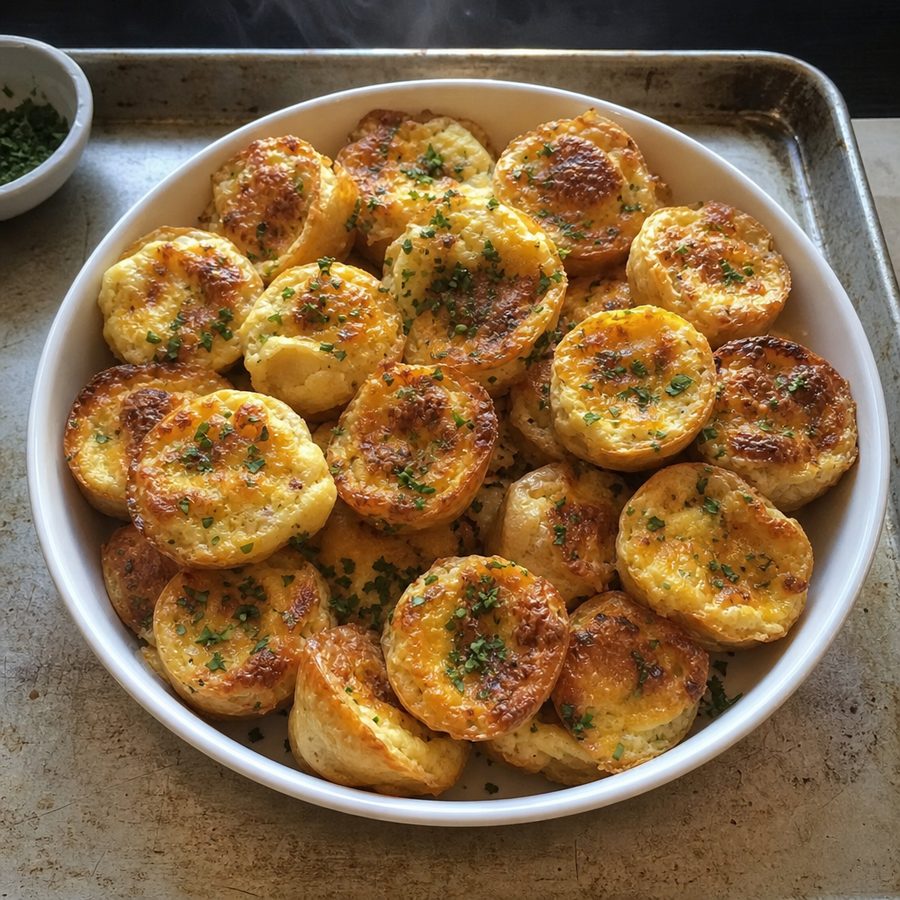
Tender little crustless quiches of whisked egg, melted mozzarella, and creamy ricotta baked in a muffin tin until just set and lightly golden.
Why You'll Love This Recipe
These are handheld baked egg cups built for anyone who wants a warm, protein-rich bite without a crust or a lot of fuss. They come together in one bowl, bake in a standard muffin tin, and turn out soft and custardy in the center with lightly golden tops. They suit a grab-and-go breakfast, a midday snack, or a simple addition to a plate, and because they hold their shape once cooled they travel well in a lunch bag or container.
Three dairy and egg elements, each doing a different job. The eggs set into a tender custard that holds everything together, the ricotta is whisked in smooth so it keeps the interior moist and slightly creamy rather than rubbery, and the shredded mozzarella melts into soft pockets that stretch when the cups are warm. Whisking the ricotta fully into the eggs before the mozzarella goes in is the small step that keeps the texture even instead of grainy.
They are satisfying because they are dense with protein and rich-tasting from the cheese, so a couple of cups feel like a real, steadying bite rather than a light nibble. The gentle salt is enough to bring out the savory, milky flavor of the mozzarella and ricotta, and the soft-set texture makes them easy to eat warm or at room temperature. With just eggs, two cheeses, and salt, they stay clean and simple while still delivering a filling result.
Ingredients
- 5 large eggs
- 3/4 cup shredded mozzarella (about 90 g)
- 1/2 cup ricotta
- a pinch of salt
Instructions
- Preheat and grease: Preheat the oven to 350°F (175°C). Grease the wells of a muffin tin thoroughly, coating the bottom and sides so that the baked cups release cleanly. Egg sticks harder than almost anything else in a tin, and a cup that tears coming out is a cup you will end up eating with a fork over the sink.
- Whisk the base: Crack the eggs into a bowl. Add the ricotta and a pinch of salt, and whisk briskly until the mixture is smooth and uniform with no streaks of ricotta remaining. Ricotta stays grainy until the eggs have been worked all the way through it, and any streak left in the bowl now bakes into a dry white patch.
- Fold in the cheese: Add the shredded mozzarella and fold it in gently with a spatula until it is evenly distributed through the egg mixture. Fold rather than whisk here, since whisking cheese into eggs works it into strings that clump at the bottom of every cup.
- Fill the cups: Divide the mixture evenly among the greased muffin wells, filling each about three-quarters full to leave room for the eggs to puff as they bake. Give the tin a light tap on the counter to settle the mixture and release any large air pockets.
- Bake until set: Bake for 18 to 20 minutes, until the tops are lightly golden and the centers are just set and no longer jiggly when the tin is gently shaken. Pull them while the middles still look barely soft, because the tin keeps cooking them for a few minutes after it leaves the oven.
- Cool and release: Let the tin rest on a rack for a few minutes so the cups firm up and pull away from the sides, then run a thin knife or small offset spatula around each one and lift them out.
Variations
- Bacon and egg: Fold cooked, crumbled bacon into the egg mixture before filling the cups for a smoky, savory bite. This adds pork.
- Ham cups: Stir in finely diced cooked ham for a heartier, meatier version. This adds pork.
- Smoked salmon: Fold in flaked cold-smoked salmon for a richer, more delicate flavor. This adds fish.
- Sharper cheese: Swap the mozzarella for shredded aged cheddar for a bolder, tangier result. This keeps it a dairy-based dish with a stronger cheese flavor.
- Extra-rich custard: Whisk in an additional egg yolk for a softer, more custardy center. This adds egg.
Storage & Leftovers
Store the cooled quiche cups in an airtight container in the refrigerator, where they keep well for up to four days. Let them cool completely before sealing so condensation does not collect and soften the tops.
To reheat, warm them in a 300°F (150°C) oven or toaster oven for a few minutes until heated through, which keeps the tops from turning tough. If you use a microwave, heat them in short bursts at reduced power so the eggs warm gently rather than seizing up and turning rubbery.
These are made for getting ahead. Bake a batch, cool fully, and refrigerate so you have single-serving bites ready through the week. They also freeze well: freeze the cooled cups in a single layer, then transfer to a freezer bag, and reheat straight from frozen in a low oven until hot in the center.
Notes & Tips
- Grease generously: Egg sticks readily, so coat every well, including up the sides. A silicone muffin pan releases the cups even more easily than metal.
- Do not overfill: Filling each well about three-quarters full leaves room for the eggs to rise; topped off too high, they spill over and stick to the surface of the tin.
- Judge doneness by the center: Pull them when the tops are just set and no longer wet or jiggly. Left in until firm and springy, the eggs turn dry, so err toward the shorter end of the bake time.
- Bring cheese to room temperature: Cold shredded mozzarella clumps in the batter; letting it sit out briefly helps it fold in evenly and melt more smoothly.
- Salt to taste: Mozzarella and ricotta already carry some salt, so keep the added pinch light and taste the raw mixture on a clean spoon before baking to judge whether it needs more.
Nutrition & Mindful Eating
- Eggs and two soft cheeses are all that goes into these, and the texture comes from how they behave together. The eggs set, the ricotta keeps the middle loose and moist, and the mozzarella melts into strands that run through it.
- The eggs are the structure. Whisked well and baked hot, they rise over the rim of each cup and then relax as they cool, and they bring complete protein along with the choline and vitamin D that live in the yolks.
- Ricotta is fresh, faintly sweet and slightly grainy, and it keeps each cup tender the whole way through rather than letting the middle turn rubbery, bringing its own slow milk protein and calcium with that softness.
- Mozzarella melts rather than browns, so it pulls into soft threads inside the cups and takes on color only where it touches the top, and it brings calcium along with that stretch.
- A pinch of salt is what brings the milky flavor of both cheeses forward, and eaten warm these are soft, savory and steadying, with the protein in the eggs and cheese making a couple of them sit like a small meal.
- As you eat, watch how tall they come out of the oven and how gently they sink, then take the first one warm and slowly enough to taste the milk in the ricotta underneath the salt.
Frequently Asked Questions
Why did my quiche cups stick to the pan?
Egg is prone to sticking, so the most common cause is under-greasing. Coat the bottom and sides of each well thoroughly, let the baked cups cool for a few minutes so they firm up and contract, then run a thin knife around each one before lifting it out. A silicone muffin pan makes release easiest.
Can I make these without the ricotta?
You can, but the ricotta is what keeps the centers moist and creamy. Without it the cups set firmer and taste more like plain baked eggs. If you leave it out, watch the bake closely and pull them as soon as the centers are just set to avoid a dry, rubbery texture.
Why are my cups rubbery instead of tender?
That is almost always overbaking. Eggs firm up quickly at the end, so take them out when the tops are just set and no longer jiggly rather than waiting until they feel springy. Reheating gently at a low temperature also helps keep them soft.
Can I eat these cold?
Yes. They hold their shape well once cooled and taste good at room temperature or straight from the refrigerator, which makes them handy for a packed lunch or snack. Warming them briefly brings back the soft center and the stretch of the melted mozzarella.