
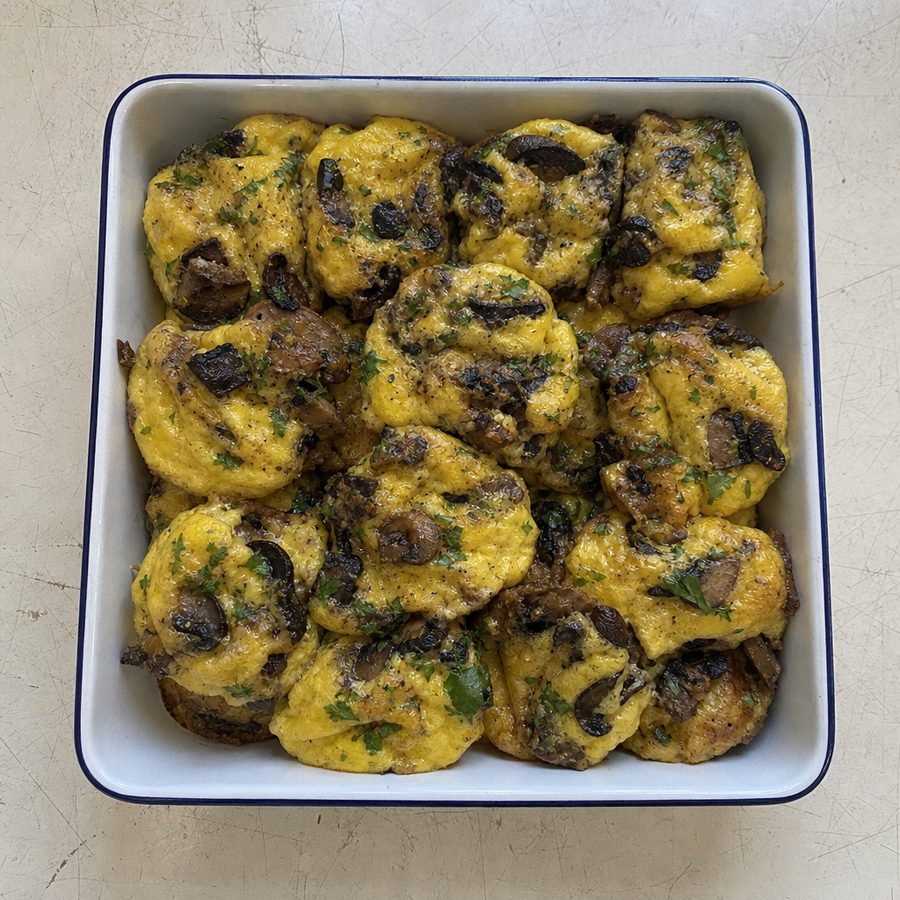
Mushroom And Herb Egg Muffins
Tender baked egg muffins folded with deeply browned mushrooms, minced garlic, fresh parsley, and savory nutritional yeast for a rich, dairy-free umami bite.
Why You'll Love This Recipe
These are savory, hand-held egg muffins for anyone who wants a real, protein-rich bite with no meat and no dairy in it. One bowl, one skillet, and a standard muffin tin is the whole of the equipment, and they hold their shape cold, which is what makes them worth having in the refrigerator rather than only worth eating hot. The nutritional yeast is standing in for cheese here, and it does the savory part of that job convincingly.
The flavor lives and dies on how well the mushrooms are browned. Cooking them over medium-high heat until their water has fully evaporated and their edges turn deep golden concentrates their natural umami and keeps them from weeping liquid into the eggs. Nutritional yeast reinforces that savory, faintly cheesy depth without any dairy, while garlic and fresh parsley add aroma and brightness. Folding the mushrooms in only after they have cooled keeps the beaten eggs from scrambling before they hit the oven, so the baked texture stays smooth and custardy.
Eggs supply high-quality complete protein and the olive oil contributes the fat that makes each muffin filling rather than a light nibble. The mushrooms bring an earthy depth along with fiber, and browning them properly is what gives a dairy-free egg muffin enough savory backbone to be worth eating. Two of them with a piece of fruit is a real breakfast, which is more than most things you can eat with one hand can claim.
Ingredients
- 6 large eggs
- 2 cups sliced mushrooms
- 3 cloves garlic, minced
- 2 tbsp chopped parsley
- 2 tbsp nutritional yeast
- 1 tbsp olive oil
- 1/2 tsp salt
Instructions
- Heat the oven and oil the tin thoroughly: Heat the oven to 375°F (190°C) and brush the cups of a muffin tin with olive oil, going up the sides as well as across the bottom. Baked egg grips bare metal as it sets, so a tin that gets a quick wipe rather than a proper coat is the reason egg muffins come out in pieces.
- Slice the mushrooms to an even thickness: Slice the mushrooms into even pieces, mince the garlic, and finely chop the parsley. Uniform slices matter more than the exact thickness, since mushrooms cut unevenly finish at different times and the thin ones are dry and leathery by the moment the thick ones have browned.
- Brown the mushrooms 8 to 10 minutes: Warm the olive oil in a skillet over medium-high, add the mushrooms in a single layer, and leave them undisturbed for a few minutes before stirring occasionally for 8 to 10 minutes, until their moisture has cooked off and they are deeply golden. Add the garlic for the last minute. Driving that water out is the entire point, because any of it left behind ends up in the eggs and the muffins sink.
- Whisk the eggs with the yeast and herbs: Beat the eggs well until the yolks and whites are fully blended, then whisk in the nutritional yeast, the salt, and the chopped parsley until evenly combined. The nutritional yeast is doing the job cheese would do in a standard egg muffin, so it wants to be dispersed through the custard rather than sprinkled on top.
- Cool the mushrooms before they meet the eggs: Slide the mushrooms onto a plate and let them cool until just warm, then stir them into the beaten eggs so they are evenly distributed. Adding them hot would start setting the eggs in the bowl, and you would be spooning scrambled egg into the tin instead of pouring a smooth custard.
- Stir between spoonfuls as you fill: Give the mixture a stir and fill each oiled cup about three-quarters full to leave room for the rise. Stir again between spoonfuls, since the mushrooms sink within a minute of standing and the last cups would otherwise be all egg and no filling.
- Bake 18 to 20 minutes, then rest: Bake for 18 to 20 minutes, until the tops are set, puffed, and no longer wet in the center, and a toothpick comes out clean. Let them rest in the tin a few minutes before running a knife around each edge, because egg firms as it cools and a muffin that tears when hot lifts out whole a few minutes later.
Variations
- Spinach and mushroom: Wilt a handful of fresh spinach in the skillet alongside the mushrooms until it collapses and the moisture cooks off, then fold it into the eggs for extra green color and earthiness.
- Smoky and warm: Whisk a pinch of smoked paprika into the eggs with the salt for a gentle smoky background that plays well with the browned mushrooms.
- Fresh herb swap: Trade the parsley for chopped chives, dill, or thyme to shift the aroma; each brings its own character while keeping the muffins fresh and herbaceous.
- Roasted red pepper: Fold in chopped jarred roasted red peppers, drained and patted dry, for a sweet, slightly smoky note and a pop of color against the dark mushrooms.
- Extra savory bite: Add a spoonful of caramelized onions to the mushroom mixture for a deeper, sweeter savory layer; cook them down slowly until soft and golden before folding in.
Storage & Leftovers
Store the cooled muffins in an airtight container in the refrigerator, where they keep well for up to four days. Let them cool completely before sealing so trapped steam does not make them soggy.
To reheat, warm a muffin in the microwave in short bursts of about 20 to 30 seconds until just heated through, or reheat in a 300°F (150°C) oven for a few minutes if you prefer the tops slightly firmer. Avoid overheating, which can turn the eggs rubbery.
For make-ahead, bake a full batch at the start of the week and portion them out for daily snacks. They also freeze well: freeze in a single layer, then transfer to a freezer bag, and thaw overnight in the fridge before reheating.
Notes & Tips
- Choose firm mushrooms: Pick mushrooms that are firm and dry with tight caps; older, damp mushrooms release more water and are harder to brown deeply, which mutes the umami you are after.
- Do not crowd the skillet: Give the mushrooms room in the pan. Piled up, they steam and stay pale; spread out, they brown and develop the rich flavor that carries the whole dish.
- Nutritional yeast is your savory booster: It stands in for the cheesy depth you would normally get from dairy. If you like a stronger savory edge, add a little more; if you prefer it subtle, use a lighter hand.
- Grease the tin generously: Egg sticks readily, so coat every cup well with olive oil, or use a silicone tin or paper liners to guarantee a clean release.
- Test for doneness: The muffins are ready when the tops are puffed and set and a toothpick comes out clean; they will deflate slightly as they cool, which is normal.
- Double the batch: These reheat and freeze well, so making a large batch at once gives you a week of ready savory snacks with no extra effort per muffin.
Nutrition & Mindful Eating
- Eggs, mushrooms and nutritional yeast are doing all of the work in these. The eggs set into a tender little custard, the mushrooms keep them interesting, and the yeast gives the whole thing a savory backbone.
- Eggs bake into a soft, springy custard in the tin, and the protein they carry is why a couple of these hold you through an afternoon better than their size suggests.
- Mushrooms want to be cooked down hard before they go in, since the water they hold will otherwise weep into the eggs. Once browned they turn dark and meaty, and they bring B vitamins and, when grown under light, vitamin D.
- Nutritional yeast is flaky, golden and unmistakably savory, and it clings to the mushrooms as it hydrates in the beaten egg. Most versions are fortified with B vitamins, including B12.
- Garlic cooked into the mushrooms and parsley stirred through raw give these two different kinds of sharpness, and what comes out of the oven smells closer to a hot lunch than to a snack.
- As you eat, notice how the outside has firmed while the middle stayed tender, and take one, sit with it for a moment, and check in with your hunger before reaching for the next.
Frequently Asked Questions
Why are my egg muffins watery or soggy?
The usual culprit is mushrooms that were not browned enough. Mushrooms hold a lot of water, so cook them until all that moisture has evaporated and the edges are golden before folding them into the eggs; otherwise they leach liquid during baking.
Why do my muffins deflate after baking?
Some deflation is completely normal. Egg muffins puff up in the heat of the oven and settle as they cool. As long as the centers are fully set and not wet, they are done and perfectly fine to eat.
How do I keep them from sticking to the tin?
Egg is prone to sticking, so brush every cup generously with olive oil, or use a silicone muffin tin or paper liners. Letting the muffins rest a few minutes before running a thin knife around each edge also helps them release cleanly.
Can I make these ahead for the week?
Yes. They keep in the refrigerator for several days and also freeze well. Bake a batch, cool completely, then store in an airtight container and reheat individually in the microwave or a low oven when you want one.