
Mussels In Coconut-Garlic Broth
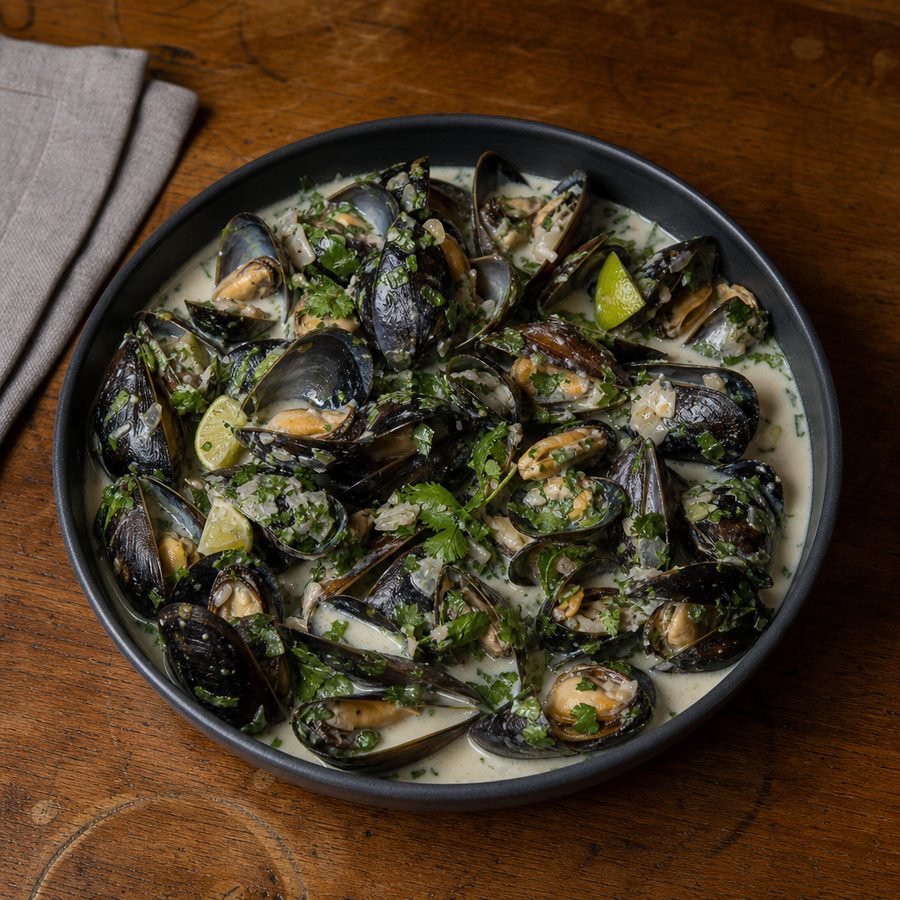
Plump mussels steamed open in a fragrant coconut milk broth built on shallots, garlic, and fresh ginger, then brightened at the end with lime juice and cilantro.
Why You'll Love This Recipe
This is a fast, one-pot seafood dinner for a weeknight when you want something warm and spoonable but not heavy. The mussels do most of the work themselves, releasing their briny liquor into the broth as they open, so the pot ends up tasting far richer than the short ingredient list suggests. It suits anyone who loves the coconut-and-lime flavors of Thai cooking and wants a bowl that comes together in well under half an hour.
Order of operations is what this rests on. Softening the shallots first, then blooming the garlic and ginger in the warm coconut oil, draws out their aromatics before any liquid goes in, so the broth tastes cooked-through rather than raw and sharp. Holding the coconut milk at a gentle simmer keeps it smooth instead of splitting, and adding the lime juice and cilantro off the heat at the very end preserves their bright, fresh top notes, which would fade and turn dull if they simmered.
It is nourishing as well as comforting. Mussels are remarkably high in protein, plus minerals like iron, zinc, and vitamin B12, while the coconut milk carries satisfying fat that makes the broth feel substantial and helps you absorb the fat-soluble nutrients in the pot. Ginger and garlic add warmth and depth, and the lime and cilantro keep the whole bowl feeling light on the palate. You finish it feeling full and steady rather than weighed down.
Ingredients
- 2 lb mussels, scrubbed and debearded
- 1 can (about 1 1/2 cups) coconut milk
- 2 shallots, minced
- 5 garlic cloves, minced
- 1 tbsp grated fresh ginger
- 2 tbsp coconut oil
- 2 tbsp fresh lime juice
- 1/3 cup chopped cilantro
Instructions
- Prep the aromatics and mussels: Peel and mince the shallots, peel and mince the garlic, and peel and finely grate the ginger. Chop the cilantro and juice the lime; keep those two aside for the finish. Scrub the mussels under cold running water and pull off any wiry beard poking from the shell by tugging it firmly toward the hinge. Tap any mussel that is open against the counter and discard it if it does not close within a minute; discard any with cracked shells.
- Build the broth: Melt the coconut oil in a wide, heavy pot over medium heat. Add the shallots and cook, stirring, until soft and translucent, about 3 minutes. Add the garlic and ginger and cook until fragrant, about 1 minute more, stirring so the garlic does not brown.
- Simmer the coconut milk: Pour in the coconut milk and stir to combine. Bring to a gentle simmer, where small bubbles just break the surface. Do not let it reach a hard boil, which can cause the coconut milk to separate.
- Steam the mussels: Add the mussels to the pot, cover tightly, and steam over medium heat until the shells swing open, 5 to 7 minutes. Give the pot a shake once or twice to move the mussels around. Discard any mussels that stay firmly shut after the rest have opened.
- Finish and serve: Turn off the heat. Stir in the lime juice and most of the cilantro, tasting the broth and adding a little more lime if it needs lifting. The mussels release their own salty liquor as they open, so it will not want salt. Ladle the mussels into bowls with plenty of broth and garnish with the remaining cilantro.
Variations
- Lemongrass and lime leaf: Bruise a stalk of lemongrass and drop it into the coconut milk along with a couple of torn kaffir lime leaves as it simmers, then fish them out before serving for a deeper, more perfumed Thai broth.
- Wilted greens: Stir in a few handfuls of chopped baby bok choy or spinach in the last minute or two of steaming so they wilt into the broth and turn the bowl into more of a full meal.
- Mushroom broth: Add thinly sliced shiitake or cremini mushrooms with the shallots and let them brown before the liquid goes in, giving the broth a savory, almost meaty backbone.
- Golden turmeric: Grate a little fresh turmeric or add a pinch of ground turmeric with the ginger for an earthy, golden broth and a warmer color.
- Clams instead: Swap the mussels for scrubbed littleneck clams, which take a few minutes longer to open; this trades one shellfish for another but keeps the same broth and method.
Storage & Leftovers
Cooked mussels are best eaten the day they are made, but leftovers keep in an airtight container in the refrigerator for up to two days. For the best texture, pull the mussel meat from the shells before storing and keep it submerged in the broth so it does not dry out.
Reheat gently. Warm the broth and mussels in a covered pot over low heat just until steaming; do not let it boil, which toughens the meat and can cause the coconut milk to separate. Because reheated shellfish overcooks quickly, take the pot off the heat the moment it is hot through.
To get ahead, make the broth through the simmering stage, then cool and refrigerate it for up to two days. When you are ready to eat, bring it back to a gentle simmer, add the fresh mussels, and steam them open, stirring in the lime and cilantro at the end so those flavors stay bright.
Notes & Tips
- Buy them live and lively: Choose mussels with tightly closed, unbroken shells that smell like clean seawater. Store them in the refrigerator in a bowl covered with a damp towel, never sealed in a bag or sitting in water, and cook them within a day or two of buying.
- Debeard right before cooking: Pull the beard toward the hinge of the shell rather than the opening, since yanking it the wrong way can kill the mussel. Do this just before cooking, because debearding shortens their life.
- Full-fat coconut milk matters: Use full-fat canned coconut milk, not the light or carton kind, for a broth with real body. Shake or stir the can well first, since the cream and liquid separate as it sits.
- Season at the very end: Mussels release their own salty liquor as they open, so wait until after they have steamed to judge the broth. Add the lime and salt gradually at the finish, tasting as you go, so the broth lands bright but not sharp.
- Give the broth something to soak into: This is a brothy bowl, so serve it with something to catch the liquid, such as cauliflower rice or a spoon-friendly side, so none of that fragrant broth goes to waste.
- Do not walk away while steaming: The window between just-open and rubbery is short. Pull the pot off the heat as soon as most shells have opened rather than waiting for every last one, and discard the few stubborn ones that stay shut.
Nutrition & Mindful Eating
- Mussels, coconut milk and garlic build this in layers. The shellfish open and season the pot with their own liquor, the coconut milk turns that liquor creamy, and the garlic runs through both so every spoonful tastes of all three.
- Garlic is the reason to make this one. Cooked gently in coconut oil it goes sweet and mellow rather than biting, and that slow heat softens the sulfur compounds that give garlic both its smell and its long-studied link to heart health.
- Mussels cook in a matter of minutes and season everything around them as they open, sending a sweet, salty liquor straight into the pot. The meat carries dense protein and a striking amount of vitamin B12.
- Coconut milk gives the broth its weight and its faint sweetness, and its fat rounds off the sharp edges of the ginger and lime while carrying the flavors that only dissolve in fat.
- Lime squeezed in off the heat and cilantro torn over the top are what wake the bowl up, cutting straight through the coconut so the last spoonful tastes as bright as the first.
- As you eat, work through the shells one at a time and spoon up what has pooled in the bottom of the bowl, letting the slowness of that show you when you have had enough.
Frequently Asked Questions
How do I know which mussels to throw away?
Before cooking, discard any mussel that is cracked or that stays open when you tap it against the counter, since that one is likely dead. After steaming, discard any that never opened. A stubbornly closed shell means the mussel was not good, and it is not worth prying open.
My mussels released a lot of liquid. Should I adjust the broth?
That liquor is a good thing; it is what makes the broth taste of the sea. Just taste before you finish and hold back a little on the salt and lime until you see how briny the mussels made it, then adjust from there.
Can I use frozen mussels?
You can, though the texture is softer than fresh. If they are frozen raw in the shell, add them straight to the simmering broth without thawing and steam until they open. If they are pre-cooked and shelled, stir them in only at the end just to heat through, or they will turn rubbery.
Why did my coconut broth look curdled or separated?
That usually means it boiled too hard. Coconut milk can split when it hits a rolling boil, so keep it at a gentle simmer with just a few bubbles breaking the surface, and reheat leftovers slowly over low heat for the same reason.