
Mussels in Coconut-Ginger Broth With Bok Choy
Plump mussels steamed open in a fragrant coconut milk broth built on ginger, garlic, and shallots, with tender bok choy and a bright finish of lime juice and cilantro.
Why You'll Love This Recipe
A warm, restorative lunch that comes together in about the time it takes to boil water, and it is deeply savory. Mussels are one of the fastest proteins to cook, and steaming them in a spiced coconut broth turns a handful of humble ingredients into something that tastes like it took far longer. It suits cooks who want a clean, aromatic meal without a long ingredient list or fussy technique.
The shallots, garlic, and ginger go in first. Softening the shallots, garlic, and ginger in coconut oil first blooms their aromas into the fat, so the coconut milk picks up all that warmth as it simmers. The mussels then steam in that broth and release their own briny liquor as they open, seasoning the base far better than any added stock could. Stirring the lime juice in off the heat keeps its brightness sharp, cutting the richness of the coconut so the bowl tastes balanced rather than heavy.
Silky broth, tender-crisp bok choy, and plump, mineral-rich mussels all turn up in the same spoonful, which is more than most bowls of shellfish manage. Mussels deliver a large amount of protein along with iron, selenium, and vitamin B12, while the bok choy adds crunch and a dose of vitamins, and the coconut milk brings a filling richness that keeps you full. It eats like comfort food yet leaves you feeling light.
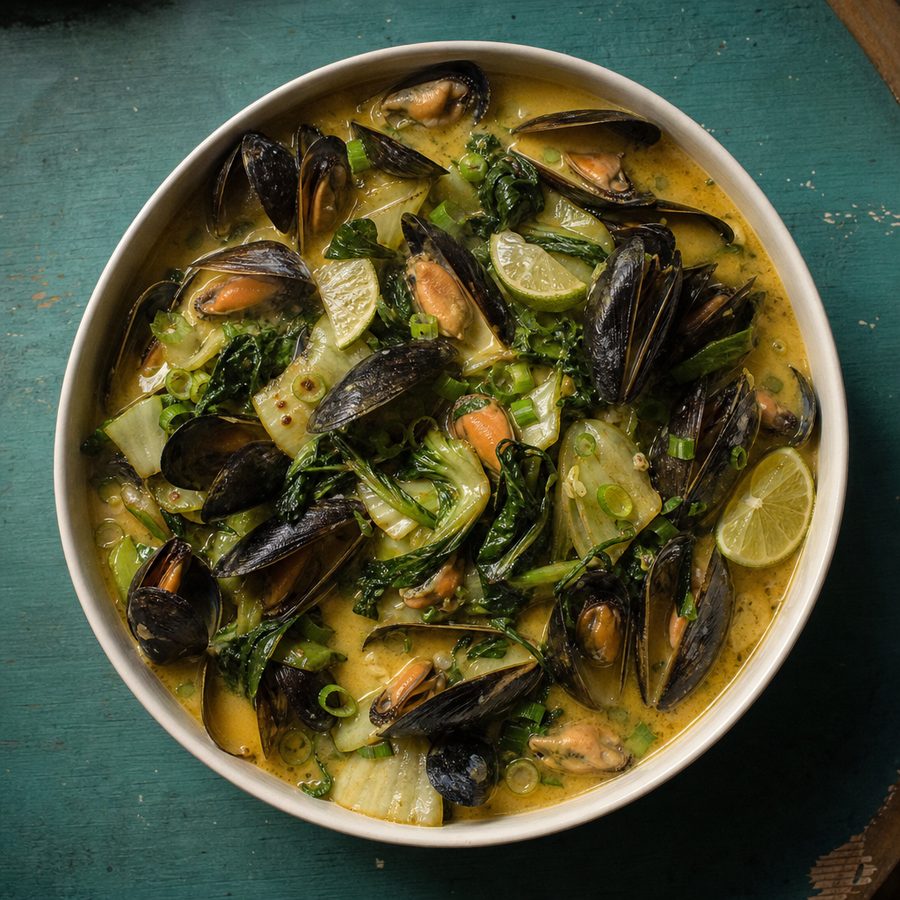
Ingredients
- 2 1/2 lb mussels, scrubbed
- 1 1/2 cups canned coconut milk
- 4 heads baby bok choy, halved
- 2 tbsp grated ginger
- 4 cloves garlic, minced
- 2 shallots, minced
- 2 tbsp coconut oil
- 2 tbsp lime juice
- 1/4 cup cilantro
Instructions
- Clean the mussels: Scrub the mussels under cold running water and pull off any stringy beards poking from the shells. Tap any mussel that is gaping open against the counter; if it does not slowly close, discard it, and discard any with cracked shells.
- Prep the aromatics and greens: Peel and finely grate the ginger, mince the garlic, and mince the shallots. Halve each head of baby bok choy lengthwise through the root so the leaves stay attached. Roughly chop the cilantro and juice the lime.
- Cook the aromatics: Melt the coconut oil in a large pot over medium heat. Add the shallots, garlic, and ginger and cook, stirring, until softened and fragrant, about 2 minutes; do not let the garlic brown.
- Build the broth: Pour in the coconut milk and stir to combine. Stir to combine and bring to a gentle simmer, with small bubbles breaking the surface rather than a hard boil.
- Steam the mussels: Add the mussels to the pot, cover tightly, and steam until the shells swing open, about 5 to 6 minutes. Discard any mussels that stay firmly shut after cooking, as they were not alive.
- Wilt the bok choy: In the last 2 minutes of steaming, settle the halved bok choy into the broth around the mussels, cover again, and cook just until the stems are crisp-tender and the leaves have wilted.
- Finish and serve: Turn off the heat and stir the lime juice and chopped cilantro into the broth. Ladle the mussels, bok choy, and plenty of broth into bowls.
Variations
- Lemongrass and lime leaf: Bruise a stalk of lemongrass and drop it into the broth with a few torn makrut lime leaves as it simmers, then fish them out before serving for a more floral, citrusy backbone.
- Golden turmeric broth: Stir a little grated or ground turmeric in with the aromatics for an earthy warmth and a deep golden color; add a pinch more ginger to keep the flavors balanced.
- Different tender greens: Swap the bok choy for napa cabbage, baby spinach, or thinly sliced green cabbage, adding leafier greens at the very end so they only just wilt in the hot broth.
- Deeper savory broth: Finish the broth with a splash of fish sauce for a rounder, more savory depth; this adds fish.
- More seafood: Steam a handful of littleneck clams or peeled shrimp alongside the mussels until the clams open or the shrimp turn opaque; this adds more shellfish.
Storage & Leftovers
Cooked mussels are best eaten the day they are made, but leftovers keep in an airtight container in the refrigerator for up to two days. For the best texture, pull the mussel meat from the shells before storing and keep it submerged in the broth so it does not dry out.
Reheat gently. Warm the broth and mussel meat together in a covered pot over low heat just until steaming, and pull it off the heat as soon as it is hot. High heat or a long reheat turns mussels rubbery, so treat this as warming through rather than cooking again.
To get ahead, make the coconut-ginger broth through the simmer step, then cool and refrigerate it for up to three days. When you are ready to eat, bring it back to a gentle simmer, steam the fresh mussels and bok choy in it, and finish with the lime and cilantro so the meal tastes just-made.
Notes & Tips
- Buy them alive and fresh: Choose mussels with tightly closed, unbroken shells that smell like clean seawater. Keep them in the refrigerator in a bowl loosely covered with a damp towel, never sealed in a bag or sitting in water, and cook them within a day or two of buying.
- Use full-fat coconut milk: Reach for canned full-fat coconut milk rather than the thin carton kind, and shake the can well before opening so the thick cream and watery liquid blend into one smooth, rich broth.
- Grate ginger the easy way: Keep a knob of ginger in the freezer and grate it while still frozen on a fine grater; it grates cleanly, and the peel practically disappears so you can skip peeling.
- Season at the very end: The mussels release their own salty liquor as they open, so taste the broth after they cook and before you salt more. Adjust with a little extra lime or salt only once everything is in the pot.
- Serve it with something to soak up the broth: The broth is the best part, so serve the bowls with cauliflower rice or roasted cassava alongside to catch every spoonful, or simply plan to sip it straight from the bowl.
- Do not crowd the pot: Mussels need room and steam to open evenly. Use a wide, heavy pot with a tight lid so the ones on the bottom are not overcooked by the time the top layer opens; work in batches if your pot is small.
Nutrition & Mindful Eating
- The mussels, the broth and the bok choy give this bowl three textures. The shellfish are tender and yielding, the liquid is thick and creamy, and the greens stay crisp at the stem, so a spoonful is never all one thing.
- Ginger is what makes this taste alive. Grated fine, it perfumes the coconut milk and leaves a clean warmth at the back of the throat, and the gingerol behind that warmth has a long history of being used to settle the stomach.
- Bok choy added near the end keeps both of its natures, leaves that wilt into the broth and stems that stay juicy and snappy, and it brings vitamin C, vitamin K and a bit of calcium in with the crunch.
- Mussels are sweet and plump and ready almost as soon as the shells open, and they carry dense protein along with iron and zinc, which the lime squeezed over them helps your body take up.
- Shallots and garlic soften in coconut oil before anything else goes in and cilantro lands at the very end, so the pot smells sweet and aromatic at the start and green and sharp by the time it reaches the table.
- As you eat, alternate a mussel with a spoonful of broth and a piece of bok choy, and let the ginger build as you go, using that rhythm to keep the meal from being rushed.
Frequently Asked Questions
How do I know which mussels to throw away?
Before cooking, discard any mussel with a cracked shell or one that gapes open and will not slowly close when you tap it, since that mussel is no longer alive. After steaming, discard any that stayed firmly shut. The vast majority should open; a few stubborn ones are normal.
Can I use frozen mussels?
Yes. Frozen mussels, whether whole in the shell or half-shell, work well here. Thaw them in the refrigerator first, and reduce the steaming time slightly since many frozen mussels are already partly cooked; you are mainly heating them through in the broth.
Will the coconut broth curdle or split?
Coconut milk can look grainy if it hard-boils, so keep the broth at a gentle simmer rather than a rolling boil. Stirring the lime juice in off the heat also keeps the acid from breaking the broth, so it stays smooth and creamy.
How can I make it taste brighter or more warming without heat from peppers?
Lean on the ginger and lime. Grate in a little extra ginger with the aromatics for gentle warmth, and add another squeeze of lime at the table for sharpness. A handful more cilantro stirred in at the end also lifts the whole bowl.