
Mussels Marinara Over Rice
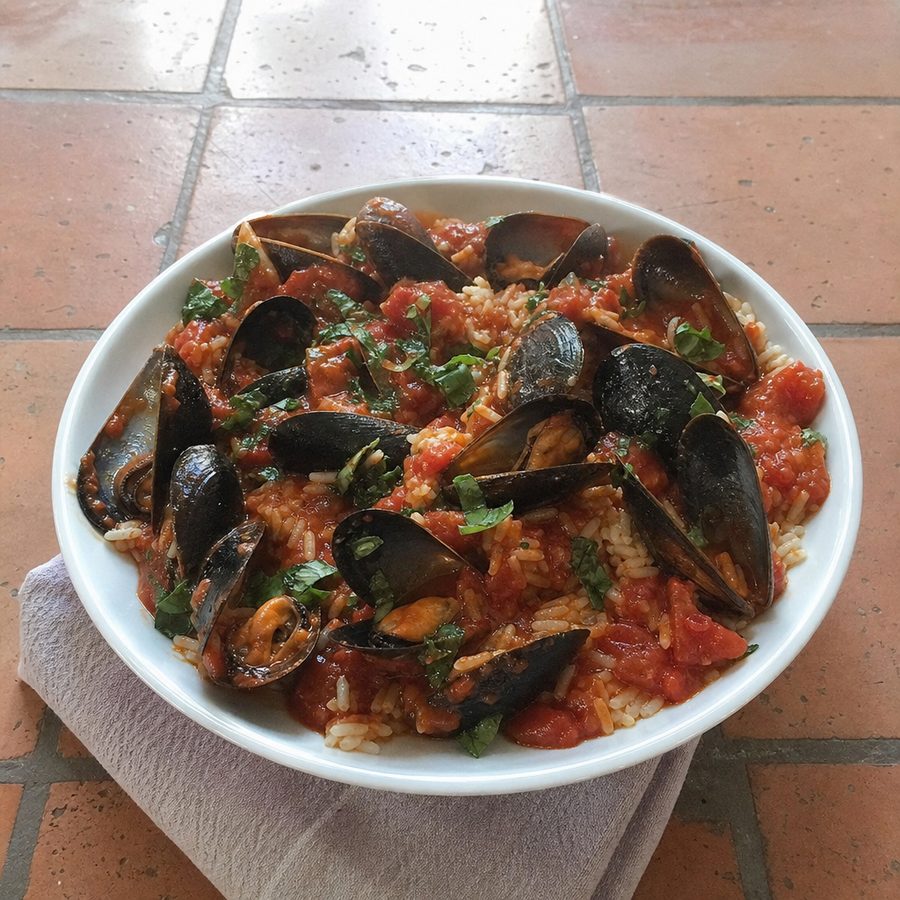
Plump mussels simmered in a garlicky tomato marinara warmed with basil, oregano, and a whisper of cayenne, spooned over tender white rice for a briny, rustic seafood dinner.
Why You'll Love This Recipe
Something that tastes slow-cooked, without the wait, out of a single skillet. Mussels are one of the quickest proteins in the kitchen, and once the sauce is built they need only a few minutes to warm through. It suits anyone who loves briny shellfish and a rustic, garlic-forward tomato sauce, and it is friendly to cooks who feel unsure about seafood, because mussels tell you plainly when they are ready by opening their shells.
The flavor comes from layering. Blooming the oregano and cayenne in the oil with the onion and garlic draws out their aroma before any liquid goes in, and cooking the tomato paste for a full minute deepens it into a sweeter, less raw taste. Simmering the crushed tomatoes until they thicken concentrates the sauce so it clings to each mussel and to the rice instead of pooling on the plate. Because the mussels themselves release briny liquor when steamed, the marinara ends up seasoned by the sea, which is why it needs so little added salt.
The dish is satisfying because it pairs sweet, delicate shellfish with a bright, savory sauce and a bed of rice that soaks up every drop. Mussels are rich in protein and minerals, the tomatoes and herbs bring vitamins and antioxidants, and olive oil rounds it out with heart-friendly fats. Two pounds of mussels sounds like a great deal until you remember most of that weight is shell, so buy the full amount rather than talking yourself down to less. It eats like comfort food but leaves you feeling light rather than heavy.
Ingredients
- 4 lb live mussels in the shell
- 1 cup uncooked long-grain white rice
- 2 cups crushed tomatoes
- 1 onion, diced
- 4 cloves garlic, minced
- 2 tbsp tomato paste
- 2 tbsp olive oil
- 4 tbsp fresh basil, torn
- 3 tbsp parsley, chopped
- 1 tsp dried oregano
- 1/2 tsp cayenne
- 1/4 tsp salt
Instructions
- Purge the mussels: Put the mussels in a large bowl and cover them with plenty of cold water. Leave them for a minute so they settle and begin to open, then swish them around with your hand so the sand works loose and sinks to the bottom of the bowl. Lift the mussels out with your hands rather than pouring them off, so the grit stays behind, then tip out the cloudy water and refill the bowl with fresh cold water. Repeat until the water stays clear and you no longer see sand settling out, which usually takes three or four changes. Fresh mussels hold more sand than you would expect, and this is the step that keeps it out of the finished dish.
- Scrub and debeard the mussels: Scrub each shell under cold running water with a stiff brush to take off anything still clinging to the outside. Then pull off the beard, the tuft of stringy fibers poking out between the two shells, by gripping it and tugging firmly toward the hinge end. Do this right before you cook, because debearding shortens the life of a live mussel. Throw away any mussel with a cracked shell, and tap any that are gaping open against the counter; keep the ones that pull themselves shut and discard the ones that stay open.
- Cook the rice: Put the rice in a fine strainer and rinse it under cold running water, tossing it with your fingers, until the water running through is no longer cloudy. Tip it into a saucepan with two cups of water, bring to a boil, then turn the heat to low, cover, and cook for fifteen minutes without lifting the lid. Take it off the heat and let it stand, still covered, for five minutes, then fluff it with a fork.
- Steam the mussels: Set the mussels in a wide pot with a splash of water, cover with a tight lid, and steam over high heat until the shells open, about 5 to 6 minutes. Discard any that stay shut. Let them cool briefly, then pull the meat from the shells and set it aside. Discard the empty shells.
- Build the soffritto: Dice the onion and mince the garlic. Heat the olive oil in a wide skillet over medium heat, then add the onion and garlic along with the dried oregano and cayenne. Cook, stirring often, until the onion is soft and translucent, about 6 minutes.
- Build the marinara: Stir in the tomato paste and cook for 1 minute, until it darkens and smells sweet. Add the crushed tomatoes, lower the heat, and simmer gently until the sauce thickens and no longer looks watery, about 10 minutes.
- Add the mussels: Fold the shelled mussels into the marinara and warm them through, about 2 minutes, stirring gently so they stay whole. Mussels release salt of their own, so taste the sauce before adding the salt.
- Serve: Tear the fresh basil and chop the parsley. Spoon the mussels and marinara over the warm rice and finish with the basil and parsley.
Variations
- Over pasta instead of rice: Swap the rice for linguine or spaghetti cooked until al dente, and toss the sauce and mussels through the drained pasta. This adds gluten.
- White wine finish: Add a splash of dry white wine to the soffritto before the crushed tomatoes and let it reduce for a minute for a deeper, winey sauce. This adds alcohol, most but not all of which cooks away.
- Extra seafood: Fold in peeled shrimp or bay scallops along with the mussels and simmer until the shrimp turn pink and opaque. This adds more shellfish.
- Creamy tomato: Stir a spoonful of heavy cream or mascarpone into the finished marinara for a rounder, mellower sauce. This adds dairy.
- Milder or bolder heat: Cut back the cayenne for a gentle, family-friendly sauce, or add a pinch of crushed red pepper flakes with the oregano for more warmth.
Storage & Leftovers
Store leftovers in an airtight container in the refrigerator for up to two days. Shellfish is best eaten soon after cooking, so plan to finish it quickly rather than keeping it the full window.
Reheat gently in a covered skillet over low heat with a splash of water to loosen the sauce, stirring just until warmed through. Avoid a hard boil or a long stint in the microwave, which turns mussels rubbery. Reheat the rice separately with a sprinkle of water so it steams back to fluffy.
To get ahead, make the marinara up to two days in advance and refrigerate it on its own. Steam and shell the mussels the day you plan to serve, then fold them into the reheated sauce at the last minute so they stay tender.
Notes & Tips
- Buy mussels that are alive: Choose mussels with tightly closed shells, or ones that snap shut when you tap an open one. Skip any that are cracked, gaping and unresponsive, or that smell of anything but clean seawater. Store them in the fridge in a bowl covered with a damp towel, never sealed in a bag or sitting in water, and cook them within a day or two.
- Debeard just before cooking: The wiry beard is the tuft poking from the shell. Pinch it and tug it toward the hinge to remove it. Do this right before you steam them, since debearding can kill the mussel.
- The shells are your timer: Mussels are done the moment their shells open. Any that stay firmly shut after steaming did not cook through and should be thrown out rather than pried open.
- Reserve the mussel liquor: When you shell the steamed mussels, strain the briny liquid left in the pot through a fine sieve and stir a little into the marinara for extra depth. It is naturally salty, so taste before adding the salt.
- Add basil off the heat: Fresh basil bruises and darkens if it simmers, so tear it in at the very end. The residual heat of the sauce is enough to release its aroma.
- Serve with something to catch the sauce: A thick slice of crusty bread alongside is worth having on the table, because this sauce is too good to leave on the plate. A simple green salad rounds out the meal.
Nutrition & Mindful Eating
- The mussels, the sauce and the rice are three parts of one idea. The shellfish open into the tomato and salt it with their own liquor, the sauce takes on that brine, and the rice underneath catches everything that runs off the shells.
- Mussels are as much the seasoning here as the protein. Every shell that opens sends more sweet, saline liquor into the pot, and the meat itself carries protein along with the omega-3 fats that come with shellfish.
- Crushed tomatoes bring the acidity and the tomato paste brings the depth, and cooking both of them in olive oil makes the sauce taste rounder while making its lycopene easier for your body to absorb.
- Rice here is less a bed than a sponge, and a spoonful that has sat under the sauce for a minute tastes of the entire pot. It also brings the steady carbohydrate that turns a pan of shellfish into dinner.
- Oregano goes in dry and early so the heat has time to open it up, the cayenne stays underneath as a slow warmth, and the basil and parsley are torn over at the end while everything is still steaming.
- As you eat, taste how the rice at the edge of the bowl has taken on the sauce and how the warmth from the cayenne builds a little with each bite, and give yourself the whole meal to sit with it.
Frequently Asked Questions
Can I use frozen or pre-cooked mussels?
Yes. If you use frozen mussel meat, thaw it in the fridge and fold it into the finished marinara just to warm through, since it is already cooked and only needs heating. For mussels still in the shell, steam them as written. Either way, avoid a long simmer so they stay tender rather than rubbery.
The sauce tastes too spicy. What can I do?
The cayenne carries real heat, so use a lighter hand next time. To calm a batch that is already too hot, stir in a splash of the reserved mussel liquid or a little extra crushed tomato to dilute it, and serve it over a generous amount of rice, which tempers the heat.
How do I know if a mussel has gone bad?
Before cooking, discard any with cracked shells, any that stay open when tapped, or any with a strong off odor. After steaming, discard any that never opened. Trust your nose above all: good mussels smell clean and briny, like the ocean.
What can I serve alongside to make it a full meal?
Crusty bread is the classic partner for soaking up the marinara. A crisp green salad or a simple sauteed vegetable such as broccolini or spinach also balances the richness of the sauce and rounds out the plate.