
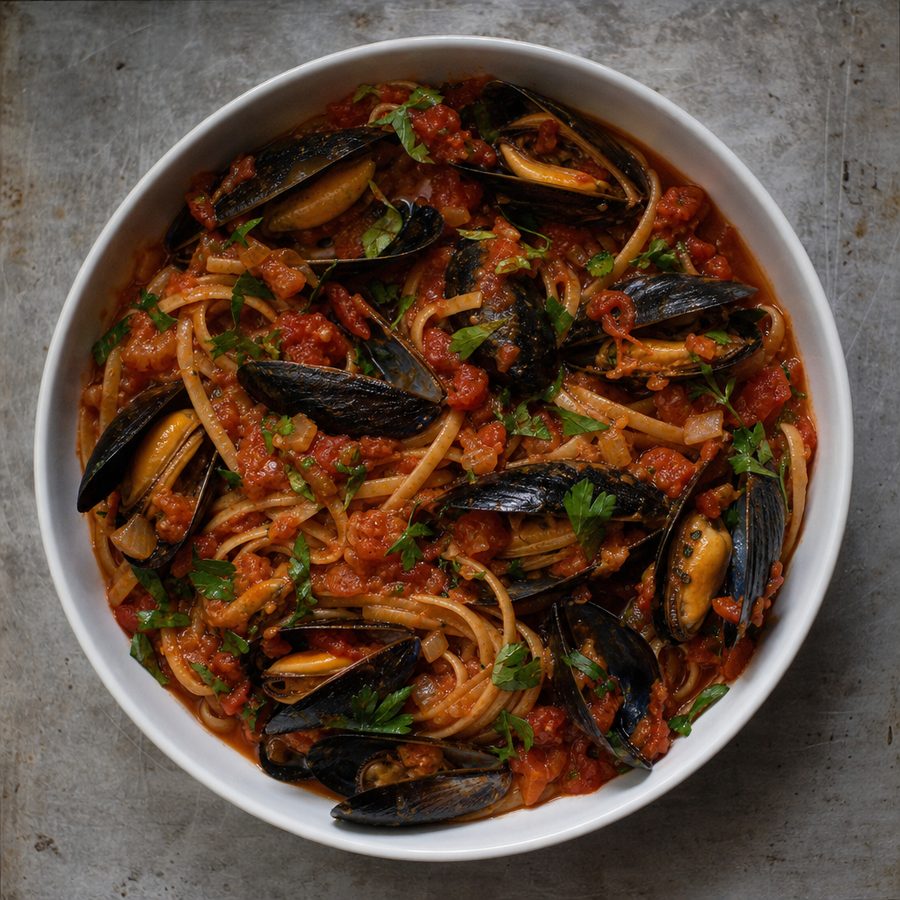
Mussels in Tomato Broth over Pasta
Plump mussels simmered in a garlicky crushed-tomato broth brightened with fresh basil and oregano, ladled generously over tender whole wheat pasta.
Why You'll Love This Recipe
This is a warm, rustic seafood bowl for anyone who wants a quick lunch that eats like a proper meal. Sweet, tender mussels steam open right in a bright tomato broth and go over nutty whole wheat pasta, so it feels coastal and comforting without a long cook or a pile of dishes. It comes together in one skillet plus a pasta pot, which makes it realistic for a weekday when you still want something that tastes like you cared.
The broth gets built in a strict order. Softening the onion first draws out its sweetness, and adding the garlic and oregano only at the end of the saute keeps the garlic fragrant instead of scorched and bitter. Simmering the crushed tomatoes on their own for a few minutes concentrates them before the mussels go in, so the broth tastes cooked-down and round rather than raw and sharp. The mussels then steam directly in that broth, which cooks them and seasons the broth at the same time, since the salty liquor they release as the shells open goes straight into the pot. Splitting the basil, half stirred in and half on top, gives you both a mellow cooked note and a fresh finish.
Protein from the mussels, slow-digesting carbohydrate and fiber from the whole wheat pasta, and heart-friendly fat from the olive oil, all carried by an intensely savory tomato broth. The pasta and broth make it feel generous and filling, while the mussels keep it light on the stomach. It is the kind of bowl that leaves you satisfied rather than heavy, and the leftovers reheat into an easy second lunch.
Ingredients
- 4 lb live mussels in the shell
- 8 oz uncooked whole-wheat pasta
- 1 (14.5 oz) can crushed tomatoes
- 1 onion, diced
- 5 cloves garlic, minced
- 1/2 cup chopped basil
- 3 tbsp olive oil
- 1 tsp dried oregano
Instructions
- Purge the mussels: Put the mussels in a large bowl and cover them with plenty of cold water. Leave them for a minute so they settle and begin to open, then swish them around with your hand so the sand works loose and sinks to the bottom of the bowl. Lift the mussels out with your hands rather than pouring them off, so the grit stays behind, then tip out the cloudy water and refill the bowl with fresh cold water. Repeat until the water stays clear and you no longer see sand settling out, which usually takes three or four changes. Fresh mussels hold more sand than you would expect, and this is the step that keeps it out of the finished dish.
- Scrub and debeard the mussels: Scrub each shell under cold running water with a stiff brush to take off anything still clinging to the outside. Then pull off the beard, the tuft of stringy fibers poking out between the two shells, by gripping it and tugging firmly toward the hinge end. Do this right before you cook, because debearding shortens the life of a live mussel. Throw away any mussel with a cracked shell, and tap any that are gaping open against the counter; keep the ones that pull themselves shut and discard the ones that stay open.
- Steam the mussels and shell them: Set the mussels in a large pot with a splash of water, cover with a tight lid, and steam over high heat until the shells open, about 5 to 6 minutes. Discard any that stay shut. Tip them into a bowl and let them cool just enough to handle, then pull the meat out of each shell with your fingers and set it aside. Discard the empty shells.
- Cook the pasta: Bring a large pot of water to a rolling boil, add the whole wheat pasta, and cook until it is just tender to the bite, following the timing on the package for the shape you are using, usually 9 to 12 minutes. Drain it and set it aside; do not rinse it, because the starch left on the surface helps the broth cling.
- Prep the aromatics: Peel and finely dice the onion, peel and mince the garlic, and roughly chop the fresh basil. Keep the basil separate from the onion and garlic.
- Build the broth: Heat the olive oil in a wide, deep skillet or pot over medium heat. Add the diced onion and cook, stirring now and then, until soft and translucent, about 4 minutes. Add the minced garlic and dried oregano and cook for 1 minute more, until fragrant but not browned.
- Simmer the tomatoes: Pour in the crushed tomatoes along with a splash of water to loosen the broth. Bring it to a gentle simmer and cook, stirring occasionally, until it thickens slightly and no longer looks watery, about 8 minutes.
- Add the mussels: Stir the shelled mussel meat into the simmering broth and warm it through, about 2 minutes. Keep this short, because a long simmer toughens mussels. Stir in half of the chopped basil, then taste the broth, which the mussels have already salted with the liquor they release as they open.
- Serve: Divide the whole wheat pasta among bowls, ladle the mussels and tomato broth over the top, and finish with the remaining chopped basil.
Variations
- Spicy arrabbiata style: Add a pinch of crushed red pepper flakes with the garlic for a broth with gentle heat that plays well against the sweet tomato.
- White wine splash: Deglaze the softened onion with a little dry white wine before the tomatoes and let it reduce; the acidity brightens the broth, though the wine will not fully cook off.
- Extra vegetables: Stir diced zucchini or chopped spinach into the broth as it simmers to add color, fiber, and volume without changing the character of the dish.
- Lemon and parsley finish: Swap or add a squeeze of fresh lemon and a handful of chopped parsley at the end for a cleaner, more herbaceous, citrus-lifted broth.
- Shrimp in place of mussels: Use peeled raw shrimp instead of the mussels, simmering them in the broth until they turn pink and opaque, about 3 to 4 minutes.
Storage & Leftovers
Store leftovers in an airtight container in the refrigerator for up to two days. Because it contains cooked shellfish, keep it cold and eat it promptly rather than pushing it to the edge of that window.
Reheat gently in a saucepan over medium-low heat, adding a splash of water to loosen the broth, and stop as soon as the mussels are warmed through. Overheating shellfish turns it tough, so avoid a hard boil or a long microwave blast; a brief, gentle warm-up keeps the mussels tender.
To get ahead, make the tomato broth up to the point before the mussels go in and refrigerate it separately from the pasta. When you are ready to eat, bring the broth back to a simmer, steam the freshly cleaned mussels in it until the shells open, and ladle the whole thing over freshly cooked or reheated pasta so nothing turns mushy.
Notes & Tips
- Buying the mussels: Look for live mussels that smell clean and briny like the ocean, not fishy or sour. Tap any that are sitting open and wait a beat; the live ones close themselves, and the ones that stay open should be discarded. After cooking, throw out any that never opened.
- Salt with a light hand: Mussels and canned crushed tomatoes both carry salt of their own, so leave the seasoning until the end, then taste the broth after the mussels have warmed and adjust only if it needs it.
- Pick the right pasta shape: A shape with ridges or a hollow, like penne or rigatoni, catches the broth better than a smooth strand, so more of that garlicky tomato flavor comes up with each bite.
- Do not overcook the shellfish: Mussels are done the moment their shells swing open, so take the pot off the heat right then; every extra minute of steam shrinks the meat and turns it chewy.
- Make it a bigger batch: The broth doubles easily and freezes well on its own, so cook extra tomato broth, freeze it without the mussels or pasta, and you have a fast base for a future lunch.
- What to serve alongside: A crusty piece of whole grain bread is worth having on hand to mop up the leftover broth in the bowl, and a simple green salad rounds the plate out.
Nutrition & Mindful Eating
- The pasta, the tomato broth and the mussels finish together in one pan, which is the whole trick of it. The pasta drinks up some of the liquid and thickens what is left, and the shellfish salt it at the very end.
- Whole wheat pasta has a nutty flavor and a firmer chew that stands up to a thin sauce, and the bran and germ it keeps carry fiber and B vitamins into the bowl.
- Mussels do double duty, seasoning the broth as they open and then sitting on top of the pasta as the protein of the meal, dense in it, along with the selenium and omega-3 fats shellfish bring.
- Onion and garlic cooked slowly in olive oil before the tomatoes go in are what keep the sauce from tasting sharp, and they bring the kind of fibers your gut bacteria feed on along with that flavor.
- Dried oregano goes in early where the heat can open it up and fresh basil goes in at the end where it stays perfumed, and those two are most of the reason a bowl of this smells the way it does.
- As you eat, twist the pasta so it carries some of the broth up with it and save the last spoonful in the bottom of the bowl for the end, slowing down enough to notice when you have had your fill.
Frequently Asked Questions
Can I use frozen mussel meat instead of live mussels in the shell?
You can, though the broth will taste thinner for it, because much of that flavor comes from the liquor the shells release as they open. Frozen mussel meat is sold already cooked, so thaw it in the refrigerator, drain it well, and stir it into the finished broth just long enough to heat through, skipping the purging and steaming steps entirely.
My tomato broth tastes sharp or acidic. How do I fix it?
Let it simmer a little longer to mellow, since cooking rounds out the raw edge of canned tomatoes. If it is still bright, a small pinch of the softened onion's sweetness usually balances it, or you can stir in a touch more olive oil to smooth the flavor.
Can I make this gluten-free?
Yes. Swap the whole wheat pasta for a gluten-free pasta made from corn, rice, or legumes and cook it according to its own package timing, as those shapes can turn soft quickly. The broth itself contains no wheat.
Why are my mussels tough and chewy?
That almost always comes from overheating. A mussel is cooked the instant its shell opens, so lift the pot off the burner right then rather than letting it ride at a hard boil. The longer they cook past that point, the tighter the protein pulls and the more rubbery they turn.