
Pan-Seared Pork Chops in Butter
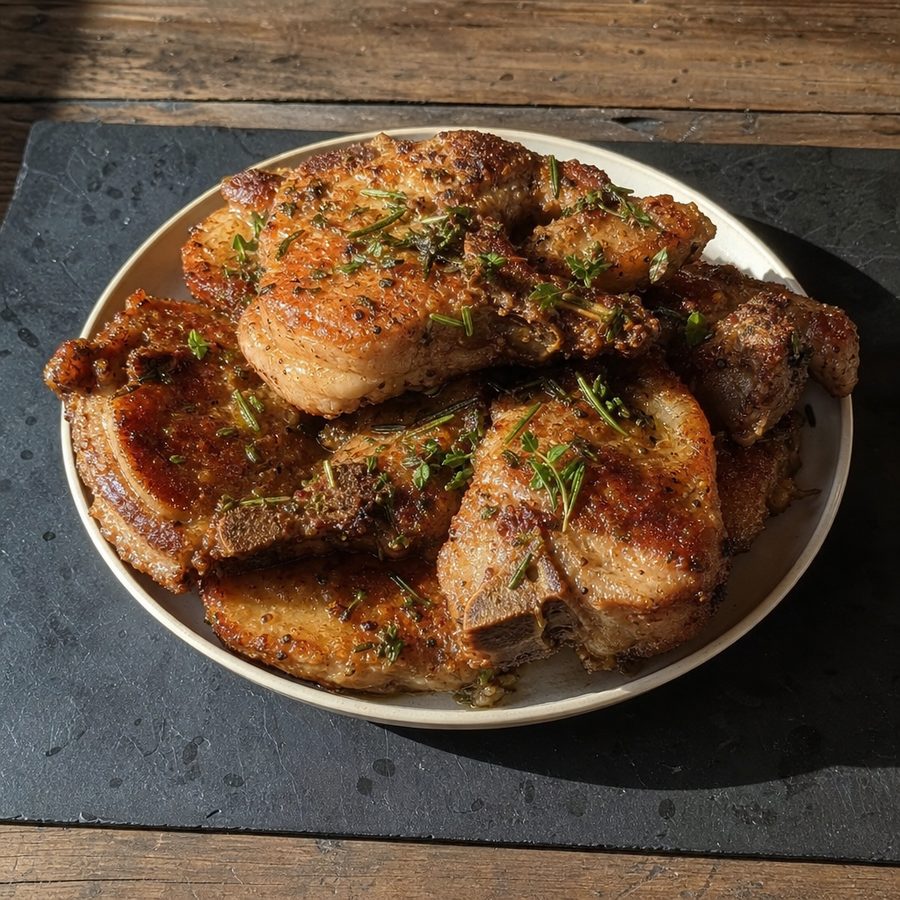
Thick pork chops seared to a deeply golden crust, then basted in foaming butter and finished with a clean hit of salt.
Why You'll Love This Recipe
This is a straightforward, deeply satisfying dinner for anyone who wants a serious portion of protein and honest flavor with almost nothing standing between the cook and the plate. It is a fine choice for a weeknight when you want something substantial, and it holds up just as well when you want a simple, focused meal that leans entirely on good meat, butter, and salt.
A screaming-hot pan, and the nerve to leave it be. A screaming-hot, dry skillet drives the browning that gives the crust its color and roasted, nutty depth, and the reason you leave the chops alone is that the crust needs uninterrupted contact to form and release. The butter baste at the end coats the meat in hot, foaming fat that carries flavor across every surface and leaves a glossy finish, while pulling the chops at 145°F (63°C) and resting them keeps the center juicy rather than dry.
Rich and filling in the most direct way there is. Pork is dense in high-quality protein, the butter adds a rounded richness that makes the meal feel complete, and the salt sharpens everything without competing. A rested, properly seared chop gives you a crisp exterior and a tender, moist interior, which is the whole appeal and the reason a plain dish like this feels like plenty.
Ingredients
- 4 thick-cut pork chops
- 5 tbsp butter
- 1 tsp salt
Instructions
- Temper and dry the chops: Take the pork chops out of the refrigerator and let them sit at room temperature for about 20 to 30 minutes so they cook evenly. Pat every surface completely dry with paper towels; a dry surface is what lets the meat brown instead of steam.
- Salt both sides: Season the chops generously with salt on both faces, pressing it lightly so it adheres. If you have time, salting and then letting them sit uncovered for a few minutes draws surface moisture back in and helps the crust form.
- Heat the skillet: Set a heavy skillet, preferably cast iron, over medium-high heat until it is very hot; a drop of water should sizzle and vanish on contact. Let it fully preheat before the meat goes in, or the crust will be pale.
- Sear the first side: Lay the chops in the dry hot skillet away from you. Let them sear undisturbed for 3 to 4 minutes until the underside is deeply golden brown and releases cleanly from the pan. Do not move them early or the crust will tear.
- Sear the second side: Flip each chop and sear the other side another 3 to 4 minutes, building the same deep color. Stand thicker chops on their fat edge for a moment to render and brown the rim.
- Baste in butter: Add the butter to the pan and let it foam. Tilt the skillet so the butter pools at one edge, and spoon it continuously over the chops for about a minute, bathing the tops in the hot fat for flavor and a glossy finish.
- Check doneness and rest: An instant-read thermometer inserted into the thickest part should read 145°F (63°C). Transfer the chops to a plate or board and rest them for 5 minutes before serving so the juices redistribute and the meat stays moist when cut.
Variations
- Bone-in chops: Use bone-in pork chops instead of boneless for more flavor and a little insurance against overcooking. Give them an extra minute or two per side and confirm doneness at the bone.
- Ghee baste: Swap the butter for ghee when basting. It has the milk solids removed, so it takes higher heat before it browns and gives a cleaner, nuttier finish.
- Beef tallow sear: Sear in rendered beef tallow instead of a fully dry pan, then still finish with the butter baste. This adds a richer, beefier note to the crust.
- Hard cheese crust: In the last minute, press a little finely grated hard cheese onto the tops of the chops so it melts and crisps against the hot fat. This adds dairy.
- Pork steak cut: Use thick pork shoulder steaks in place of chops for a fattier, more marbled result. They benefit from a slightly longer, gentler sear so the extra fat renders.
Storage & Leftovers
Refrigerate leftover chops in an airtight container once they have cooled, and use them within three to four days. Keep them whole rather than sliced so they hold their moisture better.
To reheat without drying them out, warm the chops gently in a covered skillet over low heat with a small piece of butter, turning once, just until heated through. A quick, gentle warm-up beats a long one; overheating already-cooked pork is what makes it tough.
To get ahead, you can salt the chops and keep them uncovered in the refrigerator for a few hours or overnight before cooking, which deepens the seasoning and dries the surface for an even better crust. Bring them back toward room temperature before searing.
Notes & Tips
- Buy thick: Choose chops at least an inch thick. Thin chops overcook before they can build a real crust, so thickness is what lets you brown hard and still hit a juicy center.
- Dry is everything: Pat the chops as dry as you possibly can before they hit the pan. Any surface water steams the meat and stalls browning, so it is worth an extra paper towel.
- Trust the release: When the crust is properly formed, the chop lets go of the pan on its own. If it sticks when you try to flip, give it another thirty seconds rather than forcing it.
- Use a thermometer: An instant-read thermometer is the only reliable way to nail 145°F (63°C). Pork carries on cooking a few degrees while it rests, so you can pull it right at temperature.
- Save the pan butter: The browned butter left in the skillet is full of flavor. Spoon it back over the chops just before serving instead of letting it go to waste.
- Salt to taste at the table: Because salt is the only seasoning here, taste a bite before adding more. A final small pinch of flaky salt on the rested chop brightens the whole thing.
Nutrition & Mindful Eating
- Pork, butter and salt are the whole list, and the pan is the fourth ingredient. The chop browns first, the butter goes in late and foams, and spooning it back over the meat is what gives the finished chop its glossy, nutty coat.
- A thick-cut chop is the point here. It has enough depth to take a hard sear on the outside while staying juicy at the center, and pork this dense in protein, thiamine and B12 eats like a full dinner from the first bite.
- Butter is what browns at the end. The milk solids toast and turn nutty, the fat carries that flavor over every surface of the chop, and it brings vitamin A along with the richness you taste.
- Salt goes on well before the pan gets hot, so it has time to work into the surface and draw the flavor of the pork forward. It is also what builds the crust that crackles when your knife goes through.
- Letting the chop rest before you cut it is the difference between juice on the board and juice in the meat. Protein this dense holds you for a long stretch, which is why one chop eats bigger than it looks.
- As you eat, notice the browned butter smell coming off the plate and the way the crust gives before the meat does, and let a simple dinner have your attention rather than eating it standing over the stove.
Frequently Asked Questions
Is a little pink in the center safe?
Yes. Whole pork cooked to an internal temperature of 145°F (63°C) followed by a rest is safe, and at that temperature the center can look slightly pink and still be fully done. Use a thermometer rather than color to judge it.
Why are my chops dry?
Almost always it is overcooking. Pork loses moisture quickly past 145°F (63°C), so pull the chops right at temperature, rest them for five minutes, and use an instant-read thermometer instead of guessing by time.
Do I need oil to sear them?
No. The pan is hot and dry for the sear, and the pork's own fat plus the butter added later provide plenty of fat. Starting dry actually helps you build a harder, browner crust.
When exactly do I add the butter?
At the very end, after both sides are already deeply seared. Butter's milk solids brown and can burn over a long, high-heat sear, so you add it last and use it to baste the chops for about a minute.