
Parmesan Baked Eggs
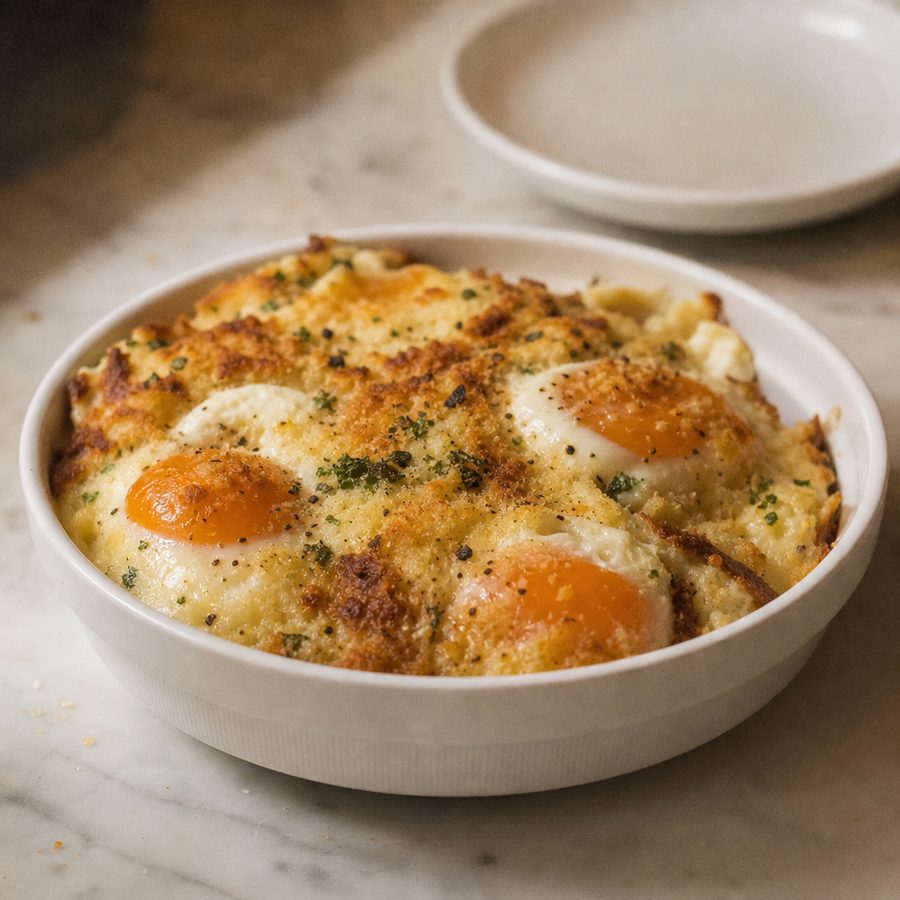
Whole eggs baked in buttered ramekins under a melted blanket of grated parmesan, seasoned simply with salt until the whites set and the yolks turn tender and rich.
Why You'll Love This Recipe
This is a warm, hands-off breakfast for anyone who wants something rich and filling without standing over a skillet turning eggs. You crack them into buttered ramekins, cover them in parmesan, and the oven takes it from there. Baked eggs are also more forgiving than fried ones, since the heat is gentle and even and there is no moment where the bottom sets while the top is still raw.
The technique works because the ramekin traps gentle, even heat around the eggs while the parmesan forms a savory, lightly browned crust on top. Buttering the ramekin well does two jobs: it keeps the whites from sticking so the egg lifts out in one piece, and it enriches the edges as they set. Because the yolk sits protected under the cheese, it stays soft and creamy while the whites cook through, giving you two textures in one dish.
Tender egg, molten yolk, and the salty, umami depth of aged parmesan, which is a short list doing a lot of work. Eggs bring complete protein that keeps you full and steady through the morning, while the butter and cheese add richness that makes a small portion feel generous. It is simple food, but the contrast of soft egg against crisp golden cheese is what keeps people coming back to it.
Ingredients
- 12 large eggs
- 1 1/4 cups grated parmesan
- 3 tbsp butter
- 1/4 tsp salt
Instructions
- Butter the ramekins right up the sides: Heat the oven to 375°F (190°C) and rub the inside of each ramekin generously with softened butter, coating the bottom and all the way up the sides. Egg bonds to bare ceramic as it sets, and the butter on the sides is also what browns the edges of the whites into something worth eating.
- Crack the eggs in one at a time: Crack each egg into a small cup first and then tip it into a buttered ramekin when you can see the yolk is whole and no shell went with it, and season the tops lightly with salt. Using a cup means a broken yolk or a piece of shell can be dealt with before it lands in the dish rather than after.
- Cover the whites, leave the yolks showing: Sprinkle the grated parmesan evenly over the eggs until the whites are covered but the yolks still peek through, then dot the surface with small pieces of the remaining butter. Leaving the yolks bare lets you see how they are setting, and cheese laid over a yolk insulates it so it stays raw while the whites overcook.
- Bake 12 to 15 minutes on a sheet: Set the ramekins on a baking sheet for easy handling and bake for 12 to 15 minutes, until the whites are fully opaque and just firm, the parmesan is melted and lightly golden, and the yolks are still soft. Bake toward the longer end if you want the yolks firmer, and take them out a minute early if you do not.
- Rest a minute or two before serving: Let the ramekins stand until the sizzling under the cheese stops, a minute or two, since ceramic holds a great deal of heat and the whites go on setting after they leave the oven. Serve hot, straight from the ramekin, on a small plate or a folded napkin, because the dish itself will be too hot to hold.
Variations
- Extra-crisp cheese top: Run the baked ramekins under the broiler for a minute at the end to deepen the parmesan into a darker, crunchier golden crust. Watch closely, since it browns fast.
- Swap the cheese: Trade the parmesan for another firm, aged hard cheese such as pecorino or aged asiago for a sharper, saltier bite. This keeps it a dairy-topped bake with a different flavor edge.
- Bacon-lined ramekin: Cook strips of bacon until just shy of crisp, line the buttered ramekin with them before adding the eggs, then bake as usual. This adds pork and a smoky, salty base under the eggs.
- Smoked salmon base: Lay a few pieces of smoked salmon in the bottom of the ramekin before cracking in the eggs. This adds fish and a silky, savory layer beneath the parmesan.
- Firmer set for meal prep: Bake toward the full fifteen minutes, or a minute or two longer, so the yolks set through. Fully cooked yolks travel and reheat better if you are making these ahead.
Storage & Leftovers
Baked eggs are best eaten fresh, but leftovers keep in the refrigerator for up to three days. Cover the cooled ramekin tightly or transfer the egg to an airtight container. Know that the yolks will continue to firm up as they sit, so a soft yolk will read as fully set once chilled and reheated.
To reheat, warm the ramekin in a 325°F (163°C) oven for about eight to ten minutes until heated through, which keeps the parmesan crust intact. A microwave works in a pinch at short bursts of ten to fifteen seconds, but the eggs can turn rubbery and the yolk may pop, so go low and slow.
For make-ahead, you can butter the ramekins the night before and keep them ready in the refrigerator. In the morning, crack in the eggs, add the parmesan and butter, and bake straight away for a hot breakfast with no prep.
Notes & Tips
- Butter the ramekins well: Do not skimp here. A thin or patchy coat of butter is the main reason baked eggs stick and tear. Coat the bottom and fully up the sides, right to the rim.
- Grate your own parmesan: A block you grate yourself melts into a smoother, better crust than the pre-shredded kind, which is often coated to prevent clumping and can bake up dry or grainy.
- Salt lightly: Parmesan is already salty, so go easy with the salt on the eggs. You can always add a pinch more at the table, but you cannot take it back once it bakes in.
- Watch the yolks, not the clock: Ovens vary, so start checking at twelve minutes. Give the ramekin a gentle nudge: firm, opaque whites and a yolk that still jiggles slightly under the cheese means soft; no jiggle means set.
- Use a baking sheet: Set the ramekins on a sheet pan before they go in the oven. It makes them far easier to move in and out and catches any butter that bubbles over the edge.
- Bring eggs closer to room temperature: If you have a few minutes, let the eggs sit out of the refrigerator before baking. Cold-from-the-fridge eggs bake a little slower and less evenly, so the whites and yolks finish more in step when they start warmer.
Nutrition & Mindful Eating
- Butter, eggs and parmesan in a hot ramekin do something none of them does alone. The butter keeps the whites tender at the edges, the eggs set from the outside in, and the cheese browns into a savory lid you break through with a spoon.
- The yolk is the whole reward of this dish, and pulling the ramekin while it is still loose is the skill. That deep gold is where the choline, the lutein and the vitamin D live, so the part that tastes best is also the part carrying the most.
- Parmesan browns rather than melting into a puddle, which is why it forms an actual cap here. Aged this long it tastes sharp and almost savory-sweet, and it adds concentrated protein and calcium to a very small dish.
- Butter swirled around the ramekin before the eggs go in is a practical thing and a flavor thing at once. Nothing sticks, the edges take on a faint toasted note, and the fat carries vitamin A along with the richness.
- Salt goes on the whites rather than the yolk so the surface stays clear, and it is what keeps a plain dish tasting alive. Eggs and cheese together hold you well into the morning, with the protein doing most of that work.
- As you eat, break the cheese cap with the edge of your spoon and watch the yolk move out into the white, and take the ramekin sitting down while it is still too hot to rush.
Frequently Asked Questions
How do I keep the eggs from sticking to the ramekin?
Butter the ramekin generously, coating the bottom and all the way up the sides before the eggs go in. A well-buttered dish lets the baked egg lift out cleanly, while a thin or missed spot is where it will grab and tear.
Can I make these in a muffin tin instead of ramekins?
Yes. Butter the cups well and treat them the same way. The eggs may bake a touch faster in a metal tin, so start checking a minute or two early, and let them rest briefly before easing them out with a spoon.
Why did my yolks come out hard?
They baked a little too long for a runny center. The yolks continue to firm up from residual heat after they leave the oven, so pull the ramekins when the yolks still jiggle slightly under the cheese if you want them soft.
Can I use a different cheese than parmesan?
A firm, aged hard cheese like pecorino or aged asiago works well and melts into a similar savory crust. Softer, wetter cheeses release more moisture and will not brown into the same crisp top.