
Parmesan-Bound Crab Cakes
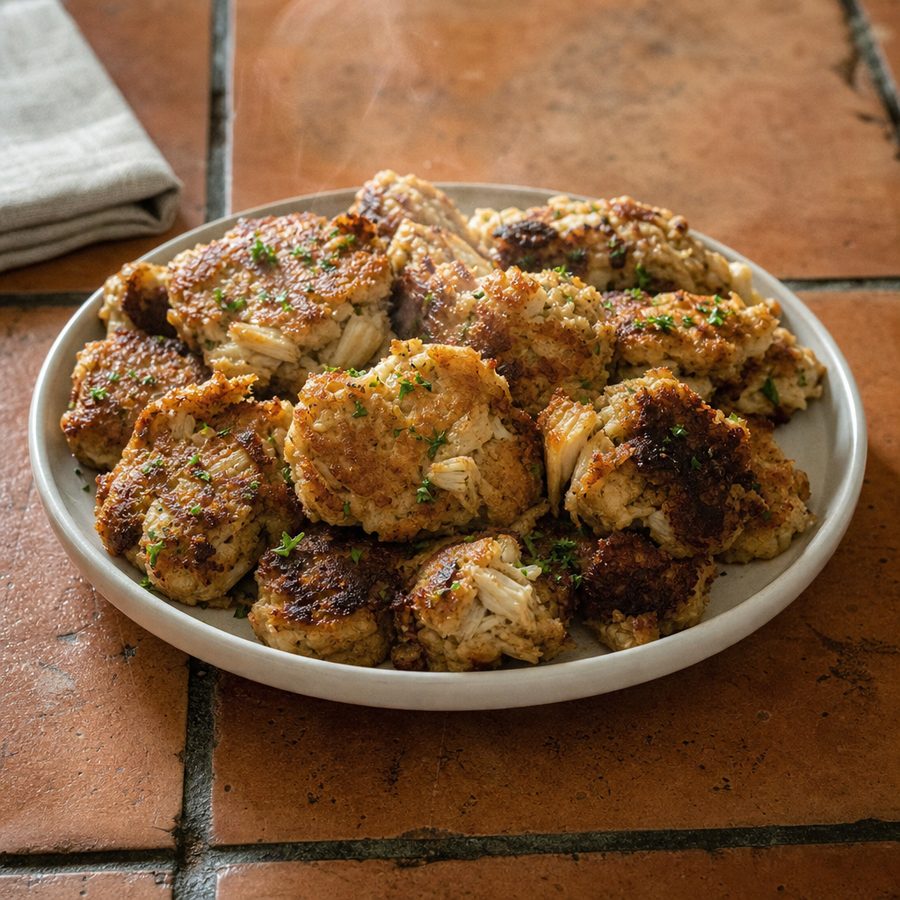
Sweet lump crab meat bound with egg and finely grated parmesan, shaped into patties and pan-fried in butter until the outsides turn deep golden and crisp.
Why You'll Love This Recipe
Crab cakes with no breadcrumb in them are best eaten within the hour, which settles when to make them: shape, chill briefly so they hold, fry, and sit down. That is not a drawback, it is the price of a cake that is almost entirely crab. Nothing is stretching the mix and there is no chopped vegetable to hide behind, just sweet lump meat held with beaten egg and a little parmesan and browned in butter. It makes a fast, generous lunch for anyone who wants the crab to be the whole point.
Egg and finely grated parmesan stand in for bread as the binder. As the cakes fry, the egg sets and the parmesan melts and then crisps against the hot butter, forming a savory golden crust that holds the loose crab together. Chilling the shaped patties before they hit the pan firms the egg-bound mixture so the cakes keep their shape, and frying in butter rather than a neutral oil adds a nutty richness that pairs naturally with shellfish. Folding gently, not stirring, is what preserves those big satisfying lumps.
A lot of protein, rich fat, and almost nothing else along for the ride. Crab is sweet and full of flavor, the eggs and parmesan carry protein of their own, and the butter makes the whole thing taste indulgent while keeping you full for hours. It is a light-feeling plate that still eats like a treat, with a crisp exterior giving way to tender, sweet crab inside.
Ingredients
- 1 1/2 lb lump crab meat, picked over
- 3 large eggs
- 3/4 cup finely grated parmesan
- 6 tbsp butter, for frying
Instructions
- Pick over the crab: Turn the lump crab meat out into a bowl and go through it carefully with your fingers, feeling for and removing any stray bits of shell or cartilage. Work gently so the large lumps stay whole rather than shredding into strings.
- Make the binding: Finely grate the parmesan if it is not already grated. Crack the eggs into a separate bowl and beat them until the yolks and whites are fully blended and smooth. Stir the grated parmesan into the beaten egg.
- Fold in the crab: Add the crab to the egg-and-parmesan mixture and fold it in slowly with a rubber spatula, lifting from the bottom rather than stirring, until everything is just moistened. The goal is to coat the crab while keeping the lumps intact for texture.
- Form and chill: Divide the mixture and shape it into firm, even patties, pressing each one just enough to compact it so it holds its shape. Set the patties on a plate and chill them in the refrigerator until firmed up, about 10 minutes. This step is what keeps them from falling apart in the pan.
- Fry until golden: Melt the butter in a skillet over medium heat until it foams. Lay the chilled patties in the pan without crowding and fry until the underside is deep golden and crisp, about 3 minutes. Flip once with a thin spatula and fry the second side another 3 minutes, until both sides are browned and the cakes are hot all the way through.
- Drain and rest: Transfer the cakes to a warm plate and let them rest for a minute or two so the butter settles and the crust sets. Serve while still warm.
Variations
- Sharper cheese crust: Swap the parmesan for finely grated pecorino for a saltier, tangier crust. It is still a hard aged cheese, so the binding works the same; taste before you season at all, since pecorino is sharper.
- Cooked in a different fat: Fry in ghee or beef tallow instead of butter for a cleaner, higher-heat browning and a different savory note. Ghee in particular lets you push the heat a little without the milk solids darkening.
- Richer and more tender: Fold an extra egg yolk into the mixture for a softer, more custardy interior and a slightly deeper color on the crust. This makes the cakes a touch more delicate, so chill them a few extra minutes before frying.
- Surf and shellfish: Replace some of the crab with cooked, chopped shrimp for a firmer bite and a slightly sweeter flavor. This adds shrimp; pat it very dry first so the mixture is not too wet to hold together.
- Smoky and savory: Crisp some chopped bacon and fold it into the mixture, then fry the cakes in a little of the rendered bacon fat. This adds pork and gives the cakes a smoky backbone against the sweet crab.
Storage & Leftovers
Cooked crab cakes keep in an airtight container in the refrigerator for up to three days. Let them cool to room temperature before sealing so trapped steam does not soften the crust, and lay them in a single layer with a piece of parchment between layers if you need to stack them.
To reheat and bring back the crispness, warm them in a dry or lightly buttered skillet over medium-low heat, a couple of minutes per side, until hot through and re-crisped. Avoid the microwave, which steams the crust and leaves the egg-bound crab rubbery.
To get ahead, shape the raw patties, place them on a plate, and refrigerate them uncooked for up to a day before frying, or freeze the raw shaped cakes on a tray until solid and transfer to a bag. Fry from chilled or frozen, adding a minute or two to each side; forming ahead actually helps them hold together, since a longer chill firms the binder.
Notes & Tips
- Buy the right crab: Look for refrigerated lump or jumbo lump crab meat rather than the shelf-stable canned kind, which tends to be shreddy and watery. Drain off any liquid in the container and give it a gentle press with a paper towel so the mixture is not too wet to bind.
- Do not skip the chill: The refrigerator rest is what firms the egg so the cakes survive the flip. If your kitchen is warm or the mixture feels loose, give them a few extra minutes in the cold rather than rushing them into the pan.
- Judge the crust by color: These are done when both sides are a deep, even golden brown and the cakes feel set when nudged, not when a timer says so. If they are still pale, let them go another minute; the browning is where much of the flavor lives.
- Flip once, gently: Use a thin, wide spatula and turn each cake a single time. Slide the spatula fully under before lifting so the loose crab-and-egg bottom does not tear, and resist poking or pressing them while they cook.
- Season with the cheese in mind: Parmesan is already salty, so taste your cheese before you decide the cakes need anything more. If your parmesan is very sharp and aged, hold back a little; if it is mild, the full amount is right.
- Serve them warm: The butter-crisped crust is best within a few minutes of frying, while the outside is still crackly and the crab inside is warm and tender. If you are cooking a batch, hold the finished cakes on a plate in a low oven so they stay hot without steaming.
Nutrition & Mindful Eating
- Crab, egg and parmesan are the three working parts of these cakes. The egg sets as it cooks and locks everything in place, the grated parmesan takes up the moisture the crab gives off, and the butter in the pan builds the crust on both faces.
- Lump crab is delicate and faintly sweet, and the whole technique here is about handling it gently enough that the pieces stay in pieces. It brings complete protein along with zinc, selenium and B12 in a meat that tastes rich while staying tender on the fork.
- The egg is the binder and it is also flavor. It sets around the crab, keeps the cakes from breaking as they cook, and adds choline and its own soft richness through the middle of each one.
- Parmesan works from the inside, seasoning the mixture and drying it just enough to hold, and where it touches the hot butter it fries into the crispest part of the crust. Calcium, phosphorus and extra protein come with it.
- Butter is what makes the outside. It browns and turns nutty as the cakes sit in it, and that toasted smell against the sweetness of the crab is the reason these are worth standing at the stove for.
- As you eat, cut in and notice how the crisp buttery outside gives way to shreds of sweet crab, and let each cake take its time rather than eating both before you have tasted the first.
Frequently Asked Questions
My crab cakes fell apart in the pan. What went wrong?
Usually one of three things: the crab was too wet, the patties were not chilled long enough, or they were flipped too early or too often. Drain and lightly pat the crab dry before mixing, let the shaped cakes firm up in the refrigerator, and turn them only once, after the first side is fully golden and set.
Can I bake or broil these instead of frying?
You can, though you lose some of the butter-crisped crust that pan-frying gives. Set them on a buttered pan and broil or bake in a hot oven until golden and set through, turning once. Frying in butter remains the version with the best color and texture.
What kind of crab should I use?
Lump or jumbo lump crab meat gives the best result, big sweet pieces and a tender bite. Backfin or claw meat works too and is more economical, but it is shreddier, so the cakes will be a little softer. Whichever you use, always pick through it for stray shell before mixing.
Why parmesan instead of breadcrumbs?
The finely grated parmesan does the same binding job as breadcrumbs but without any grain. As it fries, it melts into the egg and then crisps against the butter, which both holds the cakes together and builds a savory golden crust, while also adding its own salty, nutty flavor.