
Parmesan-Bound Salmon Cakes
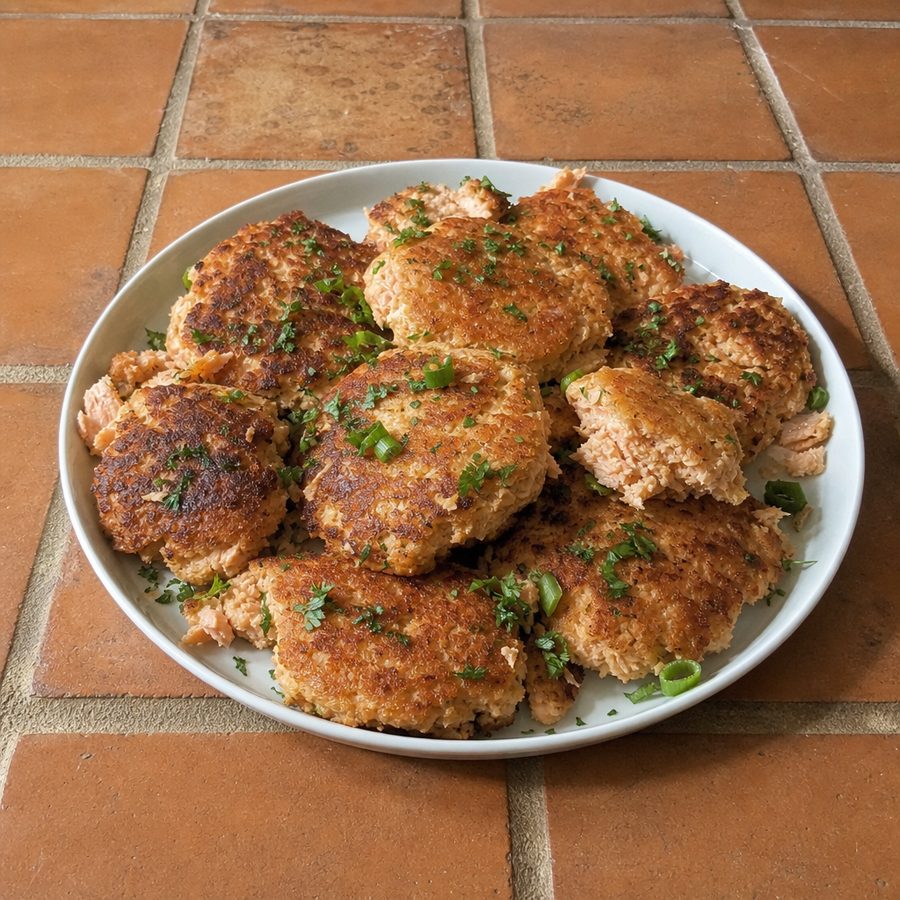
Tender flaked salmon bound with beaten egg and finely grated parmesan, shaped into cakes and pan-fried in butter until the outsides turn deeply golden and crisp.
Why You'll Love This Recipe
These are the cakes to make when you want the day after to be easier. Warm out of the pan they are rich, with a crust that crackles; after a night in the refrigerator they are firmer and saltier and eat like something you meant to have waiting rather than a leftover. Beaten egg and finely grated parmesan do all of the binding, so there are no breadcrumbs and nothing diluting them, and the short ingredient list is most of the appeal. Anyone who wants a substantial plate built almost entirely from protein and fat can eat them either way.
The binding is the whole question. Beaten egg and finely grated parmesan take the place of the usual breadcrumbs, and as the cakes fry, the egg sets and the cheese melts and lightly toasts where it touches the hot butter. That gives you a crust with real structure and a savory, almost nutty edge, while the inside stays moist from the salmon's own fat. Poaching the fish first keeps it gentle and flaky so it folds into the egg without turning dry or stringy.
The result is a plate that feels nourishing. Salmon brings a generous dose of long-chain omega-3 fats and complete protein, the eggs add more high-quality protein and richness, and the parmesan layers in calcium and a deep umami savoriness. Because it leans on protein and fat rather than starch, it tends to keep you full and steady for hours, which makes it an easy, no-fuss thing to reach for at midday.
Ingredients
- 1 1/4 lb cooked salmon, flaked
- 3 large eggs
- 2/3 cup finely grated parmesan
- 3 tbsp butter, for frying
- 3/4 tsp salt
Instructions
- Flake the salmon coarsely: Flake the cooked salmon into coarse pieces with a fork, peeling away any skin and running your fingers through the flesh to pull out pin bones. Coarse is the whole point here, since egg and parmesan are the only things holding these cakes together and a fine shred gives them nothing to grip. If you are starting from a raw fillet, poach it in barely simmering water for about 10 minutes, until it flakes easily and reads 145°F (63°C), then cool it enough to handle.
- Beat the eggs: Crack the eggs into a large bowl and beat them with a fork until the yolks and whites are fully blended and smooth.
- Mix: Add the flaked salmon, finely grated parmesan, and salt to the beaten eggs. Fold gently with a spatula until everything is evenly combined and the mixture holds together when pressed.
- Form and chill: Divide the mixture and shape it into patties about an inch thick, packing each one firmly so it holds its shape. Set them on a plate and chill in the refrigerator for 10 minutes to firm up, which helps them stay together in the pan.
- Fry: Melt the butter in a skillet over medium heat until it foams. Lay the cakes in without crowding and fry undisturbed until the underside is deep golden and set, about 3 minutes. Flip once and fry the second side another 3 minutes, until golden and heated through.
- Serve: Transfer the cakes to a warm plate and let them rest for a minute so the interior sets before serving.
Variations
- A different fish: Swap the salmon for another cooked, flaked fatty fish such as trout, which gives a milder, more delicate cake while keeping the same texture.
- Sharper cheese: Use a harder, sharper aged cheese in place of the parmesan for a bolder, saltier crust. This still keeps it a dairy-based binder.
- Add bacon: Fold in crumbled cooked bacon for a smoky, meatier bite. This adds pork to the cakes.
- Fry in a different fat: Cook the cakes in ghee or rendered beef tallow instead of butter for a cleaner, higher-heat sear and a slightly different flavor.
- Canned salmon shortcut: Skip the poaching and use well-drained canned salmon, mashing any soft bones back into the mix for extra calcium.
Storage & Leftovers
Store the cooked cakes in an airtight container in the refrigerator, where they keep well for up to three days. Let them cool to room temperature before sealing so condensation does not build up and soften the crust.
To reheat, warm them in a dry or lightly buttered skillet over medium heat for a couple of minutes per side. This crisps the outside back up far better than a microwave, which tends to make them rubbery and steamy. Heat just until warmed through so the salmon does not dry out.
To get ahead, mix the salmon, egg, parmesan, and salt and shape the cakes up to a day in advance, then keep them covered and chilled until you are ready to fry. The cakes also freeze well once cooked and fully cooled; freeze them in a single layer, then transfer to a bag and reheat straight from frozen in a skillet.
Notes & Tips
- Dry the salmon: Press the flaked salmon between paper towels before mixing. Excess moisture is the main reason cakes crack and fall apart in the pan.
- Salt with a light hand: Parmesan is already salty and cheeses vary a lot, so add the salt gradually and taste a cooked scrap of the mixture before committing to the full amount.
- Do not crowd the skillet: Fry in batches with space between the cakes so the butter stays hot and the surfaces brown rather than steam.
- Fresh or canned both work: When time is short, drained canned salmon makes a perfectly good cake; if you use it, either pick out the soft bones or mash them in, since they carry calcium and disappear into the mix.
- Serve it with something rich: A dollop of sour cream or a soft-fried egg on top rounds these out nicely. Both additions keep it in dairy and egg territory.
- Double and freeze: The recipe scales cleanly, so cook a larger batch and freeze the extras in a single layer for fast future meals that reheat crisp in a skillet.
Nutrition & Mindful Eating
- Salmon, egg and cheese come together into something that holds its shape and still eats soft. The fish stays in flakes, the egg sets around them, and the parmesan takes up the moisture so the cakes firm up rather than fall apart in the pan.
- Salmon is oily enough to stay moist through a hot pan, which is why they stay moist right through, and that same fat is where the long-chain omega-3s and the vitamin D sit. The deep color of the flesh is a good sign of both.
- Egg is what turns a bowl of flaked fish into a cake you can pick up. It sets on contact with the heat, adds a gentle richness through the middle, and brings choline and vitamins A and D along with its protein.
- Parmesan sharpens everything around it. Salmon is rich and a little sweet, and the aged, salty edge of the cheese is what keeps that richness from becoming one note, with calcium and phosphorus riding along inside it.
- Butter foams, then browns, then smells nutty, and the cakes should go in right at that point so the crust forms fast. Salt on the outside pulls the flavor of the fish forward and gives the first bite its edge.
- As you eat, notice the crisp brown surface against the soft flakes underneath and the smell of toasted cheese coming off the plate, and give the meal enough attention to feel it arrive.
Frequently Asked Questions
My cakes keep falling apart in the pan. What am I doing wrong?
Usually it is too much moisture or not enough chilling. Press the flaked salmon dry before mixing, make sure the egg and parmesan are fully folded through, pack the cakes firmly, and give them the full 10 minutes in the refrigerator. Let the first side set undisturbed before you attempt to flip.
Can I use canned salmon instead of cooking fresh?
Yes. Drain it very well and either remove the soft bones or mash them into the mixture. Because canned salmon is already cooked, you skip the poaching step and go straight to mixing.
Can I bake or air-fry these instead of pan-frying?
You can. Arrange the chilled cakes on a lined tray and bake in a hot oven, or air-fry them, turning once, until golden and set through. You lose some of the buttery crust you get from the skillet, but the cakes still hold and cook through.
How do I know when they are done?
Since the salmon is already cooked from poaching, you are mainly setting the egg binder and browning the outside. They are ready when both sides are deep golden, the cake feels firm rather than loose when pressed, and it is hot all the way through.