
Parmesan Butter Beef Steak
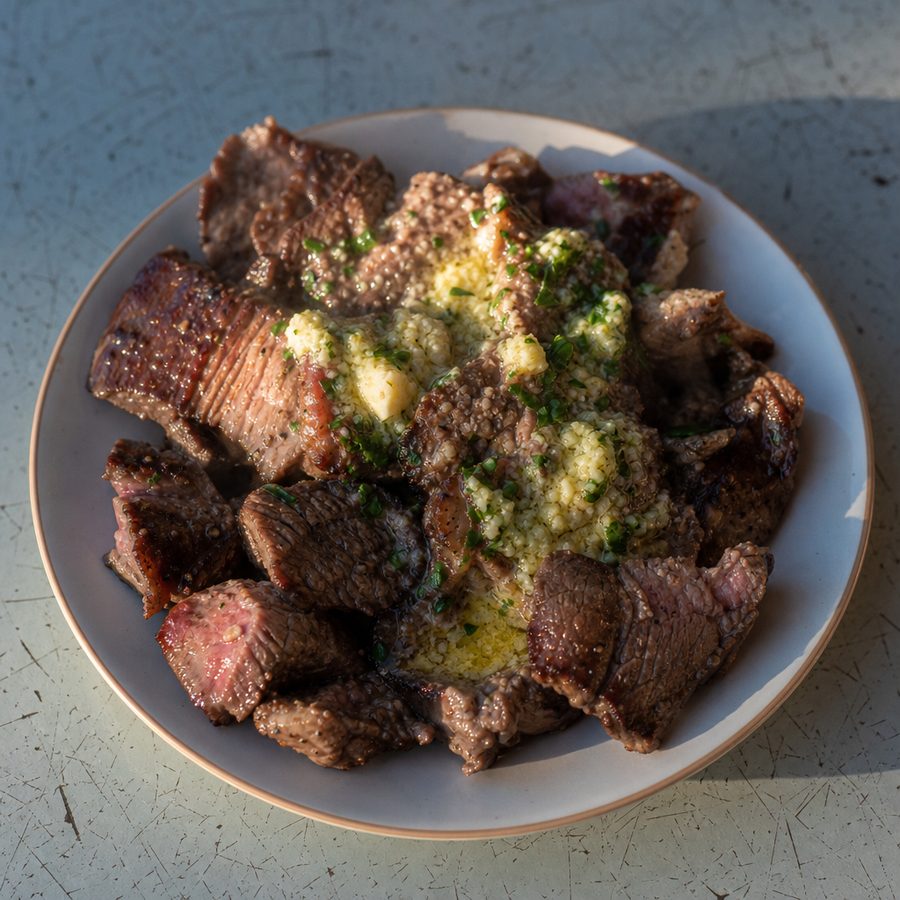
beef sirloin, seared until deeply browned and sliced, then finished with a rich pat of butter mashed together with grated parmesan and salt.
Why You'll Love This Recipe
Mash the parmesan butter whenever you have a spare minute and keep it covered and cold, and the steak becomes a ten-minute job on whatever night you want it. That is the whole shape of this one: four ingredients, a screaming-hot skillet, and a cold pat of butter going over the warm slices. It is for anyone who wants a satisfying, protein-forward plate without a long ingredient list or fussy technique, and for cooks who like the reliability of a good pan-sear. With this little in it, there is nothing to hide behind, so it rewards buying the best steak and a real wedge of parmesan you grate yourself.
A dry, hot sear, and then butter at the end. Searing does not seal anything in; what it does is drive off surface moisture and brown the meat, building the roasted, savory crust that gives the dish its depth. The parmesan butter then does double duty off the heat, melting into a glossy sauce that carries salt, richness, and the nutty, umami tang of aged cheese across every slice. Slicing against the grain shortens the muscle fibers so each bite is tender rather than chewy.
Almost entirely protein and fat, a combination that is filling and slow to leave you hungry again. The steak supplies a large dose of complete protein, the butter adds richness and helps the whole plate feel indulgent, and the parmesan layers in a concentrated savory note plus calcium. Together they make a plate that tastes like more effort than it takes and keeps you comfortably full.
Ingredients
- 1 3/4 lb beef sirloin
- 3 tbsp butter
- 1/3 cup grated parmesan
- 3/4 tsp salt
Instructions
- Make the parmesan butter: Let the butter sit at room temperature until soft enough to press with a fork. Mash it together with the grated parmesan and a pinch of the salt until it forms an even, spreadable paste with no dry streaks of cheese. Set it aside at room temperature so it stays soft, or shape it into a small log on a piece of parchment and chill it if you want firm slices later.
- Season the steak: Pat the beef steak dry on both sides with paper towels; a dry surface browns far better than a wet one. Season both sides generously with the remaining salt and let the steak rest at room temperature for about 30 to 40 minutes so it cooks more evenly.
- Heat the pan: Set a heavy skillet, preferably cast iron, over medium-high heat and let it get properly hot, about 3 to 4 minutes, until a drop of water flicked onto the surface sizzles and evaporates almost instantly. There is enough fat in the parmesan butter step, so the steak's own rendered fat and the dry hot pan are all you need to start the sear.
- Sear the steak: Lay the steak into the hot pan away from you and let it sear undisturbed for 3 to 4 minutes, until a deep brown crust forms on the underside. Flip and sear the second side another 3 to 4 minutes. For medium-rare, pull the steak when a thermometer inserted into the thickest part reads about 130 to 135°F (54 to 57°C); the color at the center should be rosy pink.
- Rest and finish: Transfer the steak to a board and let it rest for about 5 minutes so the juices settle and stay in the meat when you cut. Slice against the grain into strips, then top the warm slices with the parmesan butter so it softens and melts over the meat before serving.
Variations
- Richer cut: Swap the steak for a well-marbled ribeye. The extra intramuscular fat renders as it sears and makes the meat more tender and juicy, though it also makes the plate richer.
- Aged sheep's-milk cheese: Use finely grated pecorino in place of the parmesan for a sharper, saltier, more pungent butter. This keeps it as a hard cheese but adds sheep's-milk dairy; taste before adding extra salt, since pecorino is saltier.
- Tallow finish: Instead of butter, mash the grated cheese into softened beef tallow or ghee. Tallow gives a cleaner, beefier finish and ghee a nuttier one; both change the type of dairy or fat used.
- Egg-yolk enrichment: Top each portion of hot sliced steak with a warm, just-fried egg so the runny yolk mingles with the melting cheese butter. This adds egg and makes the dish even richer.
- Bone marrow spread: Roast split beef marrow bones until the marrow is soft and glossy, then spoon the marrow over the sliced steak alongside the parmesan butter for a deeply savory, luxurious finish. This adds beef marrow fat.
Storage & Leftovers
Store leftover sliced steak in an airtight container in the refrigerator for up to three to four days. If you have extra parmesan butter, wrap it tightly or keep it in its own small container; it will keep in the fridge for a week or two and can be frozen for longer.
Reheat the steak gently so it does not overcook and dry out. Warm the slices in a covered skillet over low heat for just a minute or two, or briefly in a low oven until barely heated through, then add a fresh knob of the parmesan butter at the end to bring back its richness. Beef reheated hard and fast turns gray and tough, so keep the heat modest and stop as soon as it is warm.
To get ahead, make the parmesan butter days in advance and keep it chilled; it actually firms into neat slices you can lay straight onto hot meat. You can also salt the steak and hold it in the fridge earlier in the day, then bring it to room temperature before searing.
Notes & Tips
- Pick an even steak: Choose a steak of fairly uniform thickness, around an inch, so the whole piece hits the same doneness at the same time. A steak that is thick at one end and thin at the other will overcook on the thin side before the thick side is ready.
- Grate your own parmesan: Grate the parmesan fresh from a block rather than using pre-grated tubs, which are often coated with anti-caking additives that keep the cheese from melting smoothly into the butter. Freshly grated also tastes noticeably nuttier.
- Let the butter soften first: The parmesan butter only comes together easily when the butter is truly soft, not cold and not melted. Leave it out until a fork sinks in with light pressure; melted butter will separate from the cheese instead of holding together.
- Use a thermometer: An instant-read thermometer takes the guesswork out of doneness. Aim for the low range for a rosy medium-rare and a few degrees higher for medium, and remember the temperature climbs a little as the meat rests.
- Don't crowd the pan: Sear the steaks with space between them; a packed pan traps steam and gives you a pale, gray surface instead of a brown crust. Work in batches if your skillet is small.
- Salt to taste at the end: The parmesan and the seasoning salt both bring saltiness, so taste a slice before adding any more. If it needs a lift, a few flakes of finishing salt over the cut steak sharpens every bite.
Nutrition & Mindful Eating
- Beef, butter and parmesan work as three degrees of savory. The crust on the steak gives you the roasted note, the butter carries that flavor across every surface it touches, and the cheese lands sharp and salty over the top of both.
- A firm, close-grained steak takes a hard sear better than almost anything, browning deeply outside while the middle stays pink. Beef this dense carries iron in the form your body absorbs most readily, along with zinc and B12.
- Butter goes in at the end and not the start, because its milk solids scorch at searing heat. Once the pan comes down it foams and turns nutty, and spooning it over the steak coats every slice with that flavor and the vitamin A it carries.
- Parmesan grated over hot beef half melts and half stays granular, which gives you two textures in the same forkful. Aged this long it is intensely savory, and it brings calcium and concentrated protein to a plate that is already rich.
- Salting well ahead of the sear rather than at the table dries the surface so it can brown, and it draws the beefy flavor up from inside the meat. A steak like this holds you for hours, with the protein and fat sharing that work.
- As you eat, slice across the grain and notice how much of the butter and cheese has pooled in the juices, and eat slowly enough that a rich plate has a chance to tell you it is enough.
Frequently Asked Questions
What cut of steak works best here?
Any tender, quick-cooking steak suits this method. Sirloin and other firm cuts take well to a hard sear, while a more marbled cut will be richer and more forgiving. Whatever you choose, look for even thickness so it cooks uniformly.
Should the parmesan butter fully melt into a sauce?
It should soften and turn glossy over the warm sliced steak rather than boil into a smooth sauce. The gentle heat of the just-rested meat is enough to melt the butter and loosen the cheese so it coats every slice. If you want it looser, slice the steak while it is very hot.
Can I make the parmesan butter ahead of time?
Yes, and it is a good thing to prep in advance. Mash it together, roll it into a log in parchment, and chill it; it keeps for a week or two in the fridge and freezes well. Slice off rounds and lay them on the hot meat straight from cold.
My steak came out gray instead of browned. What happened?
Usually the surface was too wet or the pan was not hot enough. Pat the steak thoroughly dry before it goes in, get the skillet good and hot until water sizzles on contact, and give the meat space so it sears instead of steaming.