
Parmesan-Crusted Chicken Bake
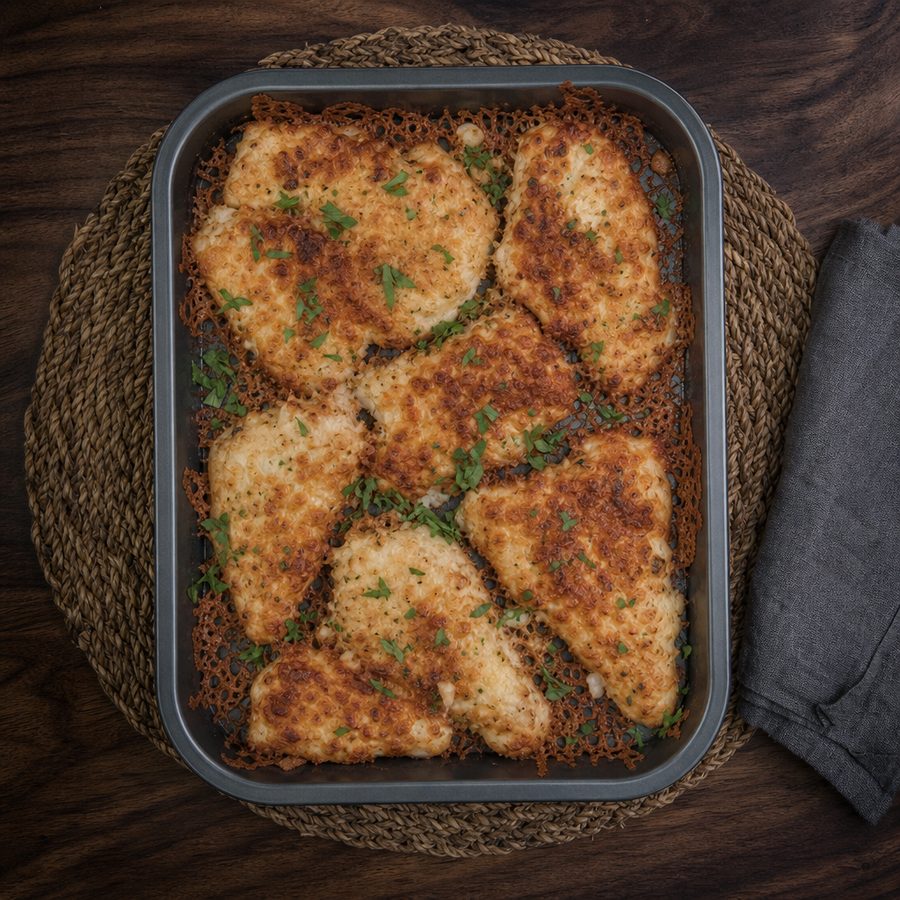
Boneless chicken breasts dipped in beaten egg, pressed into grated parmesan, and baked in butter until the cheese sets into a deep golden, crackling-crisp crust over juicy meat.
Why You'll Love This Recipe
This is a weeknight main for anyone who wants the crunch of a breaded cutlet without any breadcrumbs or flour. The crust is nothing but hard cheese and egg, so it delivers real texture while keeping the dish built entirely from chicken, eggs, parmesan, butter, and salt. It suits cooks who are keeping things simple and protein-forward, and it is forgiving enough that a beginner can pull it off on the first try.
Press the parmesan on hard and never turn the chicken. Grated parmesan is a dry, hard cheese, so as it heats it melts just enough to knit together and then browns into a crisp, lacy shell rather than sliding off. The beaten egg is the glue that anchors that shell to the meat, and patting the chicken dry first is what lets the egg grip instead of beading up. Baking on a buttered tray gives the underside the same golden, crisp finish as the top.
A shatter-crisp, deeply savory cheese crust over chicken breast that stays juicy when you pull it at the right temperature. Chicken breast is mild and rich in complete protein, the eggs and parmesan add more protein along with fat that carries flavor and keeps you full, and the whole plate comes together with almost nothing on the ingredient list. It eats rich and complete on its own, which is exactly why it works as a standalone dinner.
Ingredients
- 4 boneless chicken breasts
- 1 cup grated parmesan
- 2 eggs, beaten
- 2 tbsp butter, melted
- 1/2 tsp salt
Instructions
- Preheat the oven: Preheat the oven to 400°F (200°C). Melt the butter, then brush a rimmed baking tray generously with it so the chicken will not stick and the underside can crisp.
- Prep the chicken: Pat each chicken breast completely dry with paper towels. If any breasts are much thicker at one end, cover with a sheet of plastic wrap and pound the thick end with the flat side of a meat mallet or a heavy pan until the breast is an even thickness so it cooks through evenly.
- Set up the two bowls: Crack the eggs into a wide shallow bowl and beat them smooth with a fork. In a second wide bowl, stir the grated parmesan together with the salt so the seasoning is spread evenly through the cheese.
- Coat each breast: Working one at a time, lay a breast in the beaten egg and turn it so every surface is wet, letting the excess drip off. Lay it in the parmesan and press the cheese firmly onto the top, bottom, and sides with your hands until the breast is fully coated in a thick, even layer. Set it on the buttered tray and repeat with the rest, leaving space between them.
- Bake: Bake in the center of the oven for 25 to 30 minutes, until the crust is deep golden brown and crisp and the thickest part of a breast reaches 165°F (74°C) on an instant-read thermometer. Do not flip them; the crust stays intact best undisturbed.
- Rest and serve: Let the chicken rest on the tray for about 5 minutes before serving so the juices settle and the crust firms up. Lift each breast off with a thin spatula to keep the crust attached.
Variations
- Thin, fast cutlets: Slice each breast horizontally into thinner cutlets or pound them thin, then coat as usual. They cook in far less time and give you an even higher ratio of crisp crust to meat.
- Sharper cheese crust: Swap the parmesan for finely grated pecorino romano or aged asiago. Both are hard grating cheeses that crisp the same way; pecorino is sharper and saltier, so ease up on the added salt.
- Juicier with thighs: Use boneless, skinless chicken thighs in place of the breasts. They stay more forgiving and richer, and the darker meat adds more fat to the plate.
- Broiler finish: Bake as directed, then run the tray under the broiler for the last minute or two, watching closely, to blister the crust an extra shade darker and crunchier.
- Skillet-crisped: Instead of baking, cook the coated breasts in a skillet over medium heat in extra melted butter, turning once, until the crust is golden on both sides and the center reaches temperature. This adds more butter and gives a browner, fried-style crust.
Storage & Leftovers
Keep leftover chicken in an airtight container in the refrigerator for up to 4 days. Let it cool to room temperature before sealing so trapped steam does not soften the crust.
Reheat in a 375°F (190°C) oven or a toaster oven for about 10 minutes, straight from the fridge, until heated through and the crust crisps again. Skip the microwave if you can, since it turns the cheese crust soft and rubbery rather than crisp.
To get ahead, bread the raw breasts in egg and parmesan, arrange them on a tray, and refrigerate uncovered for a few hours or overnight; the drying time actually helps the crust set. Bake straight from the fridge, adding a couple of extra minutes.
Notes & Tips
- Grate your own cheese: Grate parmesan from a block if you can. Pre-shredded cheese is coated with anti-caking agents that keep it from melting and browning into a solid crust, so freshly grated gives you the crispest shell.
- Dry chicken grips better: The single biggest fix for a crust that falls off is drying the chicken thoroughly before the egg dip. Surface moisture makes the egg bead up instead of coating the meat.
- Use a wire rack for all-over crunch: If you want the underside as crisp as the top, set a wire rack on the baking tray and bake the breasts on it so air circulates underneath. Brush the rack with butter first.
- Trust the thermometer: Cheese browns before the chicken is necessarily done, so judge doneness by temperature at the thickest part, not color alone. Pull it right at 165°F (74°C) to keep the breast juicy.
- Season with the cheese in mind: Parmesan is already salty, so taste your usual seasoning level against it before adding all the salt. If you switch to a sharper aged cheese, cut the salt back further.
- Double the batch: The crust holds up well to make-ahead, so bread extra breasts while you have the bowls out and refrigerate the coated raw ones for a second dinner later in the week.
Nutrition & Mindful Eating
- The egg wash and the parmesan are a two-step system. The egg gives the cheese something to grip, the cheese sets into a shell in the oven heat, and that shell is what holds the moisture inside the breast rather than letting it steam away.
- Chicken breast is close-grained and mild, which is why the crust matters so much here. Cooked just to done it stays tender, and it brings a dense load of complete protein along with niacin and B6.
- Parmesan is the crust, the seasoning and the browning all at once. In a hot oven it dries, then goes gold, then turns deeply nutty, and the calcium and phosphorus it carries come attached to that flavor.
- Egg holds the whole thing together and adds choline and B12 while it does, and the butter dotted over the top melts into the cheese and browns it evenly, carrying vitamin A along with the richness.
- Salt on the meat before the crust goes on works its way in while the oven heats, so the chicken tastes seasoned all the way through rather than only on the surface. A breast this size holds you well past dinner, and the protein does most of that.
- As you eat, listen for how loud the crust is under the knife and notice the nutty, salty smell that comes up with it, and let one forkful finish before the next one starts.
Frequently Asked Questions
Why did my parmesan crust slide off the chicken?
Almost always because the chicken was wet or the cheese was not pressed on hard enough. Pat each breast bone-dry before the egg dip, let the excess egg drip off, and press the parmesan firmly onto every surface with your hands so it packs into an even layer. Freshly grated cheese also clings far better than pre-shredded.
The crust browned before the chicken was cooked through. What do I do?
That usually means the breasts were thick or uneven. Pound them to an even thickness before coating so they cook at the same rate, and if the crust is getting dark before the center hits 165°F (74°C), loosely tent the tray with foil for the last several minutes to slow the browning while the meat finishes.
Do I really get a crunchy crust with no breadcrumbs or flour?
Yes. Hard grated parmesan melts just enough to fuse and then browns into a crisp, lacy shell on its own. The egg anchors it to the meat and the buttered tray crisps the underside, so you get real crunch from cheese alone.
Can I use chicken thighs instead of breasts?
Yes. Boneless, skinless thighs work well and stay especially juicy and forgiving. Coat them the same way and bake until the thickest part reaches 165°F (74°C); they may take a little longer and will give you a richer plate.