
Parmesan-Crusted Chicken Cutlets
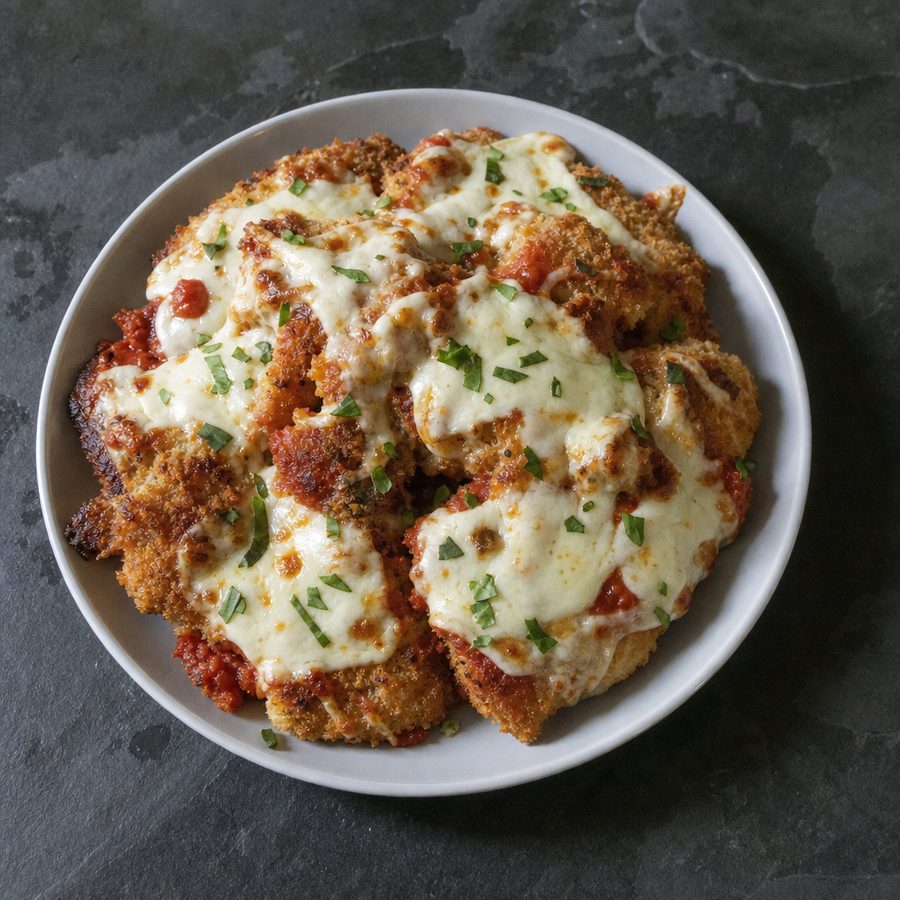
Thin chicken cutlets dipped in beaten egg, pressed into finely grated parmesan, and pan-fried in butter until the crust turns deep golden, then finished under a lid with melted mozzarella.
Why You'll Love This Recipe
This is a fast, high-protein main built around chicken and cheese, cooked entirely in one skillet. It suits anyone who wants a hearty, savory plate that comes together in well under half an hour, and it works just as well for a weeknight lunch as for a plate you want to feel a little indulgent. Because the coating is grated hard cheese rather than breadcrumbs, it stays grain-free while still giving you that crisp, golden crust people usually reach for.
Finely grated parmesan is the entire coating. Pressed firmly onto an egg-washed cutlet, the parmesan fries directly against the hot butter and its own fat and proteins crisp into a lacy, deeply browned shell, the same Maillard browning that gives fried foods their flavor. Frying in butter rather than a neutral oil adds its own toasted, nutty note as the milk solids color. Finishing under a lid traps just enough steam to melt the mozzarella into a soft, stretchy layer without overcooking the chicken beneath it.
Textures in opposition, and protein at real density. The crackling parmesan crust gives way to juicy chicken, and the melted mozzarella on top adds a creamy, mild richness that rounds out the sharp, salty cheese. Chicken delivers a large amount of complete protein that keeps you full and steady, while the two cheeses and egg add calcium and staying power, so a single cutlet eats like a full, filling meal.
Ingredients
- 4 thin chicken cutlets (about 1.35 lb)
- 3/4 cup finely grated parmesan
- 1 1/4 cup shredded mozzarella
- 1 large egg, beaten
- 2 tbsp butter
Instructions
- Set up the coating: Crack the egg into a shallow bowl and beat it well with a fork until the yolk and white are fully blended. Put the finely grated parmesan in a second shallow bowl or on a plate, spreading it out so that a cutlet can lie flat in it. Grate it yourself if you have the block, since the pre-grated kind is dusted with starch and that starch keeps it from melting into a crust.
- Season and coat the cutlets: Pat the chicken cutlets dry with a paper towel, because the egg will not cling to a wet surface and the coating slides off in the pan, then season both sides lightly if you like. Working one at a time, lay a cutlet in the beaten egg and turn it to coat completely, letting the excess drip off, then lay it in the parmesan and press down firmly on both sides so the cheese sticks in an even, packed layer.
- Fry the first side: Melt the butter in a large skillet over medium heat until it stops foaming, since the foam is the water cooking out and the cheese will not brown properly until it has gone. Add the coated cutlets in a single layer without crowding and fry undisturbed for 3 to 4 minutes, until the underside is deep golden brown and the crust has set.
- Fry the second side: Flip each cutlet carefully with a thin spatula, since the crust is one sheet of melted cheese and it will tear away if you catch it with a fork, and fry the second side for another 3 to 4 minutes, until it is deep golden and the chicken is cooked through, registering 165°F (74°C) at the thickest part on an instant-read thermometer.
- Melt the mozzarella and serve: Sprinkle the shredded mozzarella evenly over each cutlet, cover the skillet with a lid, and cook for about 2 minutes until the mozzarella is fully melted and glossy. Transfer to plates and serve hot.
Variations
- Sharper crust: Swap the parmesan coating for finely grated pecorino romano, a harder, saltier sheep's-milk cheese; cut back on the added salt to balance it.
- Richer fat: Fry the cutlets in ghee or rendered bacon fat instead of butter for a deeper, more savory browning; using bacon fat adds pork.
- Different melt: Top with shredded provolone or aged cheddar in place of the mozzarella for a tangier, more pronounced finish; this adds dairy.
- Pork instead of chicken: Use thin pork cutlets in place of the chicken, frying to an internal temperature of 145°F (63°C); this swaps in pork.
- Crispy topping: Scatter cooked, crumbled bacon over the mozzarella while it melts for a smoky, crunchy layer; this adds pork.
Storage & Leftovers
Refrigerate leftover cutlets in an airtight container once they have cooled, and eat them within three to four days. Keep them in a single layer if you can, so the crust does not steam and soften against a stacked piece.
Reheat in a dry skillet over medium heat or in an oven or toaster oven at 375°F (190°C) until hot through and the crust re-crisps, a few minutes per side. Avoid the microwave, which turns the parmesan crust soft and rubbery and can make the melted mozzarella greasy.
To get ahead, you can egg-wash and press the parmesan coating onto the cutlets earlier in the day and keep them uncovered on a plate in the refrigerator; frying just before serving gives you the crispest crust. The cooked cutlets also freeze well for up to two months, reheated straight from frozen in a hot oven.
Notes & Tips
- Buy or make thin cutlets: Use cutlets no thicker than about half an inch so they cook through in the same time the crust browns; if yours are thick, slice each breast horizontally or pound it thin between two sheets of plastic wrap.
- Dry the chicken first: Patting the cutlets dry before the egg dip helps the coating grip and keeps the butter from spitting when the cutlet hits the pan.
- Grate the parmesan fine: A fine, fluffy grate packs into a continuous crust; coarse, shredded parmesan leaves gaps and falls off. Grate it yourself from a wedge for the best melt and adhesion.
- Watch the butter, not the clock: Butter browns fast; if the milk solids in the pan start going past golden toward dark, lower the heat so the crust does not scorch before the chicken is done.
- Use a thermometer: The surest doneness cue is 165°F (74°C) at the thickest point for chicken; the crust color alone can fool you on thicker pieces.
- Double the batch: These fry quickly and reheat well, so cook extra cutlets at once and keep them for fast protein through the week; hold them warm on a rack in a low oven so the crust stays crisp while you finish the rest.
Nutrition & Mindful Eating
- Pounding the breast thin changes everything about how this cooks. The cutlet is done before the crust has a chance to scorch, the parmesan crisps on contact with the butter, and the mozzarella has just enough time to go soft in the middle.
- Chicken breast at this thickness is quick-cooking and stays juicy if you pull it early, and pounding it evenly means the whole cutlet finishes at once. Complete protein this dense is what makes a single piece a lunch.
- Parmesan pressed onto the outside fries in the butter and turns into a brittle, lacy crust with brown spots where it caught the pan. Its long aging is what makes it taste this savory, and calcium and phosphorus come with it.
- Mozzarella is the soft counterweight. It melts into strands under the crisp shell so the bite has pull to it, and it adds a mild creaminess along with calcium and more protein.
- Butter is the cooking fat and the flavor at once, browning under the cutlet and smelling nutty by the time you flip it, and the egg wash beneath the cheese sets into a thin savory layer that glues the two together.
- As you eat, cut through and watch the cheese stretch before it lets go, and take a few unhurried bites at the table so that lunch registers as a meal.
Frequently Asked Questions
Why is my parmesan crust falling off instead of staying crisp?
Two things usually cause it: the cutlet was wet, or the parmesan was too coarse. Pat the chicken dry before the egg dip, use finely grated parmesan rather than shredded, and press it on firmly. Then let the first side fry undisturbed for the full 3 to 4 minutes so the crust sets before you move it.
Can I bake these instead of frying?
You can, though you lose some of the crisp browning that butter gives. Arrange the coated cutlets on a rack set over a baking sheet and bake at 400°F (200°C) until deep golden and cooked to 165°F (74°C) inside. Frying in butter stays the best route for that lacy, crackling crust.
The butter keeps browning too fast. What am I doing wrong?
Butter's milk solids brown quickly over high heat. Keep the pan at medium, and if the fat starts going dark before the chicken is done, lower the heat. You want the crust deep golden, not scorched, by the time the center reaches 165°F (74°C).
How do I know the chicken is cooked without cutting into it?
An instant-read thermometer at the thickest point should read 165°F (74°C). Thin cutlets get there quickly, in the 3 to 4 minutes per side the recipe calls for, so check early on the thinnest pieces to avoid overcooking and drying them out.