
Parmesan-Crusted Egg Bites
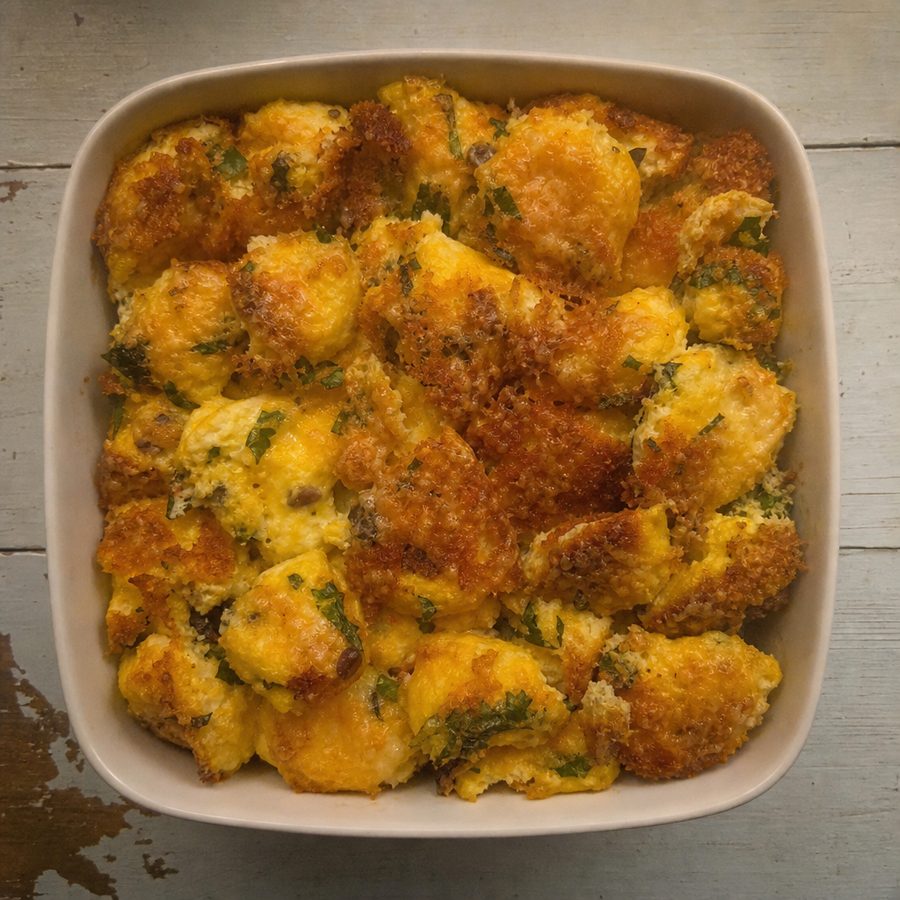
Baked egg bites with a butter-rich custard interior and a crackly, golden parmesan crust pressed into every cup, seasoned simply with salt.
Why You'll Love This Recipe
These are protein-dense little baked custards for anyone who wants a savory, hand-held bite that holds up in the fridge and tastes like more than plain scrambled eggs. They come together from four everyday ingredients, need no special equipment beyond a muffin pan, and suit people cutting back on flour and sugar who still want something that feels indulgent. They are equally at home as a morning bite, an afternoon snack, or something to eat cold straight from the container.
The whole thing works because of how the parmesan is used twice. Pressed into the buttered cups, it toasts against the hot metal into a crisp, lacy shell that shatters when you bite it; whisked into the eggs, it seasons the custard from the inside and adds a savory depth that salt alone cannot. The melted butter does double duty, greasing the cups so the crust releases and enriching each bite so the set egg stays tender rather than rubbery. Baking at a moderate temperature keeps the custard soft and just-set instead of tough.
A brittle, browned crust gives way to a soft, buttery center. Eggs bring complete protein along with the vitamins and choline concentrated in the yolk, and the aged cheese adds calcium and even more protein, so a couple of bites carry real staying power for their size. Because they are rich and savory, a small portion feels filling, which makes them an easy thing to reach for when you want something substantial without much fuss.
Ingredients
- 5 large eggs
- generous 3/4 cup grated parmesan (about 90 g)
- 1 1/2 tbsp melted butter
- a pinch of salt
Instructions
- Preheat and prepare the pan: Preheat the oven to 350°F (175°C). Melt the butter, then brush the inside of each muffin cup generously, coating the bottom and all the way up the sides so the crust and custard release cleanly.
- Line the cups with parmesan: Press grated parmesan firmly into the bottom and up the sides of each buttered cup, packing it against the walls to form a shell. Reserve any leftover parmesan to whisk into the eggs.
- Whisk the eggs: Crack the eggs into a bowl, add the salt and the reserved parmesan, and whisk until the yolks and whites are fully blended and slightly frothy with no streaks of white remaining.
- Fill the cups: Pour the egg mixture into the parmesan-lined cups, filling each nearly to the top but leaving a little room so they can puff without overflowing.
- Bake: Bake for 16 to 18 minutes, until the tops are set and no longer jiggle in the center and the parmesan crust is deep golden and crisp at the edges.
- Cool and release: Let the bites cool in the pan for 5 minutes so the custard firms and the crust sets, then run a thin knife or small offset spatula around each and lift them out.
Variations
- Pecorino crust: Swap the parmesan for grated pecorino romano for a sharper, saltier, more pungent shell and custard; it is a harder, sheep's-milk cheese, so taste before adding extra salt.
- Bacon bites: Press cooked, crumbled bacon into the cups along with the cheese before adding the eggs. This adds cured meat and extra salt and fat, so go lighter on the added salt.
- Smoked salmon folded in: Fold flaked cold-smoked salmon into the whisked eggs before filling the cups. This adds fish and pushes up the sodium, so cut back on the pinch of salt.
- Cheddar-parmesan blend: Keep the parmesan crust but stir shredded aged cheddar into the eggs for a meltier, tangier center. This adds a softer, higher-moisture cheese, so the custard will be a touch richer and looser.
- Ghee instead of butter: Brush the cups with ghee in place of melted butter for a nuttier, more heat-stable fat that browns the crust deeply; it is clarified, so it has essentially no milk solids.
Storage & Leftovers
Store the cooled egg bites in an airtight container in the refrigerator for up to four days. Keep them in a single layer or with a piece of parchment between layers so the crisp parmesan crusts do not stick to each other.
To reheat, warm them in a 325°F (163°C) oven or toaster oven for a few minutes until heated through; this revives the crust far better than a microwave, which tends to steam the crust soft. If you do use the microwave, keep it to short bursts so the eggs do not turn rubbery. They are also good eaten cold.
To make ahead, bake a full batch, cool completely, and refrigerate for grab-and-go bites through the week. They also freeze well: freeze them in a single layer, then transfer to a container, and reheat straight from frozen in the oven until hot in the center.
Notes & Tips
- Grate your own cheese: Buy a wedge of parmesan and grate it fresh. Pre-grated cheese is coated with anti-caking starch that keeps it from melting into a tight, crackly crust and can leave a chalky texture.
- Butter every surface: The single biggest cause of stuck bites is a missed spot. Brush the butter all the way up the sides, not just the bottom, so the crust and custard release in one piece.
- Pack the crust, do not just sprinkle: Press the parmesan firmly against the metal so it forms a shell rather than loose flakes. Cheese in solid contact with the hot pan is what browns and crisps.
- Judge doneness by the jiggle: Pull them when the centers are just set and no longer wobble; a puffed, domed top that is starting to deflect back means they are done. Overbaking is what turns the custard rubbery.
- Let them rest before lifting: The five-minute cool is not optional. The custard finishes firming and the crust sets as it cools, so bites lifted straight from the oven are more likely to tear.
- Double the batch: Since they keep and reheat so well, fill two pans at once. The oven is already hot and the extra effort is only cracking a few more eggs.
- Add skyr for a softer bite: Whisk three quarters of a cup of skyr into four eggs with the parmesan, grease the cups with a little butter instead of lining them with cheese, and bake at 325°F for 18 to 20 minutes. They come out creamier and less crusty, so whisk well or the skyr stays lumpy. This adds dairy.
Nutrition & Mindful Eating
- Cheese in the cup, egg on top, butter under all of it. The parmesan fuses to the sides as it bakes and becomes a crisp casing, the egg sets soft and custardy inside it, and the butter is what lets the whole bite lift out clean.
- Eggs baked gently rather than scrambled hard stay tender and only just set, which is what gives these their custard texture. The yolks are where the choline, the vitamins A and D and the lutein sit, and they are where the flavor is too.
- Parmesan lining the cups goes from grated cheese to a brittle golden wall, and that contrast against the soft egg is the entire appeal. It also adds concentrated protein and calcium to something that fits in your palm.
- Butter greasing each cup does more than keep things from sticking. It fries the cheese where the two meet, deepens the browning around the rim, and carries vitamin A and richness into a very small bite.
- Salt is what ties the two halves of the bite together, lifting the mild egg up to meet the sharp parmesan so both taste of something. Two of these hold you longer than their size suggests, with the protein doing that work.
- As you eat, peel one out of the tin and notice the brittle cheese ring before the soft center gives, and finish the first one properly before you reach for the second.
Frequently Asked Questions
Why did my egg bites stick to the pan?
Almost always a spot the butter missed. Brush every cup generously up the sides and press the parmesan firmly into that butter; the crisp cheese shell is what lets them release. Cooling five minutes before lifting also helps them come out whole.
Can I make these in a silicone muffin pan?
Yes, and they release more easily, but still brush the cups with butter so the parmesan crust can form and brown against the surface. Silicone bakes a little gentler, so check for the same set, no-jiggle center.
Why are my bites rubbery instead of tender?
They baked too long or too hot. Keep the oven at a moderate temperature and pull them the moment the centers stop jiggling. The butter in the custard keeps them soft, but overbaking will still tighten the eggs.
Can I eat these cold?
Yes. They hold their flavor cold and are good straight from the fridge, which makes them an easy grab-and-go bite. If you prefer the crust crisp again, a few minutes in a hot oven or toaster oven revives it.