
Pecan-Crusted Pork with Roasted Sweet Potato
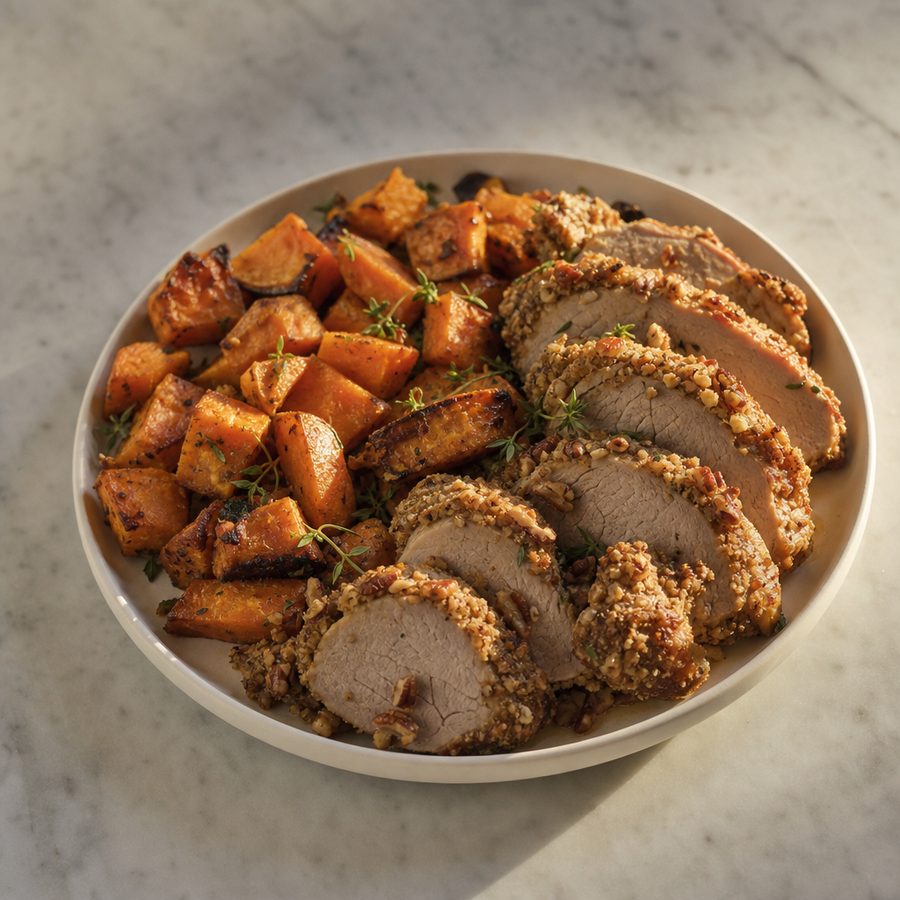
Pork tenderloin brushed with Dijon mustard and pressed with finely chopped pecans, roasted alongside cubes of sweet potato tossed with garlic, thyme, and olive oil until the edges caramelize.
Why You'll Love This Recipe
This is a weeknight-friendly sheet-pan dinner for anyone who wants something that feels a little special without much fuss. Pork tenderloin cooks quickly and stays mild, so the nutty crust and the sweet, caramelized potatoes do the flavor work. It suits a cook who wants one pan, real protein, and a plate that looks like more effort than it took. Tenderloin is also the cut to buy when you want pork on a Tuesday, since it is done in the time a shoulder would still be warming up.
One hot pan, two arrival times. The sweet potatoes get a head start so their sugars have time to caramelize and their edges crisp, while the pork goes in later and finishes in the time it takes to reach a safe, still-juicy temperature. The Dijon acts as the glue and a tangy backbone for the pecans, which toast in the oven and turn buttery and crunchy against the tender meat.
Textures vary, and the plate holds you over. The pork is a complete source of protein, the pecans bring richness and crunch, and the sweet potatoes add natural sweetness and fiber that make the plate feel hearty. The nuts matter more than their quantity suggests, since tenderloin carries almost no fat of its own and the pecans are what keep the plate from eating dry. Fresh thyme and garlic keep it savory rather than heavy, so you finish the meal full but not weighed down.
Ingredients
- 1 1/2 lb pork tenderloin
- 3/4 cup pecans, finely chopped
- 2 medium sweet potatoes, cubed
- 2 tbsp Dijon mustard
- 3 tbsp olive oil
- 1 tbsp fresh thyme
- 3 cloves garlic, minced
- 1/2 tsp salt
- 1/4 tsp black pepper
Instructions
- Preheat the oven: Preheat the oven to 425°F (220°C) and line a large rimmed sheet pan with parchment or lightly oil it. A hot oven is what caramelizes the sweet potato and browns the pecan crust.
- Prep the sweet potatoes and aromatics: Peel the sweet potatoes and cut them into even cubes, about three-quarters of an inch, so they cook at the same rate. Mince the garlic and strip the thyme leaves from their stems. Toss the sweet potato cubes with olive oil, the minced garlic, and the thyme until evenly coated, then season with the salt and a few grinds of pepper.
- Roast the sweet potatoes first: Spread the sweet potato cubes in a single layer on the sheet pan, leaving space between them so they roast rather than steam. Roast for 15 minutes while you prepare the pork.
- Coat the pork: Finely chop the pecans so they press into a crust rather than fall off in large pieces. Pat the pork tenderloin dry and trim away any silvery membrane. Brush the tenderloin all over with Dijon mustard, then press the chopped pecans firmly onto every surface so they stick in an even layer.
- Roast the pork and sweet potatoes together: Slide the sheet pan out, push the sweet potatoes to the edges, and lay the crusted pork in the center. Return the pan to the oven and roast 18 to 20 minutes, until a thermometer inserted into the thickest part of the pork reads 145°F (63°C) and the pecans are deep golden. If the crust darkens too fast, tent the pork loosely with foil.
- Rest, slice, and serve: Move the pork to a cutting board and let it rest 5 minutes so the slices stay juicy when cut. Slice it crosswise into medallions and serve with the roasted sweet potatoes.
Variations
- Walnut crust: Swap the pecans for finely chopped walnuts, which are a little more bitter and sturdy; this still uses tree nuts, just a different one.
- Rosemary and orange: Add chopped fresh rosemary to the sweet potatoes and a little orange zest to the mustard for a brighter, more aromatic version.
- Butternut instead: Replace the sweet potatoes with cubed butternut squash, which roasts in a similar time and turns silky and sweet at the edges.
- Warm spice: Toss the sweet potatoes with smoked paprika and a pinch of cayenne for gentle heat and a smoky depth against the sweet flesh.
- Apple in the pan: Add firm apple cubes to roast with the sweet potatoes for a sweet-tart bite; this adds fruit, so expect a touch more natural sweetness.
Storage & Leftovers
Refrigerate leftover pork and sweet potatoes in an airtight container for up to three to four days. Slice the pork before storing so it cools quickly, and keep the sweet potatoes in the same container or alongside.
To reheat, warm the slices and sweet potatoes in a 300°F (150°C) oven, covered loosely with foil, just until heated through so the pork does not dry out. A quick warm-up in a skillet over medium heat works too, and helps re-crisp the pecans and the sweet potato edges. Avoid a long spin in the microwave, which tends to toughen the pork.
To get ahead, cube and toss the sweet potatoes with the oil, garlic, and thyme and chop the pecans up to a day in advance, storing each in the refrigerator. You can also brush the pork with Dijon and press on the pecans a few hours ahead and keep it chilled, so all that is left at dinner is roasting.
Notes & Tips
- Trim the silver skin: Pork tenderloin has a thin, pearly membrane running along one side; slide a knife under it and peel it off before coating, or it will turn chewy and tug the crust loose as the meat shrinks.
- Chop the pecans fine: Chop the pecans small and fairly uniform, closer to coarse crumbs than halves, so they form an even crust that presses in and browns without large pieces falling off during slicing.
- Cut the sweet potatoes evenly: Keep the cubes the same size so they finish together; if some are much bigger, they will still be firm in the middle when the smaller ones are already caramelized.
- Use a thermometer: Pork tenderloin goes from juicy to dry in just a couple of minutes, so pull it at 145°F (63°C) in the thickest part rather than guessing by time; the temperature will climb slightly as it rests.
- Give it room on the pan: If the sweet potatoes are crowded they steam and stay pale; spread them out in a single layer, and use two pans if needed, to get real caramelized edges.
- Serve with something green: A simple side of sauteed spinach, roasted green beans, or a crisp salad rounds out the plate and cuts the richness of the pecan crust.
Nutrition & Mindful Eating
- The pork, the sweet potatoes and the pecans all finish in the same oven, which is the point. The meat stays juicy, the potatoes collapse into sweetness at the corners, and the nut crust goes dark and toasty over the top of both.
- Pork tenderloin is fine-textured and quick-cooking, so it comes out still faintly pink at the center and slices clean. Give it ten minutes to rest and the juices settle back through it, and the protein in it is what makes this eat like a full dinner.
- Sweet potatoes turn syrupy where they touch the hot pan, and that browning is the whole reason to roast them. The orange running through them is beta-carotene, and it arrives packed in with a fiber that gives the sweetness something to sit on.
- Pecans in the crust go from raw to deeply toasted in the time the pork needs, and the oil they release is what carries the thyme and garlic across the meat. That unsaturated fat is also why a thin crust tastes as rich as it does.
- Thyme and garlic worked into the mustard and pecans smell like a Sunday roast the second the pan warms up, and the woody thyme is what stops a sweet plate going one-note. Salt on the pork draws the juices up where the crust can catch them.
- As you eat, run a piece of sweet potato through the crust on the pork and let the thyme come up at you in the steam, and give dinner the length of a proper sit-down.
Frequently Asked Questions
How do I keep the pecan crust from burning?
Chopped pecans can go from toasted to scorched quickly. Watch the pork in the last few minutes, and if the crust is already deep golden before the meat hits temperature, tent it loosely with foil to shield the nuts while the inside finishes.
Can I use pork loin instead of tenderloin?
You can, but they are different cuts. A pork loin roast is thicker and takes noticeably longer to cook, so plan on more oven time and still pull it at 145°F (63°C). The tenderloin stays more tender and cooks in the time the recipe gives.
Why cook the pork only to 145°F (63°C)?
That is the temperature at which pork is safely cooked while still juicy and slightly pink in the center. Resting it afterward lets the temperature settle and keeps the slices moist; cooking well past that point is what makes tenderloin dry.
My sweet potatoes came out soft instead of caramelized. What happened?
They were most likely crowded on the pan, which traps steam. Spread the cubes in a single layer with space around each one, and give the pan its full head start in the hot oven so the edges can brown and crisp.