
Asparagus & Salmon Frittata with Dill
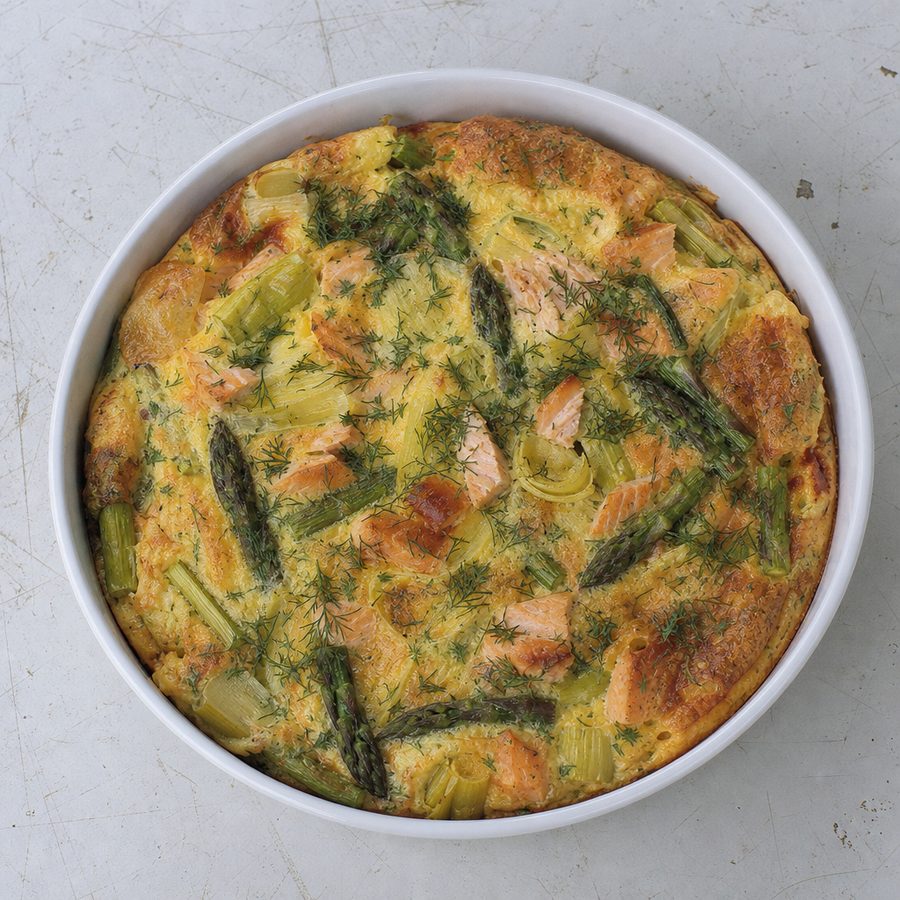
A soft, golden baked egg dish folding tender-crisp asparagus, silky leek, and flaked salmon into eggs brightened with fresh dill and a squeeze of lemon.
Why You'll Love This Recipe
This is a calm, composed one-pan breakfast for anyone who wants something more considered than scrambled eggs and still mostly hands-off. Eggs, asparagus, leek, and salmon come together in a single skillet that starts on the stove and finishes in the oven, which is what gives a frittata its even set. It is as good cold as it is warm, so a wedge left over is a proper lunch rather than a leftover.
Cook in order, and keep the heat low and steady. Softening the leek and asparagus first drives off their raw edge and keeps them from weeping water into the eggs, while poaching the salmon separately keeps it moist and lets you flake it cleanly. Starting the eggs on the stovetop sets the base, and finishing in the oven cooks them gently and evenly all the way through, so the center stays tender and custardy rather than rubbery. The lemon juice and fresh dill cut through the richness and keep every bite bright.
It satisfies because the eggs and salmon together deliver a generous amount of protein that keeps you full for hours, while the asparagus and leek add fiber, color, and freshness. The olive oil and salmon contribute the kind of fats that make a meal feel substantial without heaviness. It is the sort of dish that leaves you steady and unhurried rather than reaching for a snack an hour later.
Ingredients
- 8 large eggs
- 1 small bunch asparagus, cut into 1-inch pieces
- 1 small salmon fillet, flaked
- 1/3 cup leek, thinly sliced
- 2 tbsp fresh dill, chopped
- 2 tsp lemon juice
- 1 tbsp olive oil
- 1/4 tsp salt
Instructions
- Rinse the leek and cut the asparagus short: Heat the oven to 375°F (190°C). Trim the woody ends off the asparagus and cut the spears into 1-inch pieces, then slice the leek thin and rinse the slices in a bowl of water to wash out the grit that hides between the layers, draining them well. Chop the dill. Short pieces of asparagus matter, because a long spear in a frittata makes it impossible to cut a clean wedge.
- Poach the salmon and flake it: Bring a shallow pan of water to a gentle simmer, slide in the salmon, and poach 6 to 8 minutes, until it turns opaque and flakes easily. Lift it out, cool it briefly, peel off the skin, and flake the flesh, checking for pin bones. Poaching rather than searing is right here, since the fish is going into eggs and gentle water keeps it moist where a hot pan would dry the outside.
- Soften the vegetables 4 minutes: Heat the olive oil in a 10-inch oven-safe skillet over medium and cook the leek and asparagus about 4 minutes, until the leek is soft and the asparagus is bright green and crisp-tender, then spread the flaked salmon evenly over them. The vegetables get their cooking now because the custard sets long before raw asparagus would soften.
- Add the eggs and set the edges on the stove: Whisk the eggs with the dill, lemon juice, and salt until fully blended and slightly frothy, pour the mixture evenly over the vegetables and salmon, and cook undisturbed over medium heat about 3 minutes, until the edges begin to set. Starting it on the stove gives the bottom a head start, so the frittata is not still liquid underneath when the top has finished in the oven.
- Bake 14 to 16 minutes: Move the skillet to the oven and bake 14 to 16 minutes, until the center is just set and no longer jiggles when the pan is nudged, and a knife in the middle comes out clean. Mind the handle when you take it out, since a skillet that has been at 375°F looks exactly as it did going in.
- Rest it 5 minutes before slicing: Let the frittata rest in the pan for 5 minutes so it firms up, then loosen the edges with a spatula and cut it into wedges. Eggs keep setting as they cool, which is why a wedge cut immediately slumps and one cut five minutes later holds its shape. Serve warm or at room temperature.
Variations
- Smoked salmon: Skip the poaching step and fold in flaked hot-smoked salmon or ribbons of cold-smoked salmon instead. It brings a deeper, brinier flavor; add it after the vegetables so it does not overcook.
- Herb swap: Trade the dill for chopped fresh chives, tarragon, or flat-leaf parsley. Each shifts the character while keeping the fresh, green backbone: tarragon leans anise, chives lean oniony.
- Greens folded in: Wilt a handful of baby spinach or chopped chard with the leek until it collapses, then squeeze out excess moisture before adding the eggs. It adds color and earthiness without changing the dish's makeup.
- Caper and shallot: Add rinsed capers with the salmon and use thinly sliced shallot in place of the leek. The capers give a salty pop that plays off the lemon and dill.
- Richer eggs: Whisk a spoonful of full-fat coconut milk into the eggs for a softer, more custardy set. It adds a faint sweetness and keeps the center especially tender.
Storage & Leftovers
Refrigerator: cool any leftover wedges to room temperature, then store them in an airtight container in the refrigerator for up to three days. Keep them flat in a single layer if you can, so the delicate egg does not compress.
Reheat: warm a wedge in a 300°F (150°C) oven or toaster oven for about 8 to 10 minutes until heated through, which keeps the texture soft. A quick, low-power turn in the microwave also works if you are in a hurry, though the eggs can tighten slightly. It is also good cold, straight from the fridge.
Make-ahead: the whole frittata bakes and holds beautifully, so you can make it the night before, chill it whole, and slice as you go through the week. You can also poach and flake the salmon and slice the leek and asparagus a day ahead to make morning assembly quick.
Notes & Tips
- Choose thin asparagus: Pick pencil-thin to medium spears; thick ones stay fibrous in the short sauté. If your asparagus is thick, peel the lower stalks or slice the pieces on a diagonal so they cook through in time.
- Rinse the leek well: Leeks trap grit between their layers. Slice first, then swish the slices in a bowl of water and lift them out, leaving the sand behind. Rinsing the whole leek under the tap does not reach the inner layers.
- Don't overbake: Pull the frittata when the center is just set and barely jiggles; carryover heat finishes it as it rests. Waiting for it to look fully firm in the oven leaves it dry and tough.
- Salmon shortcut: A cooked salmon fillet from a previous meal works perfectly here. Flake and use it in place of poaching. Any firm cooked fish flakes in nicely too.
- Use an oven-safe skillet: A well-seasoned cast iron or a stainless pan with a metal handle moves from stovetop to oven cleanly. If your only skillet has a plastic handle, cook the base, then transfer everything to a greased pie dish before baking.
- Serve it forward: A wedge is lovely with a simple lemony green salad or sliced avocado alongside, and a final pinch of dill and a squeeze of lemon over the top right before serving keeps it tasting fresh.
Nutrition & Mindful Eating
- Eggs, salmon and asparagus each stay recognizable in this. You get pink flakes of fish in one forkful, a green spear in the next, and soft egg holding it all together, so the frittata never settles into a single flavor.
- Salmon is the richest thing in the pan. It breaks into oily, savory flakes that leave their flavor in the egg around them, and the omega-3 fats behind that richness are the same ones that make it worth cooking often.
- Eggs hold everything else in place and do it gently, going from liquid to just set in the oven. They bring complete protein and choline, and keeping the heat moderate is what leaves the frittata tender all the way through.
- Leeks softened in olive oil first go sweet and almost silky, and the asparagus laid over them keeps a green, grassy snap. Between them they bring folate and the kind of fiber that gut bacteria feed on.
- Dill and lemon juice go on after the pan comes out, so both stay sharp. The dill smells of anise and cut grass, the lemon lifts the salmon, and a little salt in the eggs pulls the whole thing into focus.
- As you eat, find the soft center of the frittata against the crisp tips of the asparagus, and let the dill and lemon be a reason to eat sitting down.
Frequently Asked Questions
Can I use canned salmon instead of poaching a fillet?
Yes. Drain it well, flake it, and pick out any soft bones or skin if you prefer, then add it to the vegetables just as you would the poached salmon. It is a fast, reliable shortcut.
Why is my frittata watery on the bottom?
Usually the vegetables released moisture. Make sure the leek and asparagus are fully softened and any liquid has cooked off before you add the eggs, and drain the poached salmon well so it does not carry extra water into the pan.
Can I make this in a muffin tin for individual portions?
Yes. Grease the cups generously, divide the sautéed vegetables and salmon among them, pour the egg mixture over, and bake at the same temperature for a shorter time, roughly 12 to 15 minutes, until set and puffed.
How do I know when it is done in the center?
The middle should look just set and no longer wobble in a wet way when you nudge the pan, and a knife slipped into the center should come out clean. It firms up more as it rests, so stop just shy of fully firm.