
Baked Cod with Roasted Root Vegetables
Flaky baked cod rests over a garlicky mix of roasted carrots and beets, finished with fresh parsley, a drizzle of extra-virgin olive oil, and a bright squeeze of lemon.
Why You'll Love This Recipe
This is a weeknight sheet-pan dinner for anyone who wants a light but filling meal without much cleanup. Cod is a mild white fish that even hesitant fish eaters tend to like, and roasting it over a bed of sweet root vegetables turns a handful of simple ingredients into something that feels considered. It comes together on one pan, which makes it as practical as it is wholesome.
The roots need twenty minutes the cod does not. The dense carrots and beets get a 20-minute head start at high heat so their sugars caramelize and their edges crisp, and only then does the quick-cooking cod go in to finish. That way the fish stays just-opaque and flaky instead of drying out, while the vegetables reach full tenderness. The sliced garlic warms in the oil and perfumes the fish, and the lemon and parsley added at the very end keep the flavors bright rather than muddied.
Protein from the cod against the sweetness and fiber of roasted roots, carried by plenty of olive oil. The fish is delicate and flaky, the beets go earthy and jammy, the carrots turn candy-sweet at the edges, and the lemon cuts through all of it. Roasting is doing most of the work: the same beets boiled would taste of dirt and water, and it is the dry heat that concentrates their sugar.
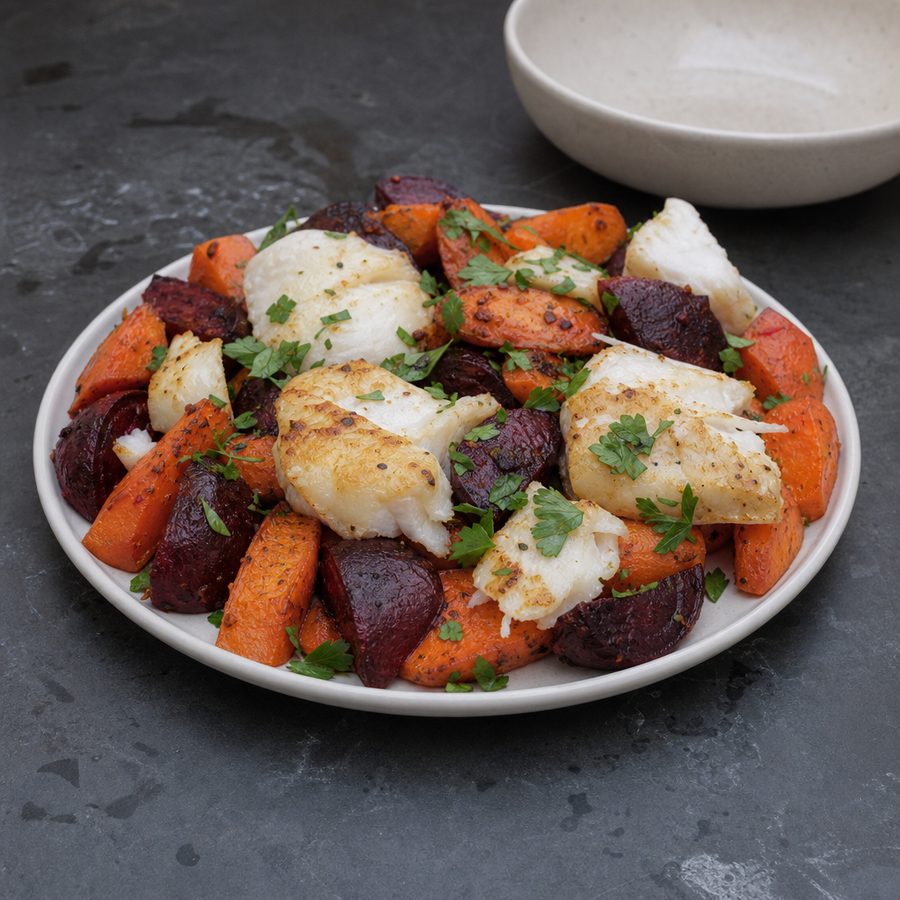
Ingredients
- 1 1/3 lb cod fillets
- 4 medium carrots, cut in batons
- 2 medium beets, wedged
- 4 tbsp extra-virgin olive oil
- 4 cloves garlic
- 1/3 cup chopped parsley
- 2 tbsp lemon juice
- 3/4 tsp salt
Instructions
- Cut the roots to a common thickness: Heat the oven to 425°F (220°C). Scrub the carrots, peel the beets, and cut both into pieces of about the same thickness, the carrots into finger-length batons and the beets into wedges, so everything roasts at the same rate. Slice the garlic thin. Beets are denser than carrots, so if anything, cut them a shade smaller.
- Roast the roots alone for 20 minutes: Spread the carrots and beets on a rimmed sheet pan, drizzle with about half the olive oil, sprinkle with the salt, and toss, then arrange them in a single layer so they brown rather than steam. Roast 20 minutes, until the edges are tender and caramelizing. They go in alone because roots need twice as long as cod, and fish added now would be dry and chalky by the time they were done.
- Dry the cod and tuck it in: Pat the cod fillets dry with paper towel, slide the pan out, push the vegetables aside, and tuck the fillets among them, then scatter the sliced garlic over the top, drizzle with the remaining oil, and season lightly. Drying the fish is what lets the surface firm rather than steam, and settling it among the vegetables shields a lean fillet from the direct heat of the metal.
- Bake 12 to 14 minutes to 145°F: Return the pan to the oven for 12 to 14 minutes, until the cod turns from translucent to opaque and flakes easily under a fork, with the thickest part reading 145°F (63°C). Begin checking at twelve, since cod passes from just done to dry within a couple of minutes.
- Lemon and parsley over the hot pan: Chop the parsley, squeeze the lemon over the cod and vegetables while everything is still hot, and scatter the parsley across the pan. Acid added now rather than before roasting keeps its brightness, and hitting the hot pan is what carries it into the beets and the oil rather than leaving it sitting on the fish.
Variations
- Herb swap: Trade the parsley for fresh dill or chives, both of which pair naturally with white fish and add a different fresh note at the finish.
- Add more roots: Toss in parsnips or turnips cut to the same size as the carrots and beets; they roast on the same timeline and add earthy variety.
- Citrus change: Use orange juice and a little grated orange zest in place of the lemon for a sweeter, mellower brightness against the beets.
- Spiced version: Sprinkle the vegetables with ground ginger and a little turmeric before roasting for a warmer, earthier flavor under the fish, with no nightshades if you are following the autoimmune protocol.
- Different fish: Swap the cod for haddock, halibut, or another firm white fish; adjust the final bake time to the thickness of the fillets so they finish just opaque.
Storage & Leftovers
Store leftovers in an airtight container in the refrigerator for up to three days. Keep the cod and vegetables together; the fish is best eaten sooner rather than later, as delicate white fish loses texture the longer it sits.
To reheat, warm gently in a 300°F (150°C) oven or toaster oven just until heated through, which keeps the cod from turning rubbery. A microwave works in a pinch on low power in short bursts, though the fish will be softer. Add a fresh squeeze of lemon after reheating to wake the flavors back up.
To get ahead, peel and cut the carrots and beets a day in advance and refrigerate them in a covered container so they are ready to toss and roast. You can also chop the parsley and slice the garlic ahead, but roast the cod fresh for the best texture.
Notes & Tips
- Choose good cod: Look for fillets that are firm, translucent, and smell clean like the sea rather than fishy. Fillets of even thickness cook more uniformly; if one end is thin, tuck it under itself so the whole piece finishes at the same time.
- Pat the fish dry: Blotting the cod with paper towel before it goes in the oven removes surface moisture so it bakes and lightly browns instead of steaming in its own liquid.
- Keep pieces the same size: Cutting the carrots and beets to a similar thickness is the single biggest factor in even roasting; mismatched sizes leave you with some pieces scorched and others still hard.
- Mind the beet stain: Beets bleed their color, so expect the carrots and pan to take on a pink tint. If you want the colors to stay separate, roast the beets on their own corner of the pan.
- Judge doneness by the flake: Cod is done the moment it turns opaque all the way through and flakes with gentle pressure. It keeps cooking slightly after it leaves the oven, so pull it right as it turns to avoid dryness.
- Serve it as a full plate: This eats well on its own, but a spoonful of the pan juices poured over the top, or a simple green salad alongside, rounds it into a complete dinner.
Nutrition & Mindful Eating
- The roots and the fish are cooked on different clocks, and that is what makes the plate work. The beets and carrots need long heat to sweeten, the cod needs only a few minutes, and the two meet on the pan right at the end.
- Cod is mild and snow-white and breaks into wide soft flakes the moment it is done. It takes on whatever it is cooked beside, which is why the garlic and lemon matter so much here, and it carries a dense, clean protein.
- Beets roasted in their skins go deep and earthy and stain everything they touch. That color is betalain pigment, and the sweetness that comes with it is the reason a vegetable this earthy sits well next to a fish this delicate.
- Carrots shrink and blister in a hot oven and their sugars concentrate into something close to candy at the tips. The beta-carotene behind their color travels along with that sweetness.
- Garlic roasted alongside turns mellow and spreadable, parsley goes over raw at the end for a green, peppery bite, and a squeeze of lemon across the fish is what makes the whole pan taste finished.
- As you eat, watch how easily the cod gives way under the fork and how dark the beets have gone at their edges, and let the meal take some of the time the roasting took.
Frequently Asked Questions
How do I know when the cod is fully cooked?
The fish should turn from translucent to fully opaque and flake apart easily when nudged with a fork. If you want to be exact, the thickest part should read 145°F (63°C) on an instant-read thermometer. Pull it as soon as it reaches that point, since white fish dries out quickly if left in longer.
Can I use frozen cod?
Yes. Thaw it fully in the refrigerator first, then pat it very dry, because frozen fish releases extra water that would otherwise steam the fillets. Frozen-then-thawed cod may need a minute or two longer in the oven depending on thickness.
My beets turned everything pink. Did I do something wrong?
No, that is normal. Beets release a natural red pigment as they roast, and it tints the carrots, the pan, and sometimes the fish. It is purely cosmetic. If you prefer to keep the colors distinct, roast the beets in their own section of the pan.
Do I need to peel the carrots and beets?
Beets are best peeled because their skin is tough and earthy. Carrots only need a good scrub; you can leave the skin on for extra fiber or peel them if you prefer a smoother look and milder flavor.