
Beef & Mushroom Stuffed Spaghetti Squash
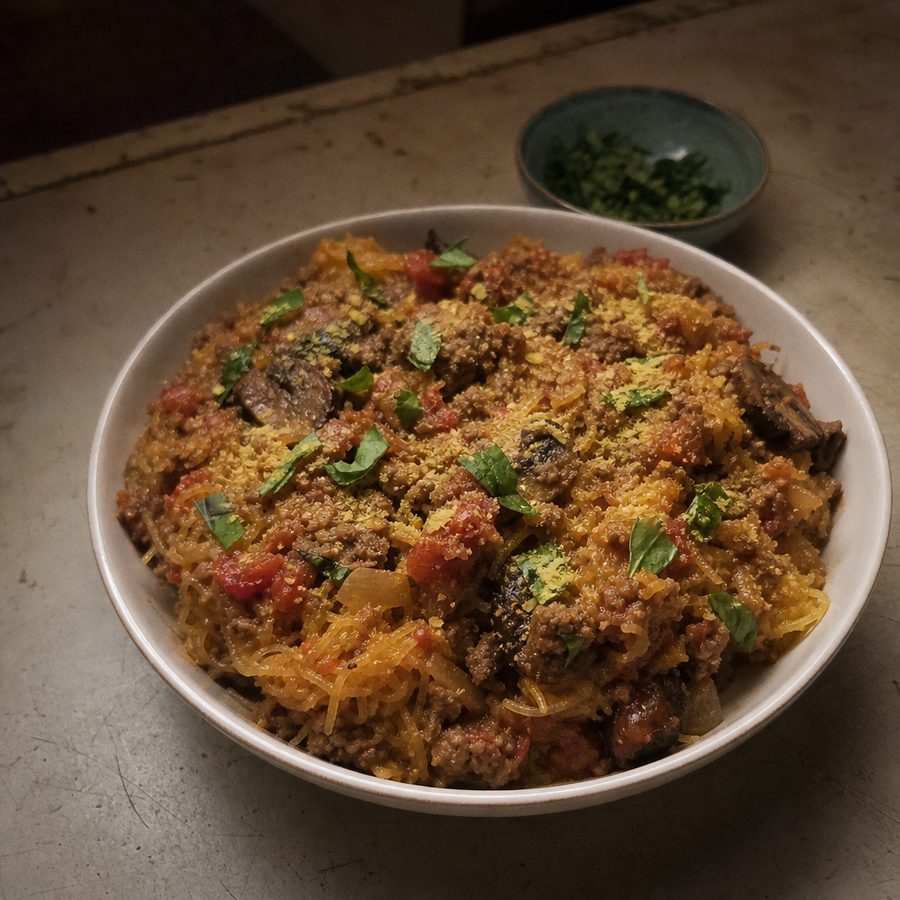
Roasted spaghetti squash raked into tender strands and tossed right in its shells with a hearty ragu of ground beef, mushrooms, onion, garlic, and crushed tomatoes, finished with fresh basil and a savory hit of nutritional yeast.
Why You'll Love This Recipe
This is a warm, forkable dinner for anyone who wants the comfort of a meat-and-tomato sauce without a bowl of pasta underneath it. The spaghetti squash roasts into mild, faintly sweet strands that catch sauce the way noodles do, and because the squash becomes its own serving vessel there is very little to clean up. It suits a weeknight when you want something substantial and hands-off, and it holds up well enough to make ahead for lunches.
The skillet does its work before the tomatoes ever go in. Cooking the mushrooms and onion until they brown drives off their water and builds a deeper, meatier base, so the ragu tastes rich rather than thin. Browning the beef adds its own savory notes, and the nutritional yeast stirred in at the end brings a nutty, almost cheesy depth that rounds everything out. Adding the fresh basil off the heat keeps it bright instead of cooking it flat.
The beef brings real protein and the squash and mushrooms bring fiber and bulk, so a plate feels like a full meal without being heavy. The tomatoes and herbs keep each bite lively, the mushrooms stretch the beef so a modest amount of meat fills the squash, and the whole thing lands as hearty and grounding while still tasting like vegetables are doing their share of the work.
Ingredients
- 1 large spaghetti squash, halved lengthwise and seeded
- 3/4 lb ground beef
- 2 cups sliced mushrooms
- 3/4 cup crushed tomatoes
- 1/2 medium onion, diced
- 3 cloves garlic, minced
- 1 tsp dried oregano
- 2 tbsp chopped fresh basil
- 2 tbsp olive oil
- 2 tbsp nutritional yeast
- 1/2 tsp salt
Instructions
- Prep and season the squash: Preheat the oven to 400°F (200°C). Halve the spaghetti squash lengthwise and scrape out the seeds and stringy pulp with a spoon. Rub the cut faces with olive oil and sprinkle with a little salt.
- Roast the squash: Place the halves cut-side down on a baking sheet and roast for about 40 minutes, until the shells give slightly when pressed and the flesh pulls apart into strands with a fork. Let them cool for a few minutes, then drag a fork lengthwise through each half to rake the flesh into loose strands, leaving the strands in the shells. Tip out any water that has pooled in the bottom of the shells so the finished dish does not turn watery.
- Prep the ragu ingredients: While the squash roasts, dice the onion, slice the mushrooms, mince the garlic, and roughly chop the fresh basil so everything is ready to go.
- Soften the vegetables: Heat olive oil in a skillet over medium heat. Add the onion and mushrooms and cook, stirring occasionally, for about 6 minutes, until the mushrooms have released their liquid and taken on color and the onion is soft. Add the garlic and cook for 1 minute more, until fragrant.
- Brown the beef and build the sauce: Add the ground beef and cook, breaking it up with a spoon, for about 5 minutes, until it is browned and no longer pink (160°F (71°C)). Stir in the crushed tomatoes, oregano, and salt, and simmer for about 5 minutes, until the sauce thickens and no longer looks watery. Remove from the heat and stir in the nutritional yeast and chopped basil.
- Fill and warm through: Spoon the ragu over the squash strands in each shell and toss gently with a fork so the sauce coats the strands. Return the filled boats to the oven for about 8 minutes, until everything is hot through, then serve.
Variations
- Change the mushrooms: Swap the button mushrooms for sliced cremini or chopped portobello for a firmer bite and a deeper, earthier flavor in the ragu.
- Try a different meat: Use ground bison or ground lamb in place of the beef for a richer, more distinctive taste; ground turkey also works and keeps it lighter (this adds poultry).
- Fold in greens: Stir a couple of big handfuls of chopped spinach or kale into the ragu in its last minute of simmering, letting it wilt down before you fill the shells.
- Add gentle heat: Sprinkle in a pinch of crushed red pepper flakes with the oregano for a slow warmth that plays well against the sweet squash.
- Load in more vegetables: Add diced bell pepper or zucchini along with the onion and mushrooms to soften and brown, stretching the ragu further and adding more color.
Storage & Leftovers
Store leftovers in an airtight container in the refrigerator for up to four days. You can keep the whole filled shells if you have room, or scoop the sauced strands out of the shells into a container to save space; the flavor actually deepens by the next day.
Reheat gently in a covered dish in a 350°F (175°C) oven until hot through, or in the microwave in short bursts, stirring once so the strands heat evenly. Spaghetti squash gives off water as it sits, so pour off any liquid that has pooled before reheating to keep the dish from turning watery.
To get ahead, roast the squash and make the ragu separately up to two days in advance and keep them chilled apart. When you are ready to eat, rake the strands, spoon on the sauce, and warm the filled shells through so the squash does not get soggy from sitting in sauce overnight.
Notes & Tips
- Pick a heavy squash: Choose a spaghetti squash that feels heavy for its size with a hard, unblemished rind and a dry stem; those tend to be ripe and give you longer, more distinct strands.
- Halving it safely: If the raw squash is hard to cut, microwave it whole for a few minutes to soften the rind slightly, then set it on a folded towel so it does not roll while you press the knife through lengthwise.
- Do not overcook it: Pull the squash when the strands separate but still have a little bite; roasted too long it turns mushy and watery instead of noodle-like, and it will soften further when you warm the filled shells.
- Let the mushrooms brown: Give the mushrooms room in the pan and resist stirring constantly so they can release their water and caramelize; crowding them steams them and dulls the ragu's flavor.
- Season at the end: Taste the ragu after the nutritional yeast goes in before adding more salt, since the yeast brings its own savory, slightly salty depth and you may not need much more.
- Round out the plate: Serve alongside a simple green salad or some roasted broccoli if you want a larger meal; the boats are hearty on their own but take well to a crisp side.
Nutrition & Mindful Eating
- The squash, the beef and the mushrooms come together right in the shell. The strands stay sweet and faintly watery, the sauce is thick and savory, and eating both from the same boat is what makes the dish work.
- Spaghetti squash roasts until a fork drags the flesh into pale golden strands, each one tender with a slight squeak to it. It is mild and gently sweet, which is why it takes a heavily seasoned sauce so well, and it brings fiber and vitamin C.
- Ground beef browned hard and mushrooms cooked past their water make a filling that is deeply savory. The mushrooms go dark and meaty in their own right, and the beef carries iron, zinc and B12 into a sauce that tastes like it simmered far longer than it did.
- Crushed tomatoes, oregano and garlic reduce until the sauce grips rather than runs, and basil torn in at the end stays raw and sharp. Salt held back until the tomatoes go in lets the mushrooms brown before they steam.
- Nutritional yeast stirred through at the end brings a savory, faintly cheesy depth and a nutty smell, and it carries B vitamins in with that flavor. A spoonful is enough to change how the whole pan tastes.
- As you eat, scrape down to where the sauce has soaked into the strands and pick out the basil coming through the oregano, and give the bowl a few unhurried minutes.
Frequently Asked Questions
Why did my finished dish come out watery?
Spaghetti squash holds a lot of water, and it keeps releasing it after roasting. Roast just until the strands separate rather than turning soft, rake them, and tip out any liquid pooling in the shells before you add the ragu. Simmering the sauce until it is thick also helps it coat the strands instead of diluting.
Can I make the whole thing ahead of time?
Yes. It reheats well for up to four days. For the best texture, roast the squash and make the ragu separately, keep them chilled apart, and only combine and warm the filled shells when you are ready to eat so the strands do not sit in sauce and soften too much.
What does the nutritional yeast do here, and can I leave it out?
It adds a nutty, savory, faintly cheesy depth that rounds out the ragu without any dairy. You can leave it out and the dish still works, but you will lose some of that richness, so taste and add a little extra salt or fresh herbs to compensate.
How do I know when the squash is done roasting?
The shell will give slightly when you press it, and a fork dragged through the flesh should lift away in clean strands rather than staying firm or feeling crunchy. If it still resists, give it a few more minutes and check again.