
Cinnamon Sweet Potato Crisps
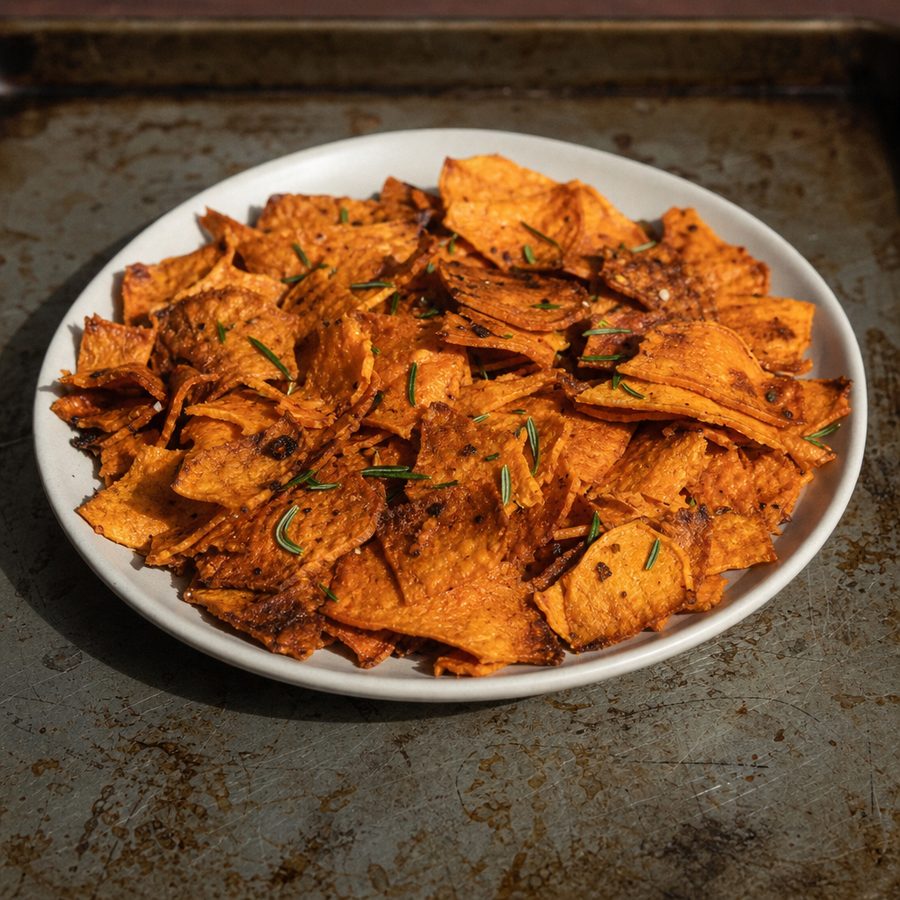
Paper-thin rounds of sweet potato tossed with melted coconut oil, warm cinnamon, and a pinch of salt, then baked low and slow until they shatter into a naturally sweet, crackly crisp.
Why You'll Love This Recipe
These are for anyone who wants something crunchy and lightly sweet between meals without reaching for a fried bag. One sweet potato, a spoonful of coconut oil, cinnamon, and salt is the entire list, and the sugar already in the root does all the sweetening. They suit a slow afternoon or a plate set out for company, though they are worth making on a day you will actually eat them, since crisps like these are at their best within hours.
The magic is in two choices: slicing the rounds paper-thin and baking them at a low temperature. Thin, even slices let the moisture escape slowly and steadily; the gentle heat dries them through before the outside can burn, which is how you get a true snap instead of a chewy chip. Drying the slices first removes surface starch and water so they crisp faster, and the thin coat of coconut oil helps conduct heat evenly across each round while carrying the cinnamon so its warmth lands on every bite.
A brittle, shattering crunch gives way to concentrated, caramel-edged sweetness, with cinnamon adding warmth that reads as dessert. Because they are built from a whole root vegetable with the skin left on, they bring real fiber and the earthy depth of roasted sweet potato, so a small handful feels satisfying rather than empty. It is a snack that tastes indulgent while being nothing but vegetable, oil, and spice.
Ingredients
- 1 large sweet potato, scrubbed
- 1 tbsp coconut oil, melted
- 1 tsp ground cinnamon
- 1/4 tsp salt
Instructions
- Heat the oven low and line two pans: Heat the oven to 275°F (135°C) and line two rimmed baking sheets with parchment. The low heat is what dries the slices into crisps instead of scorching them, so give the oven time to come fully up to temperature before anything goes in.
- Slice paper-thin, and use the mandoline: Scrub the sweet potato and leave the skin on, then slice the whole thing into thin, even rounds on a mandoline set to about a sixteenth of an inch. Even thickness is the single most important thing here, because thicker slices stay leathery while thinner ones burn, and a knife cannot hold that tolerance across a whole potato. Keep your fingers on the guard.
- Dry the slices on a towel: Lay the rounds out on a clean towel and pat both sides dry, pressing gently to pull off the surface starch and moisture. Drier slices crisp faster and more evenly, because any water on them has to boil away before the drying can even begin.
- Toss with oil, then the cinnamon: Melt the coconut oil until it is liquid, put the dried rounds in a bowl, pour the oil over, and then add the cinnamon and salt, tossing with your hands until every slice carries a thin, even sheen with no clumped cinnamon. Oil first and spice second, since the oil is what the cinnamon sticks to and spice thrown onto dry slices falls to the bottom of the bowl.
- Lay them out in a single layer: Arrange the rounds flat on the parchment in a single layer with their edges not touching, using both pans. Any overlap traps steam between the slices and leaves soft spots, which is why crowding one pan costs you more than washing a second.
- Bake low, 20 minutes then 12 to 15 more: Bake 20 minutes, then rotate the pans front to back and flip each crisp over, and bake another 12 to 15 minutes, watching closely near the end. Pull any rounds that are golden and stiff and give the softer ones a few minutes more, because a single pan is never quite uniform and the thin edges finish first.
- Cool them 10 minutes on the pan: Slide the pans out and let the crisps cool on them for about 10 minutes. They firm up as they cool, so a round that seems a touch bendy straight from the oven will usually be fully crisp at room temperature. Serve the same day, since they soften overnight however well they are stored.
Variations
- Warm spice blend: Add a pinch of ground ginger and nutmeg alongside the cinnamon for a deeper, spiced-cider warmth. It leans the crisps toward the flavor of a holiday pie without changing how they bake.
- Sweet and spicy: Stir a small pinch of ground ginger and a little clove into the cinnamon and salt. The gentle warmth plays against the natural sweetness of the sweet potato for a crisp that finishes spiced rather than plain.
- Savory herb: Skip the cinnamon and toss the rounds with chopped fresh rosemary and a little more salt for a savory, earthy crisp that eats more like a cracker than a sweet snack.
- Citrus finish: Grate a little orange zest into the oil before tossing. The bright citrus oils lift the cinnamon and make the sweetness taste even rounder.
- Different oil: Swap the coconut oil for avocado oil or olive oil if you prefer a more neutral or fruity background. Any of them coats the slices the same way and crisps them evenly; olive oil brings a subtle savory note.
Storage & Leftovers
Store fully cooled crisps in an airtight container at room temperature and eat them within a day or two for the best texture. They are at their crispest the day they are baked; the longer they sit, the more they soften as they draw humidity from the air. Avoid the refrigerator, where the damp, cold air turns them limp quickly.
If they have gone soft, you can revive them: spread the crisps in a single layer on a parchment-lined sheet and warm them in a 275°F (135°C) oven for a few minutes, then let them cool on the pan. The gentle reheat drives off the moisture they absorbed and brings back much of the snap. Skip the microwave, which steams them soft instead of crisping them.
To get ahead, slice and dry the rounds earlier in the day and keep them layered between towels, then toss with the coconut oil, cinnamon, and salt and bake when you want them fresh. Tossing with oil too far in advance draws out moisture and makes them harder to crisp, so hold that step until just before baking.
Notes & Tips
- Pick the right potato: Choose a firm, straight sweet potato with smooth skin and an even width from end to end. A uniform shape gives you round slices of consistent size, which cook at the same rate; knobby or tapered ones leave you with a mix of thick and thin rounds.
- A mandoline is worth it: Hand-slicing almost never gets you the even 1/16-inch thickness these need, and uneven slices are the main reason a batch comes out part burnt and part chewy. If you make these more than once, a mandoline pays for itself; always use the hand guard.
- Leave the skin on: There is no need to peel. The skin holds the round together as it dries, adds a little more fiber, and turns pleasantly crisp along with the flesh. Just scrub it well first.
- Do not crowd the pans: It is tempting to fit everything on one sheet, but touching or overlapping slices steam each other and stay soft. Two pans with room around each round is the difference between crisp and floppy.
- Watch the last few minutes: The window between crisp and burnt is short at the end. Stay near the oven, pull the golden, stiff ones as they finish, and give the softer stragglers a little longer rather than baking the whole pan until the last one is done.
- Adjust the sweetness to taste: The sweetness comes entirely from the potato, so if you want more warmth, add a little extra cinnamon rather than any sweetener. A slightly heavier hand with the salt also makes the natural sweetness read stronger.
Nutrition & Mindful Eating
- Sweet potato, coconut oil and cinnamon are the whole recipe and the oven does the rest. The oil helps the slices crisp evenly, the cinnamon toasts into the surface, and the sugars in the potato caramelize at the rim of each one.
- Sweet potato is what makes these taste sweet on their own. Sliced paper-thin the flesh dries and curls into a shard, and that orange color is beta-carotene, which your body converts into vitamin A.
- Thin and even is everything here. Slices cut on a mandoline dry at the same rate and go properly brittle, thicker ones stay chewy in the middle, and the pieces that curl hardest are usually the best in the batch.
- Leaving the skin on gives each crisp a darker rim and a slightly earthy edge against the sweetness, and the fiber it carries is part of why a small handful sits so well.
- Cinnamon and a little salt go on before the oil sets. The cinnamon smells like baking as soon as the tray warms, and the salt pulls the sweetness of the potato forward so each crisp tastes more like itself.
- As you eat, listen for the snap of the first one and notice how the cinnamon arrives just after the sweetness rather than with it, and let a small bowlful be something you finish slowly.
Frequently Asked Questions
Why did my crisps come out chewy instead of crunchy?
The two usual causes are slices that were too thick or too crowded on the pan. Aim for a true 1/16 inch on the mandoline, pat the rounds dry before tossing, and leave space around each one so steam can escape. Remember they also firm up as they cool, so give them their full cooling time before deciding.
Can I use a regular knife instead of a mandoline?
You can, but it is hard to cut evenly enough by hand. Uneven thickness is the number one reason a batch comes out part scorched and part leathery, since thin slices burn while thick ones stay soft. If you go by knife, slice as thin and uniform as you can and expect to pull them from the oven at different times.
Do I need to peel the sweet potato?
No. Scrub it well and leave the skin on. The skin crisps up nicely, helps hold each round together, and adds a little more fiber. Peeling only removes texture and nutrients you would want to keep.
Why won't they stay crisp after a day?
Sweet potato slices naturally draw moisture from the air as they sit, which softens them. Keep them in an airtight container at room temperature, not the fridge, and if they do go limp, a few minutes in a low oven drives off the moisture and brings the crunch back.