
Coconut Curry Shrimp & Snap Peas over Cauliflower Rice
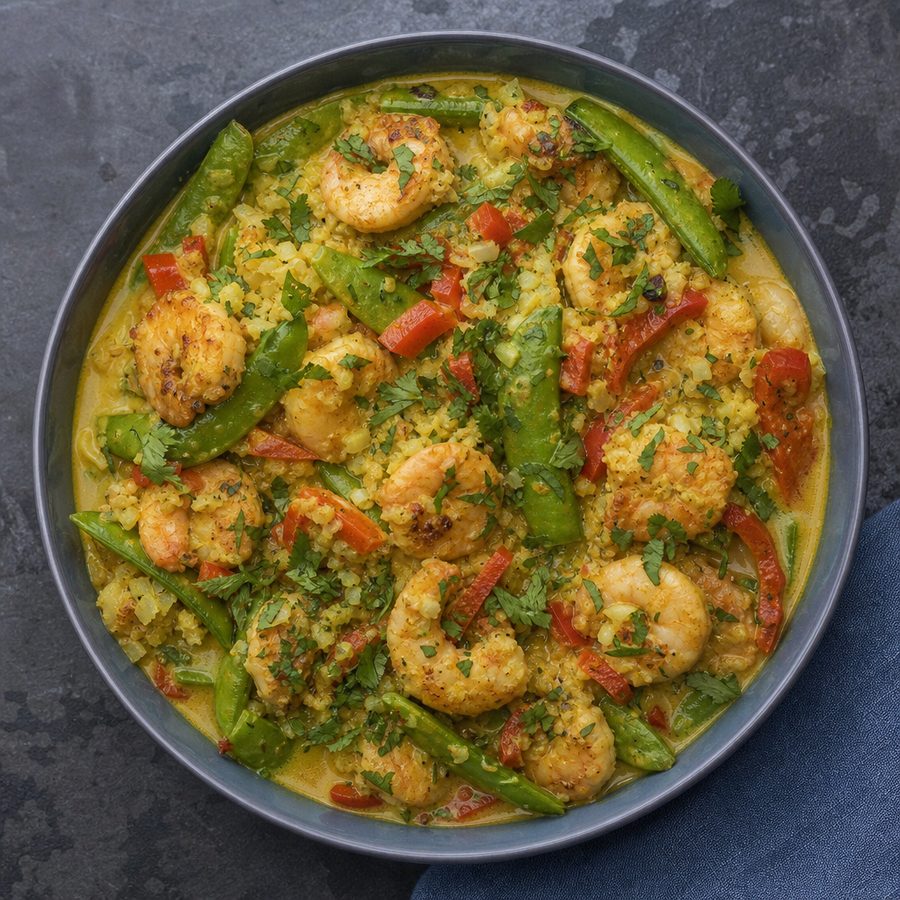
Plump shrimp, crisp snap peas, and sliced red bell pepper simmered in a golden turmeric-and-coconut-milk curry brightened with fresh ginger, garlic, and lime, then ladled over tender cauliflower rice and showered with fresh cilantro.
Why You'll Love This Recipe
This is a bright, brothy one-skillet dinner for anyone who wants something that eats like comfort food but leaves them light rather than heavy. It comes together in about half an hour with a single pan, which makes it a realistic weeknight meal, and it leans entirely on whole ingredients like seafood, fresh vegetables, aromatics, and coconut, so it suits people cutting back on grains, dairy, and added sugar without feeling like they are eating a compromise.
The aromatics go in long before any liquid does. Blooming the garlic, ginger, and turmeric in warm coconut oil for a full minute draws out their fat-soluble flavor and mellows the raw bite of the turmeric, so the coconut milk arrives already infused with gold color and warmth rather than tasting of raw spice. Adding the vegetables first and the shrimp last is deliberate too: the peppers and snap peas get just enough time to soften while holding their snap, and the shrimp go in only for their final few minutes so they stay tender instead of turning rubbery. The lime juice stirred in off the heat keeps its fresh acidity, cutting the richness of the coconut milk right at the end.
It satisfies on every front. Shrimp deliver sweet, complete protein that keeps you full, while the coconut milk brings a silky richness and satisfying fats that make a low-starch bowl feel indulgent. Cauliflower rice stands in for a grain and soaks up the sauce while adding fiber and volume, and the snap peas and bell pepper contribute color, crunch, and a dose of vitamin C. The result is a bowl that is filling and nourishing without weighing you down, with fresh cilantro and lime keeping every bite lively.
Ingredients
- 1 lb shrimp, peeled and deveined
- 2 cups snap peas, trimmed
- 1 red bell pepper, sliced
- 1 large head cauliflower, riced
- 1 cup canned coconut milk
- 1 1/2 tbsp fresh ginger, grated
- 4 cloves garlic, minced
- 1 tsp ground turmeric
- 1/3 cup cilantro, chopped
- 1 tbsp fresh lime juice
- 2 tbsp coconut oil
- 3/4 tsp salt
Instructions
- Prep the shrimp and vegetables: If your shrimp still have shells, peel them and pull out the dark vein along the back with the tip of a knife, then pat them dry. Trim the tough stem ends from the snap peas, since the stem stays fibrous and the string down the side comes away with it. Halve, core, and slice the red bell pepper into thin strips. Peel and grate the ginger, mince the garlic, chop the cilantro, and squeeze the lime for its juice. Break the cauliflower into florets and pulse them in a food processor until they look like grains of rice.
- Cook the cauliflower rice: Heat some of the coconut oil in a large skillet over medium heat. Add the riced cauliflower and a pinch of the salt, and cook, stirring now and then, for 5 to 6 minutes, until it softens and loses its raw crunch but still holds its shape. Divide it among serving bowls and set aside, because cauliflower left in the pan keeps cooking down into something wet and loses the point of standing in for rice.
- Build the curry base: In the same skillet, melt the remaining coconut oil over medium heat. Add the garlic, ginger, and turmeric and stir constantly for about 1 minute, just until fragrant and the turmeric smells toasty, taking care not to let the garlic brown. Pour in the coconut milk, stir to loosen anything on the bottom of the pan, and bring it to a gentle simmer rather than a boil, since coconut milk splits into oil and solids if you push it too hard.
- Simmer the vegetables: Add the sliced bell pepper and snap peas to the simmering coconut milk, ahead of the shrimp because they take twice as long, and cook for 3 to 4 minutes, until they turn bright and just begin to soften while keeping some snap.
- Add the shrimp: Settle the shrimp into the curry in a single layer and cook for 3 to 4 minutes, turning them once, until they curl into a loose C-shape and turn pink and opaque all the way through. Avoid a tight O-shape, which means they are overcooked.
- Finish and serve: Turn off the heat and stir in the lime juice and the remaining salt, since lime added to a simmering pan goes flat and this sauce needs the acid to cut the coconut. Taste and adjust with a little more salt or lime if needed. Ladle the curry and its sauce over the cauliflower rice in each bowl and garnish generously with the fresh cilantro.
Variations
- Turn up the heat: Add a thinly sliced fresh red chili or a pinch of red pepper flakes along with the garlic and ginger for a curry with a warming kick. Start small and taste, since the coconut milk mellows heat more than you expect.
- More greens: Fold a few handfuls of baby spinach or small broccoli florets into the simmering curry with the snap peas. The spinach wilts in a minute; give broccoli an extra couple of minutes to turn tender-crisp.
- White fish instead of shrimp: Swap the shrimp for cubes of a firm white fish such as cod, adding it to the simmering curry and poaching gently until it flakes. This changes the protein to fish; keep the cubes large so they hold together in the sauce.
- Herb swap: Trade the cilantro for torn Thai basil or a mix of both, added at the very end. Basil brings a sweeter, anise-like note that plays beautifully against the coconut and lime.
- Extra aromatic depth: Bruise a stalk of lemongrass and add a few slices of it, or a strip of lime zest, to the coconut milk as it simmers, then fish them out before serving for a more layered, fragrant broth.
Storage & Leftovers
Store leftovers in an airtight container in the refrigerator for up to three days. Keep the curry and cauliflower rice together or separate, whichever is easier; the flavors actually deepen overnight as the aromatics settle into the coconut milk.
Reheat gently in a skillet or saucepan over low to medium heat, stirring often, just until warmed through. Pull it off the heat as soon as it is hot so the shrimp do not toughen. If the sauce has thickened in the fridge, loosen it with a splash of water or a little extra coconut milk. A microwave works in a pinch at reduced power in short bursts, stirring between them.
To get ahead, you can rice the cauliflower and cook it, slice the bell pepper, trim the snap peas, and grate the ginger and mince the garlic a day in advance and refrigerate them in separate containers. With the prep done, the curry itself comes together in under fifteen minutes, so it is easy to finish fresh right before serving.
Notes & Tips
- Buy shrimp that smell clean: Fresh shrimp should smell like the sea, never of ammonia. Frozen shrimp are often a better bet than the thawed shrimp at the counter; thaw them in a bowl of cold water for about fifteen minutes and pat them very dry so they do not water down the sauce when they go into the curry.
- Use full-fat coconut milk: Reach for full-fat canned coconut milk for a sauce with real body and silk; lighter versions turn thin and watery. Shake the can well before opening, and if the fat has separated into a solid cap, whisk it smooth as it warms.
- Do not crowd the cauliflower: Rice the cauliflower and cook it in a wide skillet so it browns and dries slightly instead of steaming into mush. If your head is large and the pan looks packed, cook it in two batches for a fluffier, drier rice that soaks up the sauce.
- Watch the shrimp shape: The most reliable doneness cue is the curl: a loose C means perfectly cooked, a tight O means overdone. Since they keep cooking in the hot sauce, pull the pan from the heat the moment they turn opaque.
- Season at the very end: Coconut milk mutes salt and acid, so wait until the curry is finished to judge it. Add the lime juice off the heat to keep it bright, then adjust salt and lime a little at a time until the flavors pop.
- Mind the turmeric stains: Ground turmeric stains cutting boards, plastic spoons, and light countertops. Wipe up spills quickly and use a metal or glass utensil when you stir it in, and it comes off cleanly.
Nutrition & Mindful Eating
- The curry sauce, the shrimp and the cauliflower underneath work as one thing. The coconut milk goes golden with the turmeric, the shrimp firm up in about three minutes, and the fine cauliflower grains below soak up everything that runs off the spoon.
- Shrimp are sweet, firm and fast, which is what makes this a quick dinner. They take on the curry in the short time they cook, and the protein and selenium they carry are why a bowl this brothy still eats like a full meal.
- Coconut milk is the whole sauce. It thickens as it simmers, mellows the ginger and garlic into something rounder, and its fat is what pulls the turmeric and the warmth across your whole mouth rather than leaving it on the spoon.
- Turmeric, ginger and garlic go into the hot coconut oil before anything else, and blooming them that way is what turns the sauce gold and gives it its warmth. The turmeric dissolves into the fat rather than sitting on top of it.
- Snap peas and red bell pepper go in near the end so they keep their crunch inside all that softness, and both bring vitamin C along with their color. Lime and a handful of cilantro at the table cut straight through the coconut.
- As you eat, breathe in the ginger and turmeric coming off the bowl before the first spoonful, and let the heat of it keep you eating slowly enough to notice when you are full.
Frequently Asked Questions
Can I use frozen shrimp?
Yes, and they are often fresher than thawed shrimp at the counter. Thaw them in a bowl of cold water for about fifteen minutes, drain, and pat them thoroughly dry before cooking so they do not water down the sauce.
My cauliflower rice turned out mushy. What went wrong?
Usually the pan was too crowded or the cauliflower cooked too long. Use a wide skillet, keep it to a single layer or work in two batches, and cook it just until it loses its raw crunch, around 5 to 6 minutes, so it stays fluffy rather than wet.
Can I make this ahead for meal prep?
It keeps well in the refrigerator for up to three days and the flavor deepens overnight. Reheat gently over low heat just until warm so the shrimp stay tender, and loosen the sauce with a splash of water or coconut milk if it has thickened.
Is the flavor spicy?
No, as written it is warm and fragrant from the ginger and turmeric rather than hot. If you want heat, add a sliced fresh chili or a pinch of red pepper flakes with the garlic and ginger, tasting as you go since the coconut milk tames the burn.