
Crab Cauliflower Fried Rice
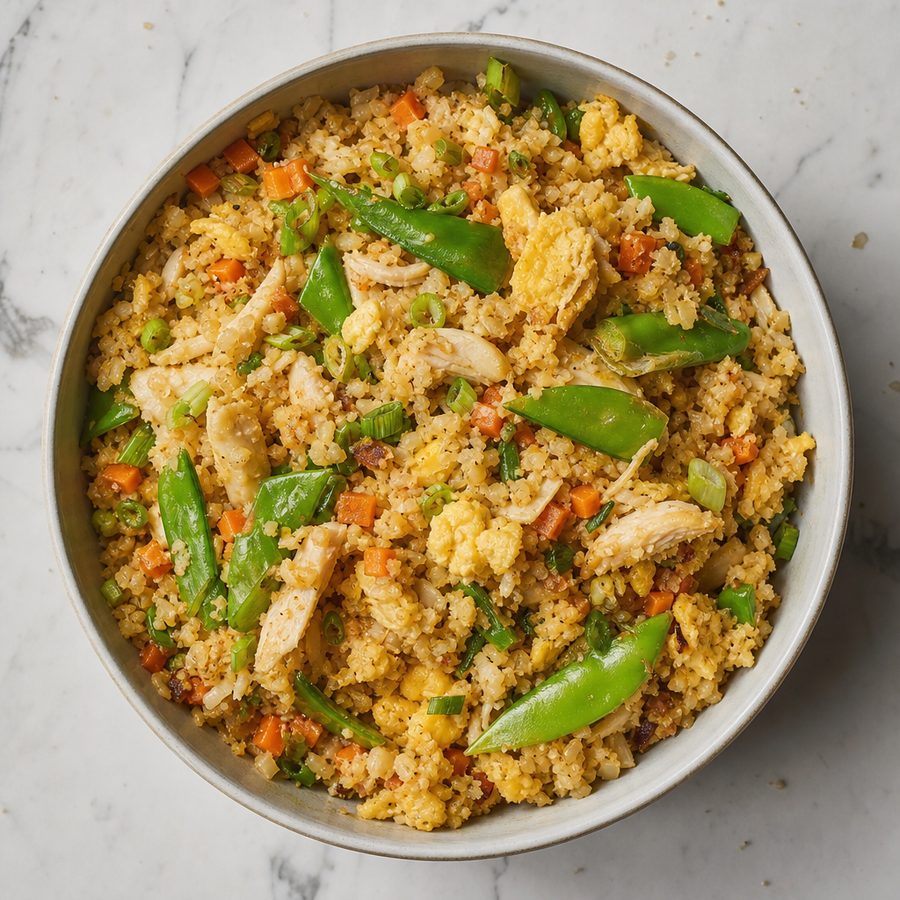
Sweet lump crab folded into golden cauliflower rice with soft scrambled egg, crisp-tender snow peas, carrot, and scallions, all seasoned with fresh ginger, garlic, toasted sesame oil, and coconut aminos.
Why You'll Love This Recipe
Takeout fried rice flavors, built on vegetables instead of a bowl of white rice, all in one pan. Sweet lump crab does the heavy lifting for flavor, so the dish feels a little special without much fuss, and it comes together in about the time it takes to rice a head of cauliflower. It is a good fit for people watching their carbohydrate load, cooking for a shellfish lover, or just looking for a fresh way to eat more vegetables at midday.
Cauliflower can be fried rice if you treat it like rice: spread it across a hot pan and let it sit undisturbed between stirs so the surface moisture cooks off and the grains take on color instead of turning to mush. Coconut aminos brings the savory-sweet, lightly salty note that stands in for a soy-based sauce, while fresh ginger and garlic bloom in the oil to give the whole pan its aroma. Folding in the crab, egg, and toasted sesame oil only at the end keeps the crab in tender lumps and preserves the nutty fragrance of the sesame, which would cook away if it went in early.
Textures vary, and the protein behind them is good. You get soft curds of egg, sweet flakes of crab, the snap of snow peas and carrot, and the golden, slightly chewy cauliflower underneath. Crab and egg together make this a protein-rich plate, the cauliflower and vegetables bring fiber and a lot of volume, and the good fats come from avocado and toasted sesame oil rather than a heavy sauce. It eats like comfort food but leaves you feeling light.
Ingredients
- 8 oz lump crab meat
- 1 medium head cauliflower, riced
- 2 eggs, beaten
- 1 carrot, finely diced
- 1 cup snow peas, sliced
- 3 scallions, sliced
- 2 tbsp coconut aminos
- 1 tbsp toasted sesame oil
- 1 tbsp avocado oil
- 1 tbsp grated fresh ginger
- 3 cloves garlic, minced
Instructions
- Prep the aromatics and vegetables: Peel and grate the fresh ginger, and peel and mince the garlic. Finely dice the carrot, thinly slice the snow peas on a slight angle, and slice the scallions, keeping the white and green parts. Beat the eggs in a small bowl until the yolks and whites are fully combined.
- Rice the cauliflower: Cut the cauliflower into florets, discarding the tough core, and pulse them in a food processor in batches until they break down into rice-sized pieces, about the size of couscous. If any large pieces remain, pulse again briefly so the texture is even. Set aside.
- Scramble the egg: Heat the avocado oil in a large skillet or wok over medium-high heat until it shimmers. Pour in the beaten eggs and let them sit for a few seconds, then stir gently until just set and still glossy, about 1 minute. Push the egg to the side of the pan or transfer it to a plate.
- Cook the aromatics and vegetables: Add the grated ginger, minced garlic, diced carrot, and sliced snow peas to the same skillet. Stir-fry for 2 to 3 minutes, keeping everything moving, until the garlic is fragrant and the carrot and snow peas are crisp-tender and still bright.
- Fry the cauliflower rice: Add the riced cauliflower and coconut aminos. Spread the cauliflower out and stir-fry for 5 to 6 minutes, stirring every minute or so, until it is tender and some grains turn lightly golden. Let it sit undisturbed for short stretches between stirs so it can dry out and brown rather than steam.
- Fold in the crab and finish: Pick through the lump crab meat with your fingers to remove any bits of shell or cartilage, keeping the lumps as whole as you can. Gently fold the crab, scrambled egg, toasted sesame oil, and sliced scallions into the cauliflower. Heat through for 1 to 2 minutes, folding gently so the crab stays in pieces. The crab and the coconut aminos season the pan for you, so taste it and serve.
Variations
- Cooked shrimp: Swap the crab for peeled, deveined shrimp; add them raw with the aromatics and cook until pink and opaque, then continue with the recipe. This changes the seafood but keeps the dish light.
- Extra ginger and heat: Fold in a little more grated fresh ginger at the end and add thin slices of fresh red chile or a pinch of chile flakes with the garlic for a warmer, spicier version.
- More green: Stir a handful of baby spinach or thinly sliced bok choy into the pan with the cauliflower and let it wilt down, adding more vegetable volume and color without changing how it tastes.
- Mushroom umami: Add thinly sliced shiitake or cremini mushrooms with the carrot and snow peas and let them brown well; they deepen the savory backbone of the dish.
- Pineapple-scallion: Fold in small fresh pineapple pieces at the end along with the scallions for a sweet-savory take. Note this adds natural sugar from the fruit, so keep the amount modest.
Storage & Leftovers
Store leftovers in an airtight container in the refrigerator for up to three days. Because cauliflower gives off moisture as it sits, spread the fried rice in a shallow layer to cool before sealing so it does not steam itself soft, and keep the crab folded through rather than stored separately.
Reheat in a hot skillet with a small drizzle of avocado oil rather than the microwave, spreading it out and leaving it undisturbed for a minute or two so it re-crisps instead of turning watery. If it looks dry, add a splash of water and toss; taste and add a little coconut aminos to freshen the seasoning, since cold storage dulls it.
To get ahead, rice the cauliflower and prep the ginger, garlic, carrot, snow peas, and scallions up to two days in advance and keep them in separate containers in the refrigerator. With everything cut, the actual cooking takes only a few minutes, so this is an easy dish to finish fresh right before lunch.
Notes & Tips
- Buy the right crab: Refrigerated lump or backfin crab meat from the seafood case has the best sweetness and texture. If you use canned or pasteurized crab, drain it well and pat it dry so it does not water down the pan, and always run your fingers through it to catch stray shell.
- Dry cauliflower browns better: If your riced cauliflower looks damp, pat it with a clean towel before it hits the pan. Drier cauliflower takes on golden color instead of steaming, which is the difference between fried rice and a soggy mash.
- Do not crowd the pan: Use your widest skillet or a wok. If the cauliflower is piled deep it will steam; a thin layer with room to spread lets the surface dry and brown. Cook in two batches if your pan is small.
- Add sesame oil off the heat: Toasted sesame oil is a finishing oil, not a cooking oil. Folding it in at the very end keeps its nutty aroma intact, whereas heating it hard early flattens the flavor you paid for.
- Season at the end: Coconut aminos varies in saltiness by brand, and crab carries its own brine, so taste before you add any salt of your own. Adjust with a little more coconut aminos rather than plain salt if you want more savory depth.
- Serve it fresh and hot: This is best straight from the pan while the cauliflower still has some texture and the egg is tender. If you are serving a crowd, have everything prepped and cook it just before the meal rather than holding it warm, which softens the vegetables.
Nutrition & Mindful Eating
- Cauliflower, egg and crab go into the pan at three different moments and that order is the recipe. The cauliflower toasts first and takes on color, the egg scrambles into soft ribbons through it, and the crab folds in last so it stays in lumps.
- Lump crab is sweet, delicate and already cooked, so all it needs is warming through. It brings its own gentle salinity to the pan along with zinc and B12, and it is the reason a bowl of vegetables reads as a real lunch.
- Cauliflower grated coarse behaves like rice in a hot pan as long as you give it room. Crowded it steams, spread out it browns in patches and turns nutty, and it carries fiber and vitamin C into a dish that is mostly about texture.
- Carrot cut fine and snow peas added late are what keep the bowl crunchy. The carrot turns sweet as it hits the oil and brings the beta-carotene behind its color, and the snow peas stay flat, green and squeaking.
- Toasted sesame oil goes in off the heat so its aroma survives, while ginger, garlic and the scallion whites hit the oil early where they can sizzle. Coconut aminos rounds it out and the scallion greens go over the top raw.
- As you eat, look for the pieces of crab that stayed whole and notice the toasted sesame arriving just behind the ginger, and give the bowl your attention for the few minutes it takes to finish.
Frequently Asked Questions
Can I use frozen cauliflower rice instead of ricing a fresh head?
Yes, but do not thaw it first. Add it to the hot pan straight from frozen and cook it a few minutes longer, letting it sit undisturbed so the extra moisture cooks off, or it will turn watery. Fresh riced cauliflower still gives the best golden texture.
What is coconut aminos and can I leave it out?
Coconut aminos is a savory, lightly sweet sauce made from coconut sap that stands in for soy sauce. It provides most of the seasoning here, so I would not skip it; if you do not have it, the dish will taste flat and need extra salt and a little more sesame oil to compensate.
My cauliflower fried rice always comes out mushy. What am I doing wrong?
Usually it is too much moisture and too crowded a pan. Pat the riced cauliflower dry, spread it in a thin layer in your widest skillet over medium-high heat, and let it sit undisturbed between stirs so it browns instead of steams. Cooking in two batches helps if your pan is small.
Can I make this ahead for meal prep?
It keeps in the refrigerator for up to three days and reheats best in a hot skillet with a little avocado oil to re-crisp it. For the freshest result, prep all the vegetables and rice the cauliflower ahead, then do the quick stir-fry just before eating so the crab and egg stay tender.