
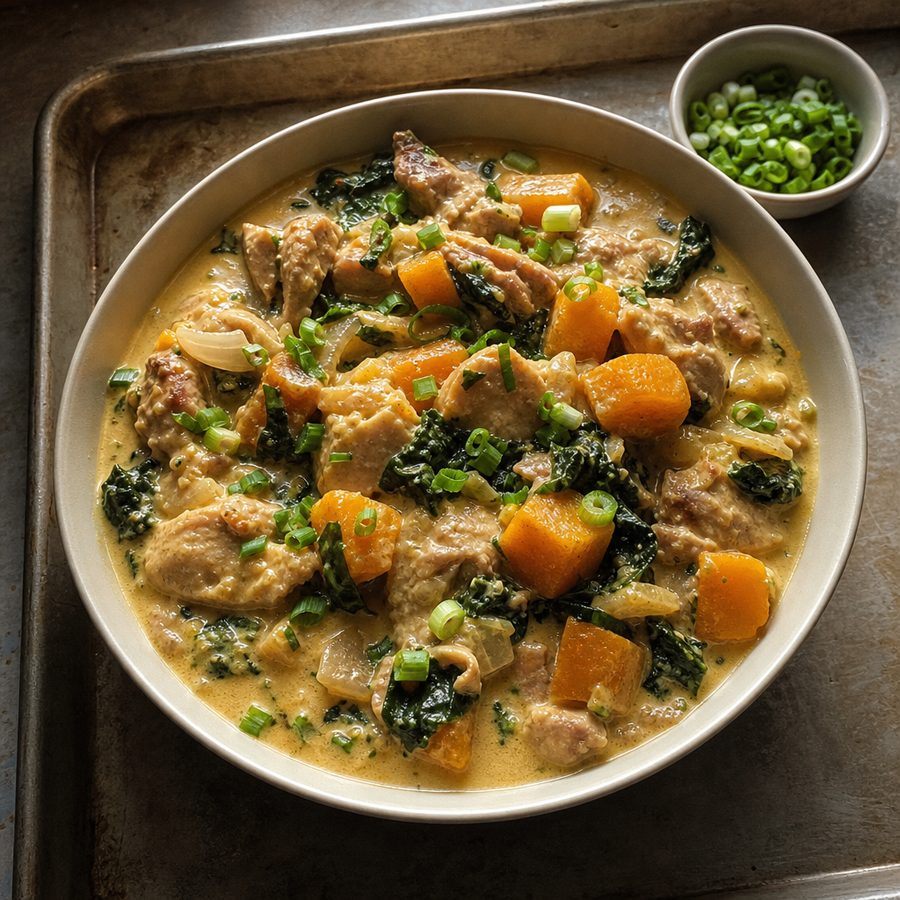
Filipino Coconut Braised Chicken with Squash & Kale
Tender chunks of chicken thigh and butternut squash simmered in ginger-scented coconut milk with onion, garlic, and coconut aminos, then folded with wilted kale and finished with fresh scallions.
Why You'll Love This Recipe
One pot gives you a full meal here: protein, a starchy vegetable, and greens, all cooked together in a single fragrant sauce that is warm and spoonable. It leans on gentle, familiar flavors rather than heat, so it suits a weeknight when you want something nourishing and low-effort but still feel like you cooked something with care. Boneless thighs and pre-cubed squash keep the hands-on time short.
The coconut milk carries everything else in the pot. Sauteing the onion, garlic, and ginger first releases their aromatics into the fat so the sauce tastes layered rather than raw, and the coconut aminos add a savory, faintly sweet depth that balances the richness of the coconut milk. Simmering the squash right in that liquid lets it soak up flavor while it softens, and a few of its edges break down to lightly thicken the sauce. The kale goes in last so it wilts without turning drab.
Three textures, and none of them fades on you. The thighs stay juicy through the braise, the squash turns silky, and the kale keeps a little bite. Together they deliver protein, fiber, and the natural sweetness of winter squash in a way that feels indulgent thanks to the coconut milk but still eats clean. It is the kind of bowl that feels comforting on a cool evening and holds you over well past dinner.
Ingredients
- 1 1/4 lb boneless skinless chicken thighs, cut into chunks
- 2 cups butternut squash, peeled and cubed
- 1 (13.5 oz) can full-fat coconut milk
- 3 cups kale, stemmed and torn
- 1 small onion, sliced
- 4 cloves garlic, minced
- 1 tbsp fresh ginger, julienned
- 2 tbsp coconut aminos
- 2 scallions, sliced
- 1 tbsp coconut oil
- 1/2 tsp salt
Instructions
- Prep the vegetables and chicken: Peel the butternut squash, scrape out any seeds, and cut it into bite-sized cubes. Slice the onion thinly, mince the garlic, and cut the fresh ginger into thin matchsticks. Strip the kale leaves from their tough stems and tear the leaves into rough pieces. Slice the scallions and set them aside for garnish. Pat the chicken thighs dry and cut them into chunks, since a wet surface will not brown and browning is the only step in this recipe that builds any depth.
- Saute the aromatics: Melt the coconut oil in a heavy pot over medium heat. Add the sliced onion, minced garlic, and julienned ginger and cook, stirring, for 3 to 4 minutes until the onion is soft and translucent and the mixture smells fragrant. Keep the heat moderate, because scorched garlic turns the whole pot bitter and coconut milk is too mild to cover for it.
- Brown the chicken: Add the chicken chunks to the pot and cook for 5 to 6 minutes, stirring now and then, until the pieces are lightly browned on the outside. They do not need to be cooked through yet, since the braise will finish them, and the browning is only here to build flavor before the liquid goes in.
- Braise with coconut milk and squash: Shake the can of coconut milk before opening, because the fat separates and sets at the top of the can, then pour it in along with the coconut aminos. Add the cubed squash and stir to combine. Bring to a gentle simmer, then cover and cook for about 20 minutes, until the squash is fork-tender and the chicken is cooked through and no longer pink in the center.
- Wilt in the kale: Stir the torn kale into the pot and simmer uncovered for 3 to 4 minutes, since kale added any earlier would be olive-colored and limp by the time the squash was tender, just until the leaves collapse and turn deep green but still hold their shape. Taste and season with the salt.
- Serve: Ladle the braise into bowls and garnish with the sliced scallions, which go on raw, because they are the only sharp thing against a pot that is otherwise soft and sweet all the way through.
Variations
- Swap the squash: Trade the butternut squash for cubed sweet potato or kabocha. Both turn tender in about the same time and give the sauce the same natural sweetness and body.
- Change the greens: Use torn spinach or Swiss chard in place of the kale. They wilt faster, so stir them in for the last minute or two of simmering rather than the full three to four minutes.
- Add gentle heat: Double the ginger and add a bruised stalk of lemongrass with the aromatics for a warming background note that plays well against the sweet squash and rich coconut milk, and stays clear of nightshades.
- Brighten with fish sauce: Stir a small splash of fish sauce in with the coconut aminos for a deeper savory, briny edge. This adds fish.
- Make it shrimp: Replace the chicken with peeled shrimp, adding them in the last few minutes of the braise so they cook just until pink and curled. This adds shellfish.
Storage & Leftovers
Cooled leftovers keep well in an airtight container in the refrigerator for up to four days. The flavors actually deepen overnight as the ginger and garlic settle into the sauce, so day-two servings are often even better than the first.
To reheat, warm a portion gently in a saucepan over low to medium heat, stirring occasionally until heated through. The coconut milk may look separated when cold; a slow, stirred reheat brings it back together smoothly. Add a splash of water if the sauce has thickened too much in the fridge. Avoid a hard boil, which can make the sauce grainy.
To get ahead, you can peel and cube the squash and cut the chicken a day in advance, storing each in the refrigerator. You can also cook the whole braise through the squash stage and refrigerate it, then reheat and stir in fresh kale just before serving so the greens stay bright.
Notes & Tips
- Buy the right coconut milk: Reach for full-fat coconut milk in a can, not the thin drinkable kind in a carton. The canned version has the fat content the sauce needs to turn rich and glossy; a light or beverage coconut milk will leave it watery.
- Shortcut the squash: Butternut squash is the most tedious part to peel and cube. A bag of pre-cut squash from the produce section works perfectly here and cuts your prep time in half.
- Julienne the ginger the tender way: Peel the knob, then slice it into thin coins across the fibers before stacking and cutting those into matchsticks. Slicing across the grain first shortens the tough lengthwise fibers so the strands melt into the sauce instead of turning stringy.
- Judge doneness on the squash: The squash is your timing cue: when a fork slides in with no resistance, the chicken will be cooked through too. If the squash still feels firm, cover and give it a few more minutes.
- Season at the end: Coconut aminos vary in saltiness by brand, so wait until the kale has wilted to add the salt. Taste the sauce first and adjust from there rather than salting up front.
- Round out the bowl: This braise is satisfying on its own, but a scoop of cauliflower rice underneath soaks up the sauce beautifully if you want to stretch it further.
Nutrition & Mindful Eating
- The chicken, the squash and the coconut milk finish as one thing. The thighs give up their fat into the sauce, the squash breaks down at the edges and thickens it, and the kale goes in at the end while it can still hold its shape.
- Chicken thighs are built for a braise like this. The fat and connective tissue in them soften over the long simmer and keep the meat from ever drying out, and they carry iron and zinc along with the protein that makes this a full dinner.
- Butternut squash is doing two jobs at once. The pieces that hold together stay sweet and tender, and the ones that fall apart dissolve into the coconut milk and give the sauce its color, which is beta-carotene going straight into the pot.
- Kale stirred in for the last few minutes keeps a little bite and a slight bitterness, which is exactly what a sauce this rich wants pushing back against it, and it brings vitamin K and vitamin C in with that dark green.
- A lot of ginger and garlic go into the coconut oil at the start and they perfume the whole pot. Coconut aminos gives the braise its savory backbone, and raw scallion scattered over at the table cuts through the richness.
- As you eat, watch how far the squash has collapsed into the sauce and how the ginger keeps surfacing through the coconut, and let a bowl this warm be worth sitting down for properly.
Frequently Asked Questions
My coconut milk looks curdled or separated in the sauce. Did I do something wrong?
No. Coconut milk can look grainy or separated if it comes to a hard, rolling boil or if the can was very thick. Keep the braise at a gentle simmer and stir now and then, and it will stay smooth. If it does separate, a good stir usually brings it back together.
Can I use bone-in chicken thighs instead of boneless?
Yes, and they add richer flavor. Bone-in, skinless thighs need longer to cook through, so extend the covered braise until the meat is tender and pulls easily from the bone, and check that the squash has not overcooked in the meantime.
Is this dish spicy?
Not as written. The ginger gives warmth and fragrance rather than heat, so it is mild and family-friendly. If you want a kick, add a sliced fresh chili or a pinch of red pepper flakes with the aromatics, keeping in mind that both are nightshades and take it off the autoimmune protocol.
Can I freeze the leftovers?
You can, though the texture changes. Coconut milk sauces sometimes turn slightly grainy after freezing and thawing, and the squash softens further. It is still tasty; thaw in the refrigerator and reheat gently, stirring to bring the sauce back together.