
Herb Salmon over Sweet Potato Noodles
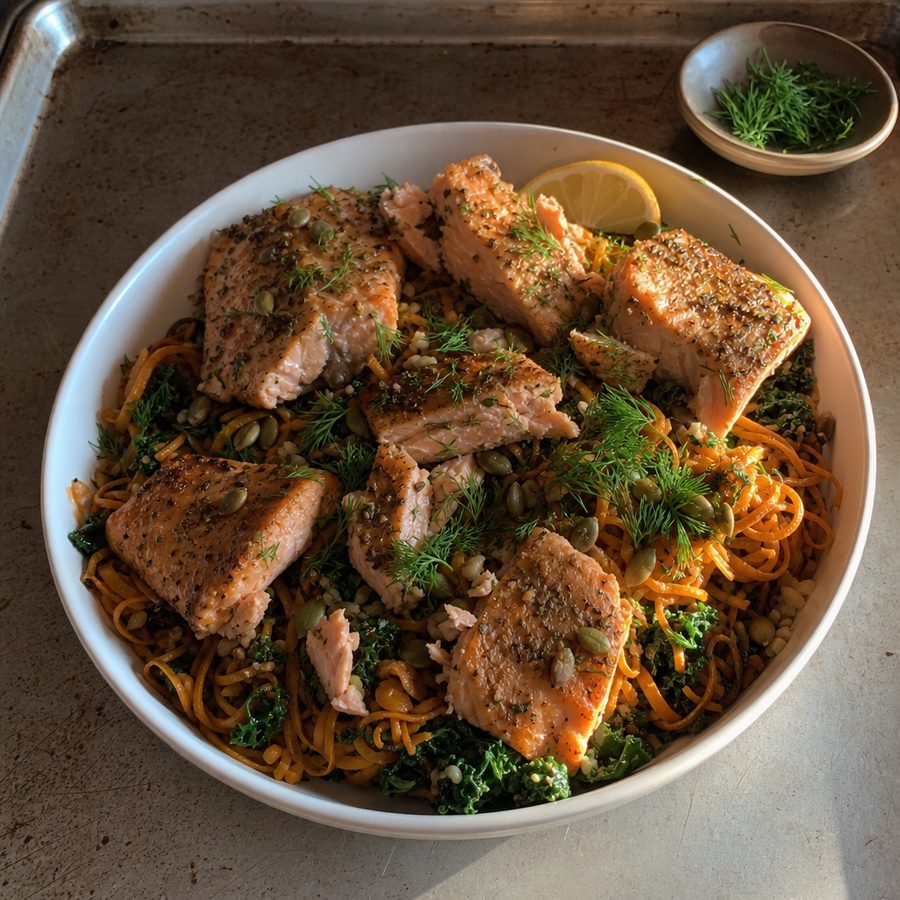
Roasted salmon fillets seasoned with thyme, set over garlicky sweet potato noodles and wilted kale, then finished with fresh lemon, dill, and pumpkin seeds.
Why You'll Love This Recipe
There are stretches, mostly in the fall and winter, when one more cold plate is not going to satisfy anybody. This is the answer to that. A roasted salmon fillet goes over a tangle of sweet potato noodles and kale, warm the whole way through, in about half an hour with one baking sheet and one skillet. The noodles turn soft and sweet in garlicky olive oil, the kale wilts down among them, and dill and lemon land at the very end so the plate stays bright instead of heavy. It suits anyone who wants to eat more fish and vegetables without a long ingredient list or fussy technique.
The dish works because two gentle cooking methods run at once and meet at the plate. Roasting the salmon in a moderate oven lets the outside firm up while the inside stays moist, and pulling it when it just flakes keeps it from drying. Meanwhile the garlic is bloomed in oil for only a moment before the noodles go in, so it flavors the whole skillet without scorching. Adding the lemon juice off the heat at the end keeps its brightness sharp, cutting through the richness of the fish.
Three different textures share the plate, and each one earns its place there. The salmon brings rich protein and omega-3 fats, the sweet potato noodles offer a naturally sweet, tender base with fiber, and the kale adds a savory, slightly chewy bite. Dill and lemon lift the whole thing, while pumpkin seeds add a crisp, nutty finish. It eats like comfort food but leaves you steady rather than heavy.
Ingredients
- 2 salmon fillets (about 6 oz each)
- 1 large sweet potato, spiralized
- 2 cups chopped kale
- 2 tbsp olive oil, divided
- 3 cloves garlic, minced
- juice of 1/2 lemon
- 2 tbsp chopped fresh dill
- 2 tbsp pumpkin seeds
- 1 tsp fresh thyme
- 1/2 tsp salt
Instructions
- Preheat and prep: Preheat the oven to 400°F (200°C) and line a baking sheet with parchment, since salmon skin welds itself to a bare pan and comes off in pieces. Strip the thyme leaves from their stems and roughly chop them, mince the garlic, roughly chop the kale into bite-size pieces, and chop the dill. If your sweet potato is not already spiralized, peel it and run it through a spiralizer to make long noodles.
- Roast the salmon: Pat the salmon fillets dry and set them on the lined baking sheet. Rub each with olive oil, then press on the chopped thyme and a pinch of salt, because the oil is what holds the herbs against the fish rather than letting them slide off onto the paper. Roast for 12 to 15 minutes, until the flesh turns opaque and flakes easily with a fork; the center should reach 125 to 130°F (52 to 54°C) for a moist, just-cooked fillet. That is medium-rare; the FDA figure for seafood is 145°F (63°C), which gives a firmer piece of fish if that is what you are after.
- Cook the sweet potato noodles: While the salmon roasts, heat olive oil in a large skillet over medium heat. Add the minced garlic and cook for about 30 seconds, just until fragrant, since it burns the moment the pan is left alone, then add the sweet potato noodles. Sauté, tossing often with tongs, for 5 to 6 minutes, until the noodles are tender but still hold their shape.
- Wilt the kale: Add the chopped kale and remaining salt to the skillet. Cook for 2 to 3 minutes, stirring, until the kale collapses and turns deep green. Squeeze in the lemon juice and toss to coat, then remove from the heat, so that the lemon stays sharp instead of cooking down into the oil.
- Plate and finish: Divide the noodles and kale between plates. Top each with a salmon fillet, then garnish with the chopped dill and a sprinkle of pumpkin seeds, which go on last, because the seeds soften within a few minutes of touching anything warm.
Variations
- Swap the green: Use baby spinach or chopped Swiss chard in place of the kale. Both wilt faster, so add them at the very end and cook just until collapsed.
- Different noodle base: Trade the sweet potato for spiralized butternut squash or zucchini. Zucchini releases more water, so cook it a minute less and let excess liquid steam off before plating.
- Warm spice: Toss the noodles with a pinch of smoked paprika or a little grated fresh ginger as they cook for a deeper, warmer backbone under the lemon and dill.
- Seed crunch swap: Replace the pumpkin seeds with sunflower seeds or roughly chopped walnuts for the same toasty finish (chopped walnuts add tree nuts).
- Herb switch: Finish with chopped fresh parsley or basil in place of the dill. Stir it in off the heat so it stays bright and green.
Storage & Leftovers
Store leftovers in an airtight container in the refrigerator for up to three days. Keep the salmon and the noodle-and-kale mixture together or separate; either way, let everything cool before sealing so condensation does not make the noodles soggy.
Reheat gently to protect the fish. Warm the noodles and kale in a skillet over medium-low heat with a small drizzle of olive oil, and set the salmon on top for the last minute or two just to take the chill off. A microwave works in a pinch at reduced power, but the fish will firm up more, so stop as soon as it is warm.
To get ahead, spiralize the sweet potato, chop the kale, mince the garlic, and chop the dill up to a day in advance and refrigerate them in separate containers. With the prep done, the whole dish cooks in under fifteen minutes.
Notes & Tips
- Pick the right fillet: Look for salmon of even thickness rather than a piece that tapers to a thin tail, so both fillets finish roasting at the same time. If one is much thinner, tuck the thin end under itself to even it out.
- Keep the noodles from turning to mush: Sweet potato noodles overcook fast. Toss them frequently and start checking at five minutes; you want them bendable and tender but still holding their spiral shape.
- Toast the seeds for more flavor: For a deeper, nuttier finish, warm the pumpkin seeds in a dry skillet for a couple of minutes until they smell toasty and begin to pop, then let them cool before sprinkling on top.
- Judge the salmon by feel: Beyond the flake test, gently press the top of the fillet; when it feels firm with just a little give and the flesh separates along its natural lines, it is done. An instant-read thermometer at 125 to 130°F (52 to 54°C) takes out the guesswork.
- Adjust the brightness to taste: Lemon strength varies. Add the juice, taste the noodles, and add a squeeze more or a pinch of salt if it tastes flat. The dish should taste lively, not just savory.
- Round out the plate: This is filling on its own, but if you want more on the table, a simple sliced cucumber and tomato salad or a few avocado slices alongside adds cool freshness against the warm fish.
Nutrition & Mindful Eating
- Salmon, sweet potato and kale land on the plate at three different textures, which is what makes this worth twirling. The fish flakes apart, the sweet potato ribbons stay springy, and the kale keeps a little chew in among them.
- Salmon is rich enough that it barely asks for anything to be done to it, and it roasts to the point where the flakes separate under a fork while the center stays translucent. Its omega-3 fats and its protein are what make a plate this simple eat like a full meal.
- Sweet potato cut into long ribbons cooks in minutes and holds its shape better than you expect, staying springy rather than collapsing, and its sweetness sits directly against the salt and the herbs on the fish. The beta-carotene behind that orange comes with the olive oil it needs.
- Kale wilted into the hot pan with garlic goes dark and silky at the edges while the ribs keep their bite, and it brings its own gentle bitterness, which is the thing that keeps a sweet base and an oily fish from landing on the same note.
- Pumpkin seeds are the last thing to hit the plate, toasted just long enough to smell of themselves, and their small hard crunch is the one thing on the plate that pushes back. They scatter magnesium and zinc across the top as they go.
- As you eat, take the first bite with a bit of everything on the fork, the fish, a ribbon and some kale, and see how the dill and lemon lift all three, then let the twirling slow the rest of the plate down.
Frequently Asked Questions
Do I need a spiralizer to make the sweet potato noodles?
A spiralizer gives the best long strands, but you can use a julienne peeler for thinner ribbons or a regular vegetable peeler to make wide, flat noodles. All of them cook in about the same time; just watch that thinner cuts soften a little faster.
My salmon came with skin still on. What should I do?
You can roast it skin-side down right on the parchment; the flesh cooks the same way, and the skin peels off easily once it is done if you would rather not eat it. Leaving it on during roasting also helps hold the fillet together when you lift it onto the plate.
Can I cook the salmon in the same skillet instead of the oven?
Yes. Sear the fillets in a hot oiled skillet for a few minutes per side until they flake, then set them aside and cook the noodles and kale in that same pan so they pick up the flavor. Roasting is simply more hands-off since it frees the stovetop for the noodles.
How do I keep the kale from tasting bitter?
Cook it just until it wilts and turns deep green, and be sure to finish with the lemon juice, which balances any bitterness. Tearing the leaves off the tough center stems before chopping also keeps the texture tender and the flavor milder.