
Lemon-Garlic Scallops over Spaghetti Squash
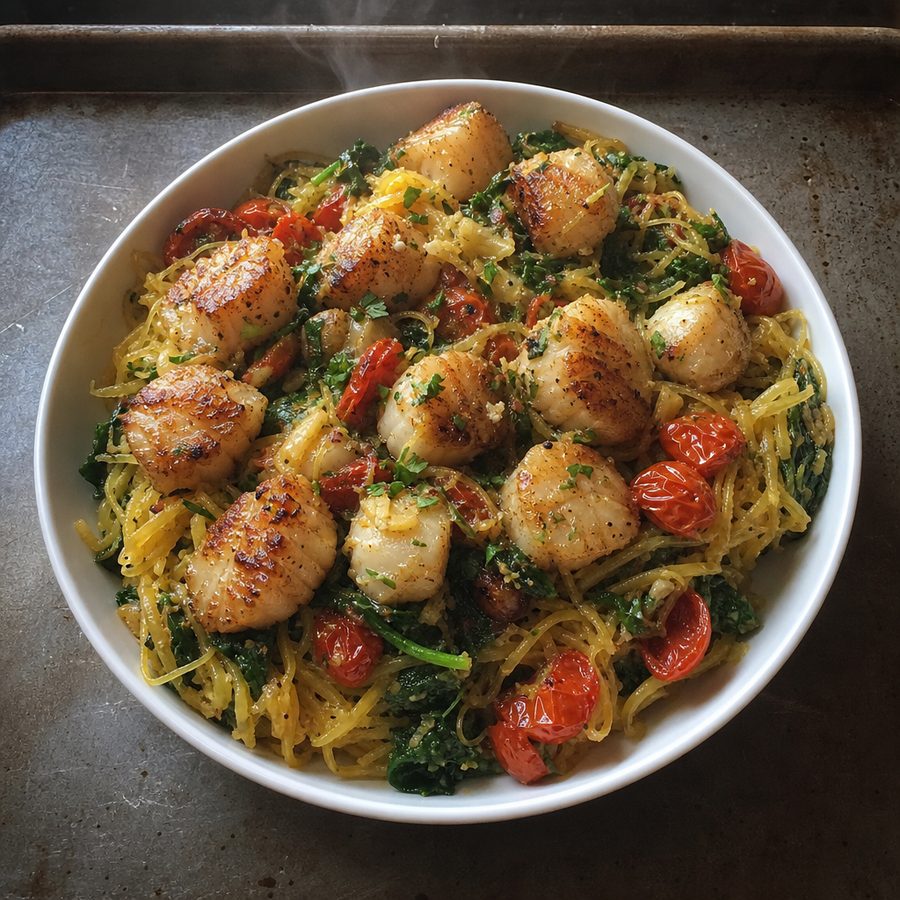
Golden seared sea scallops rest on a tangle of roasted spaghetti squash tossed with garlic, blistered cherry tomatoes, wilted spinach, lemon, and fresh parsley, finished with a whisper of cayenne.
Why You'll Love This Recipe
Restaurant-quality seafood at midday, with no heavy starch underneath it weighing the whole plate down at all. Roasted spaghetti squash stands in for noodles, so the sweet, briny scallops stay the center of attention while garlic, tomato, and lemon carry the plate. It comes together in one skillet plus a baking sheet, which makes it approachable for a weekday even though it eats like something special.
Bone-dry scallops, a hot pan, and room between them. Scallops are mostly water, so any surface moisture will steam them gray before they can brown; patting them bone-dry and setting them into a hot, shimmering pan with room to breathe gives you that deep golden crust and its toasty flavor. Searing in the same skillet also leaves behind fond and rendered flavor that the garlic and tomatoes lift right off the pan, and finishing with raw lemon juice off the heat keeps the acidity bright rather than dull.
Contrast runs through it: the tender chew of the scallops, the delicate strands of squash, the pop of blistered tomatoes, and the silkiness of wilted spinach, all tied together with garlic and citrus. Scallops deliver sweet, complete protein that keeps you full, while the squash, tomatoes, and spinach add fiber, water volume, and color, so the plate feels generous and fresh at once. You finish it nourished and awake rather than sluggish.
Ingredients
- 1 small spaghetti squash, halved and seeded
- 3/4 lb sea scallops, patted dry
- 2 tbsp olive oil, divided
- 4 cloves garlic, minced
- juice of 1 lemon
- 1 cup cherry tomatoes, halved
- 2 cups fresh spinach
- 3 tbsp chopped fresh parsley
- pinch of cayenne
Instructions
- Roast the squash: Preheat the oven to 400°F (200°C). Halve the spaghetti squash lengthwise and scoop out the seeds and loose pulp with a spoon. Rub the cut sides with olive oil and leave them unseasoned, since the scallops and pan juices season the squash later. Place the halves cut-side down on a baking sheet and roast for 35 to 40 minutes, until the flesh is tender and gives easily when pressed. Let cool a few minutes, then drag a fork lengthwise through the flesh to pull it into long strands and leave them in the shells for now.
- Prep the aromatics and scallops: While the squash roasts, mince the garlic, halve the cherry tomatoes, and roughly chop the parsley. Juice the lemon and set it aside. Check each scallop for the small tough side muscle and peel it off if present, then pat the scallops thoroughly dry on both sides with paper towels; dry surfaces are the difference between a golden crust and a gray steam.
- Sear the scallops: Heat olive oil in a skillet over medium-high heat until it shimmers. Season the scallops with the cayenne alone, because sea scallops come out of the water already briny. Lay them in the pan without crowding, leaving space between each, and sear undisturbed for 1.5 to 2 minutes until a deep golden crust forms. Flip and sear the second side 1.5 to 2 minutes more, until just opaque through the center. Transfer to a plate and set aside.
- Build the garlic base: Lower the heat to medium and add the minced garlic to the same skillet. Cook for about 30 seconds, stirring constantly so it turns fragrant but not brown. Add the halved cherry tomatoes and cook about 3 minutes, until they soften and begin to slump and release their juices. Add the spinach and stir just until it wilts down, less than a minute.
- Combine and serve: Add the spaghetti squash strands to the skillet along with the lemon juice and toss to coat everything in the garlicky pan juices, which carry the brine the scallops gave up in the pan. Divide onto plates, arrange the seared scallops on top, and garnish with the chopped parsley.
Variations
- Turn up the heat: Increase the cayenne or add a pinch of crushed red pepper flakes to the garlic as it cooks for a warmer, more assertive background heat that plays against the sweet scallops.
- Swap the shellfish: Trade the scallops for peeled shrimp, seared the same way until pink and opaque. This keeps the dish quick and swaps in a different shellfish for the scallops.
- Add a green vegetable: Roast asparagus or zucchini alongside the squash and fold the pieces into the skillet at the end for more volume and a second texture.
- Change the herb: Finish with torn fresh basil in place of the parsley for a sweeter, more perfumed top note that leans into the tomatoes.
- Add a crunch: Sprinkle toasted sliced almonds over the top for a bit of crackle against the tender scallops and squash; this adds nuts.
Storage & Leftovers
Store leftovers in an airtight container in the refrigerator for up to two days. Scallops are best the day they are cooked, so if you know you will have extra, keep the seared scallops in a separate container from the squash and vegetables to protect their texture.
Reheat gently. Warm the squash and vegetables in a skillet over medium-low heat until hot, then add the scallops for just the last minute or so, only long enough to take the chill off; high heat or a long reheat turns scallops rubbery. A microwave works in a pinch at reduced power, but the stovetop keeps the scallops far more tender.
To get ahead, roast the squash, scrape it into strands, and refrigerate it up to three days in advance. You can also mince the garlic, halve the tomatoes, and chop the parsley the day before. With the squash and prep done, searing the scallops and building the pan takes only minutes at mealtime.
Notes & Tips
- Buy dry-packed scallops: Ask the fishmonger for dry-packed or dry sea scallops. Wet-packed scallops are treated with a phosphate solution that makes them hold water, so they weep and steam in the pan instead of browning.
- Don't crowd the skillet: Give each scallop space. Packed too tightly, they trap steam and turn gray; sear in two batches if your pan is small so every one gets a real crust.
- Remove the side muscle: Each scallop has a small rectangular tab on its side that turns tough and chewy when cooked. Pinch it and peel it away before searing; it comes off easily.
- Know when scallops are done: Pull them the moment the sides look opaque and the center is barely translucent. They keep cooking off the heat, and a minute too long is the difference between silky and rubbery.
- Pick a good squash: Choose a spaghetti squash that feels heavy for its size with a hard, matte, blemish-free rind. A dense one yields firmer, more separate strands than a light, hollow-sounding one.
- Serve it right away: This plate is at its best hot off the skillet while the crust on the scallops is still crisp and the squash is steaming. Have plates ready before you start searing so nothing sits and cools.
Nutrition & Mindful Eating
- This is a fast plate built on one slow step. The squash roasts while everything else waits, and then the scallops, garlic and tomatoes are all done in the few minutes it takes to get a pan properly hot.
- Sea scallops want a dry surface and a hot pan, and about ninety seconds a side gives you a deep gold crust over a center that is still sweet and only just set. They are dense with protein and carry B12 and selenium, which is a lot from something that cooks that quickly.
- Spaghetti squash pulls into long pale strands under a fork once it is roasted, and those strands stay slightly firm and faintly sweet, which is exactly what you want underneath a pan sauce this sharp. The fiber comes along with them.
- Cherry tomatoes left alone in hot oil until they blister and split release their juice straight into the pan, and that juice with the garlic and a pinch of cayenne is the entire sauce. Cooking them in oil is also what makes their lycopene easier for your body to use.
- Lemon juice goes in off the heat so it stays sharp, the spinach wilts in whatever warmth is left, and the parsley is scattered raw. Those three at the end are what make a plate of seared things taste fresh.
- As you eat, take a scallop with a forkful of squash so the crust and the strands arrive together, and slow down enough to notice how the lemon keeps coming back and when you are comfortably full.
Frequently Asked Questions
Why did my scallops turn out rubbery?
Almost always overcooking. Scallops need only about a minute and a half to two minutes per side over medium-high heat and should come out when the center is just opaque. They finish cooking on the plate, so pull them a touch early rather than late.
Can I cook the spaghetti squash in the microwave instead of roasting it?
Yes. Pierce the whole squash in several places, microwave it a few minutes to soften, then halve, seed, and microwave the halves cut-side down in a little water until tender. Roasting gives a slightly drier, sweeter strand, but the microwave is a fine shortcut.
My squash came out watery. How do I fix that?
Roast it cut-side down until fully tender so excess moisture cooks off, and after scraping the strands, let them sit a moment or blot them before adding to the skillet. Tossing them in the hot pan at the end also drives off some of the water.
Can I make this ahead for lunches?
Roast the squash and do your chopping up to a few days early and refrigerate. Sear the scallops fresh when you eat, since they are quick and taste best just cooked. If you must cook everything ahead, reheat the scallops gently and briefly to keep them tender.