
Mediterranean Zucchini & Tomato Shakshuka
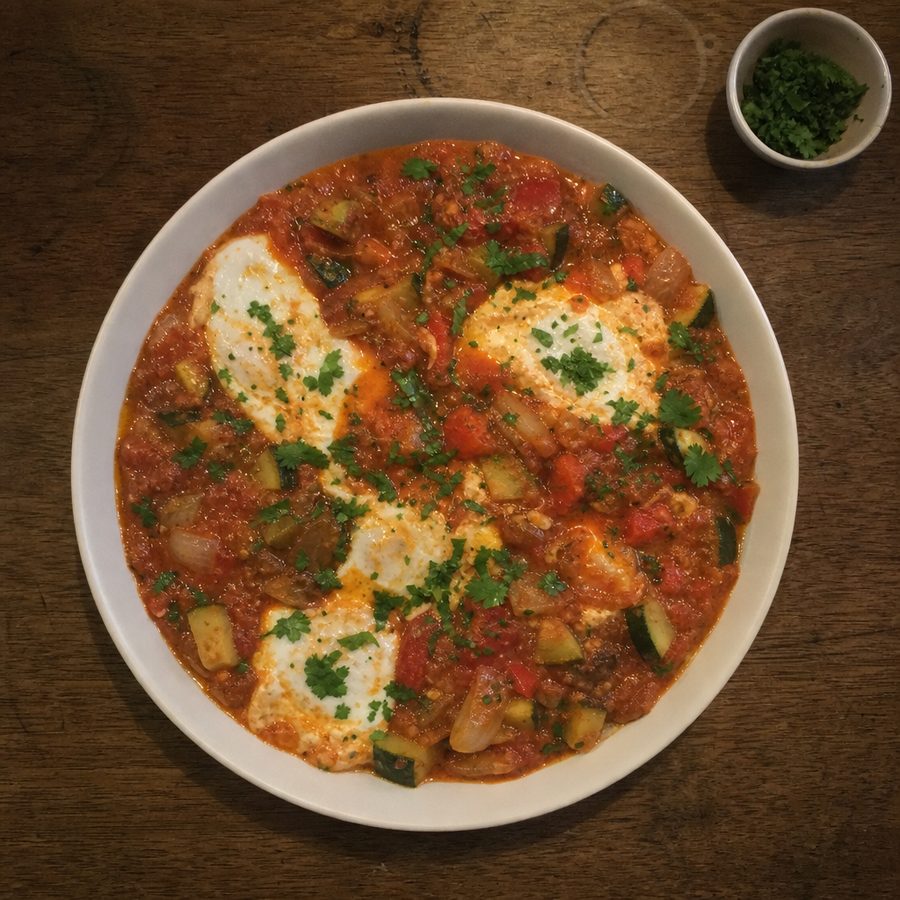
Eggs gently poached in a spiced skillet of crushed tomatoes, onion, red bell pepper, and zucchini, warmed with cumin and paprika and finished with fresh parsley.
Why You'll Love This Recipe
This is a one-skillet breakfast for anyone who wants something warm, savory, and filling in the morning without a long ingredient list. It leans entirely on vegetables and eggs, so it lands soft and comforting rather than heavy, and it comes together in a single pan you can carry straight to the table. It suits a slow weekend morning just as well as a make-ahead weekday, and it scales up easily when you are feeding a full table.
The onion and pepper come first, the spices second. The onion and pepper are softened first to build a sweet, mellow base, then the paprika and cumin are toasted briefly in the oil so their aroma opens up before any liquid goes in. The tomato paste is cooked until it darkens to concentrate its flavor, and the sauce is simmered uncovered until it thickens, which matters because a watery sauce cannot hold the wells that cradle the eggs. Poaching the eggs directly in that sauce under a lid lets the whites steam and set while the yolks stay soft.
The staying power of eggs meets a big volume of vegetables, so a full serving feels generous without being dense. The eggs bring high-quality protein, the tomatoes and peppers add brightness and color, and the zucchini melts into the sauce so even a skeptic gets vegetables at breakfast. Olive oil rounds everything out and helps carry the fat-soluble nutrients in the tomatoes and peppers, making a plate that tastes indulgent but leaves you steady rather than sluggish.
Ingredients
- 2 tbsp olive oil
- 1 medium onion, diced
- 3 garlic cloves, minced
- 1 red bell pepper, chopped
- 1 medium zucchini, diced
- 1 1/2 cups crushed tomatoes
- 1 tbsp tomato paste
- 1 tsp paprika
- 1 tsp ground cumin
- 5 large eggs
- 2 tbsp chopped fresh parsley
- 3/4 tsp salt
Instructions
- Prep the vegetables: Dice the onion, chop the red bell pepper into small pieces, and dice the zucchini. Mince the garlic and roughly chop the parsley; set the parsley aside for the end. Cut everything before the pan heats, because the aromatics scorch in the time it takes to catch up with a knife.
- Soften the aromatics: Heat the olive oil in a large skillet over medium heat until it shimmers. Add the onion and red bell pepper and cook, stirring now and then, for 5 to 6 minutes, until the onion turns translucent and the pepper softens. Stir in the garlic and cook about 30 seconds, just until fragrant, so it does not brown and turn bitter.
- Bloom the spices and add the zucchini: Add the diced zucchini along with the paprika and cumin. Cook, stirring, for 3 to 4 minutes, since the spices need those few minutes in hot oil to smell like anything, and once the tomatoes go in there is no oil left uncovered for them to bloom in. Stir in the tomato paste and cook it for about a minute until it darkens slightly, which is how you know its raw, tinny edge has cooked off.
- Build and simmer the sauce: Pour in the crushed tomatoes and add the salt, stirring to combine. Reduce the heat to low and simmer, uncovered, for 8 to 10 minutes, until the sauce thickens enough that a spoon dragged across the pan leaves a brief trail. Taste and adjust the salt now, before the eggs go in, since stirring a pan with five poached eggs sitting in it is not something you can do.
- Poach the eggs: Using the back of a spoon, make five shallow wells spaced around the sauce. Crack one egg into each well. Cover the skillet and cook over low heat for 6 to 8 minutes. The whites are done when they are fully opaque and set with no clear liquid; for runny yolks, pull the pan while the yolks still jiggle when nudged, and cook a minute or two longer for firmer yolks.
- Garnish and serve: Remove the skillet from the heat and garnish with the chopped fresh parsley, because parsley that hits a hot pan goes dark within a minute and loses the point of being there. Serve straight from the pan, spooning up an egg with plenty of the sauce for each portion.
Variations
- Turn up the heat: Add a pinch of red pepper flakes or a little cayenne along with the paprika and cumin for a warming, spicy edge. Start small, taste the sauce before the eggs go in, and add more if you want it hotter.
- Fold in greens: Stir a handful of fresh spinach or finely chopped kale into the sauce during the last couple of minutes of simmering, letting it wilt down before you make the wells. It adds color and a little more substance without changing the character of the dish.
- Smoky depth: Swap the sweet paprika for smoked paprika, or use half of each. This shifts the flavor toward a mellow, campfire smokiness that plays well with the tomatoes.
- Add a savory protein: Brown a little ground lamb or beef in the pan before the onion, then build the sauce on top of it. This adds meat and makes the skillet heartier and more filling.
- Briny finish: Stir chopped pitted olives or a spoonful of capers into the sauce near the end for a salty, briny lift. If you add them, hold back on the salt, since both bring their own.
Storage & Leftovers
The sauce keeps well, but eggs are best fresh. Refrigerate leftovers in an airtight container for up to three to four days. Poached eggs continue to firm up in the fridge, so their yolks will no longer be runny once stored; the flavor stays good, they just set fully.
Reheat gently. Warm leftovers in a covered skillet over low heat with a splash of water to loosen the sauce, or microwave in short bursts at reduced power. Low and slow keeps the eggs from turning rubbery and the sauce from splitting; avoid a hard boil, which toughens the whites.
For make-ahead, prepare the sauce through the simmering step, cool it, and refrigerate it on its own. When you are ready to eat, bring the sauce back to a gentle simmer, make the wells, and poach the eggs fresh so the yolks come out exactly how you like them. The sauce also freezes well before the eggs are added.
Notes & Tips
- Crack each egg into a cup first: Break each egg into a small cup or ramekin, then slide it into its well. You get a cleaner, more contained egg, you can fish out any shell before it goes in, and you avoid breaking a yolk against the hot pan.
- Pick the right zucchini: Choose a firm zucchini with tight, glossy skin and no soft spots. Smaller ones have fewer seeds and a denser texture that holds up in the sauce instead of going mushy.
- Let the sauce thicken enough: The wells only hold their shape if the sauce is thick enough to part and stay parted. If it still looks loose after simmering, give it a few more minutes uncovered before you add the eggs.
- Judge doneness by the whites and yolks: The whites should be fully opaque with no translucent, jelly-like patches, while the yolks still wobble for runny centers. Peek under the lid a minute early the first time so you learn the timing for your stove.
- Season to your tomatoes: Crushed tomatoes vary a lot in salt and acidity by brand. Always taste the sauce before the eggs go in; a pinch more salt, or a moment longer to cook down sharp acidity, makes a real difference.
- Round out the plate: Serve alongside sliced avocado or a simple green salad to make it a fuller meal, and keep extra chopped parsley on the table for anyone who wants a fresher, brighter finish.
Nutrition & Mindful Eating
- The tomatoes, the eggs and the vegetables cooked into them work as one dish here. The sauce goes deep and savory over the simmer, the zucchini and pepper keep it fresh, and the eggs settle on top and turn the whole skillet into breakfast.
- Eggs are the reason this eats like a meal. Cooked just until the whites set and the yolks are still loose, they run into the sauce as you break them, and they bring complete protein and choline along with that softness.
- Crushed tomatoes and a spoonful of tomato paste build the body of the sauce, sweet and a little tart once they have simmered down, and cooking them is what makes their lycopene easier for your body to take up.
- Olive oil goes into the pan before anything else and stays in the sauce, softening the onion and red bell pepper into sweetness and carrying the color and the fat-soluble goodness of the tomatoes and paprika through every spoonful.
- Cumin and paprika toast in the hot oil for a moment before the tomatoes arrive, which is where that warm, faintly smoky smell comes from, and the parsley scattered over the finished pan keeps the last bite green and fresh.
- As you eat, notice how the spoon breaks the yolk into the sauce and how the parsley smells the moment the heat reaches it, and give yourself the length of the meal sitting down rather than eating over the stove.
Frequently Asked Questions
How do I keep the yolks runny but the whites fully cooked?
Poach over low heat with the lid on, which steams the tops of the eggs so the whites set from above while the yolks stay soft. Start checking at the 6-minute mark: the whites should be opaque with no clear liquid, and the yolks should still jiggle when you nudge the pan. Pull it from the heat right then, since carryover heat keeps cooking the eggs.
My sauce turned out watery. How do I fix it?
Let it simmer longer, uncovered, before adding the eggs. Excess liquid needs to evaporate so the wells will hold their shape; the sauce is ready when a spoon dragged across the pan leaves a trail that does not immediately fill back in. If eggs are already in, you can carefully spoon off a little of the thin liquid pooling at the edges.
Can I make this for one or two people instead of a crowd?
Yes. The sauce scales cleanly up or down, so make the amount of sauce you need and poach only as many eggs as you plan to eat. Any extra sauce keeps well on its own in the fridge, and you can poach fresh eggs in it later for a fast second meal.
Can I use whole or diced tomatoes instead of crushed?
Yes. Whole tomatoes work if you crush them by hand or break them up in the pan with your spoon as they simmer, and diced tomatoes work too, though they stay a bit chunkier. Either way, simmer until the sauce thickens enough to hold the wells for the eggs.