
Ripe Plantain Pancakes with Almond Butter
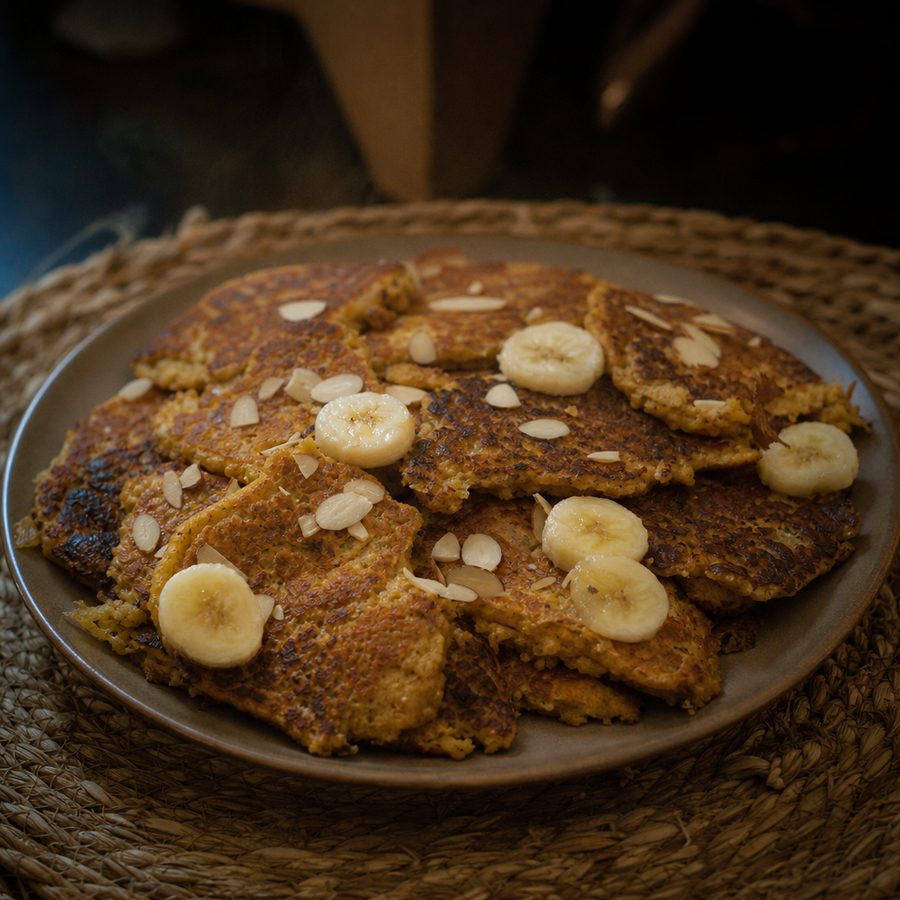
Tender, grain-free blender pancakes built from very ripe plantain and eggs, enriched with almond butter and warmed with cinnamon, cooked in coconut oil until deeply golden and naturally sweet.
Why You'll Love This Recipe
These are soft, naturally sweet pancakes for anyone who wants a warm, comforting breakfast without flour, dairy, or added sugar. Because the whole batter comes together in a blender, they suit busy mornings and cooks who would rather not measure out multiple bowls of dry ingredients. They are gentle enough for kids and satisfying enough to carry an adult through a full morning. Buy the plantains several days ahead, since the whole recipe depends on their being properly black, and a yellow one will give you something closer to a savory fritter.
The plantain is doing all of the sweetening. When a plantain ripens until its skin turns black, its starch converts to sugar, which is what gives these pancakes their sweetness and golden color. The eggs set the batter into a real pancake structure as they cook, while almond butter adds richness and body that keeps the crumb tender rather than eggy. Cooking low and slow in coconut oil is the key technique, because that natural sugar browns fast and would scorch over higher heat.
What makes this stack satisfying is the balance of what is actually on the plate. The plantain brings carbohydrate and fiber, the eggs contribute complete protein, and the almond butter layers in healthy fat, so the meal holds you rather than spiking and crashing. The warmth of cinnamon and the toasty edge from the coconut oil make it taste like a treat while the food itself is nourishing.
Ingredients
- 1 large very ripe plantain, peeled
- 2 large eggs
- 2 tbsp almond butter
- 1 tsp ground cinnamon
- 1/4 tsp salt
- 1 tbsp coconut oil, for the pan
Instructions
- Peel and prep the plantain: Choose a plantain that is very ripe, with a skin that has turned mostly black and yields to gentle pressure. Trim off both ends, score the peel lengthwise with a knife, and pull the skin away. Break the peeled plantain into a few chunks so it blends easily.
- Blend the batter: Add the plantain chunks, eggs, almond butter, cinnamon, and salt to a blender. Blend until completely smooth, about 30 seconds, stopping once to scrape down the sides so no lumps of plantain remain. The batter should look thick and uniform.
- Rest the batter: Let the batter sit for about 3 minutes so it thickens slightly. It should be pourable but not runny. This short rest helps the pancakes hold together when you flip them.
- Heat the pan: Warm a nonstick skillet over medium-low heat and melt a thin layer of coconut oil to coat the surface. Medium-low is important here, because the natural sugars in ripe plantain brown quickly and can scorch over higher heat.
- Cook the pancakes: Pour small 3-inch rounds into the pan, leaving space between them. Cook 2 to 3 minutes, until the tops look set and no longer wet and the undersides are deep golden. Keep the rounds small; these pancakes are delicate and larger ones are hard to turn.
- Flip and serve: Slide a thin spatula fully under each pancake and flip gently, then cook 1 to 2 minutes more until the second side is golden and the center feels firm. Repeat with the remaining batter, adding coconut oil to the pan as needed, and serve warm.
Variations
- Extra warm spice: Add a pinch of ground nutmeg or ground ginger to the blender along with the cinnamon for a deeper, cozier flavor that leans toward gingerbread.
- Vanilla and citrus: Blend in a splash of vanilla extract and a little grated orange zest to brighten the natural sweetness of the plantain without changing the texture.
- Sunbutter swap: Replace the almond butter with sunflower seed butter for a nut-free version; the pancakes stay just as rich and tender.
- Fruit-topped: Fold a handful of fresh blueberries or thin banana slices onto the tops of the pancakes right after you pour them, then flip as usual, for pockets of soft fruit.
- Toasted coconut finish: Sprinkle unsweetened shredded coconut over the batter as it cooks so it toasts against the pan, adding crunch and a light tropical aroma.
Storage & Leftovers
Cooled pancakes keep in an airtight container in the refrigerator for up to 3 days. Stack them with a small piece of parchment between each one so they do not stick together, since they are soft and can tear when pulled apart.
To reheat, warm them in a dry nonstick skillet over low heat for a minute or two per side until heated through and the surface crisps again. A toaster oven works well too. Avoid the microwave if you can, as it makes them steamy and limp rather than golden.
To make ahead, cook a full batch, cool completely, and freeze flat on a tray before transferring to a bag; they reheat straight from frozen in a skillet or toaster. You can also blend the batter the night before and keep it covered in the refrigerator, then give it a quick stir before cooking.
Notes & Tips
- Ripeness is everything: Use a plantain whose skin has turned mostly black; a yellow or green one is too starchy and firm, and the batter will taste bland and cook up gummy rather than sweet.
- Keep them small: Resist the urge to make big rounds. Three-inch pancakes are far easier to flip in one piece, and the batter is soft enough that a large one is likely to fold or tear.
- Watch the heat: If the undersides are browning before the tops set, lower the heat. The natural sugars caramelize fast, so patience over medium-low gives you golden pancakes instead of scorched ones.
- Stir the batter as you go: The batter can separate slightly while it rests and between batches. Give it a quick stir before each pour so every pancake has an even mix of plantain, egg, and almond butter.
- Double the batch: These freeze and reheat beautifully, so it is worth blending extra and cooking a big stack at once to bank easy breakfasts for the week.
- Serve them simply: They are sweet on their own, but a dollop of extra almond butter, a few fresh berries, or a light dusting of cinnamon on top rounds out the plate without any syrup.
Nutrition & Mindful Eating
- Plantain and egg are the entire structure here. The fruit brings the sweetness and the body, the eggs set it into something that holds together in the pan, and the almond butter makes the batter rich enough to stay tender as it cools.
- A plantain gone black is a different food from the green one, still starchy but soft and properly sweet, with a flavor closer to banana bread than to a vegetable. It brings potassium and a slow whole-food carbohydrate to the plate.
- Eggs do the binding and the lifting, and they are why the middles set custardy rather than gummy. They also bring complete protein and choline, which is what turns a sweet breakfast into one that holds you.
- Almond butter runs through the batter and goes on top as well, thick and toasty, and its fat and vitamin E slow the whole breakfast down so the sweetness arrives gradually.
- Coconut oil in the pan gives the edges a deep caramelized brown, cinnamon and a pinch of salt sharpen the plantain's sweetness, and the smell coming off the skillet belongs more to dessert than to breakfast.
- As you eat, taste how caramelized the outside has gone against the soft center, and let the plate be a reason to sit rather than something you finish while the pan is still hot.
Frequently Asked Questions
My plantain looks yellow with a few black spots. Is that ripe enough?
Not quite. For sweet, tender pancakes you want a plantain whose skin has turned mostly to fully black and feels soft when pressed. At the yellow-with-spots stage it is still too starchy, and the pancakes will be firmer and much less sweet.
Why did my pancakes fall apart when I flipped them?
This batter is delicate, so two things help most: keep the rounds small at about three inches, and let the tops set fully before you flip. Slide a thin spatula all the way under each one and turn it in a single confident motion rather than nudging it.
Can I use a different nut or seed butter?
Yes. Any smooth, drippy nut or seed butter works in place of almond butter and keeps the pancakes rich and tender. A thick, stiff butter can make the batter too dense, so choose one that stirs easily.
Do these taste eggy?
Not when made with a very ripe plantain and almond butter, which balance the eggs with sweetness and richness. If you notice any eggy note, it usually means the plantain was underripe or the batter needed a longer blend to fully combine.