
Roasted Beet & Tahini Dip with Snap Peas
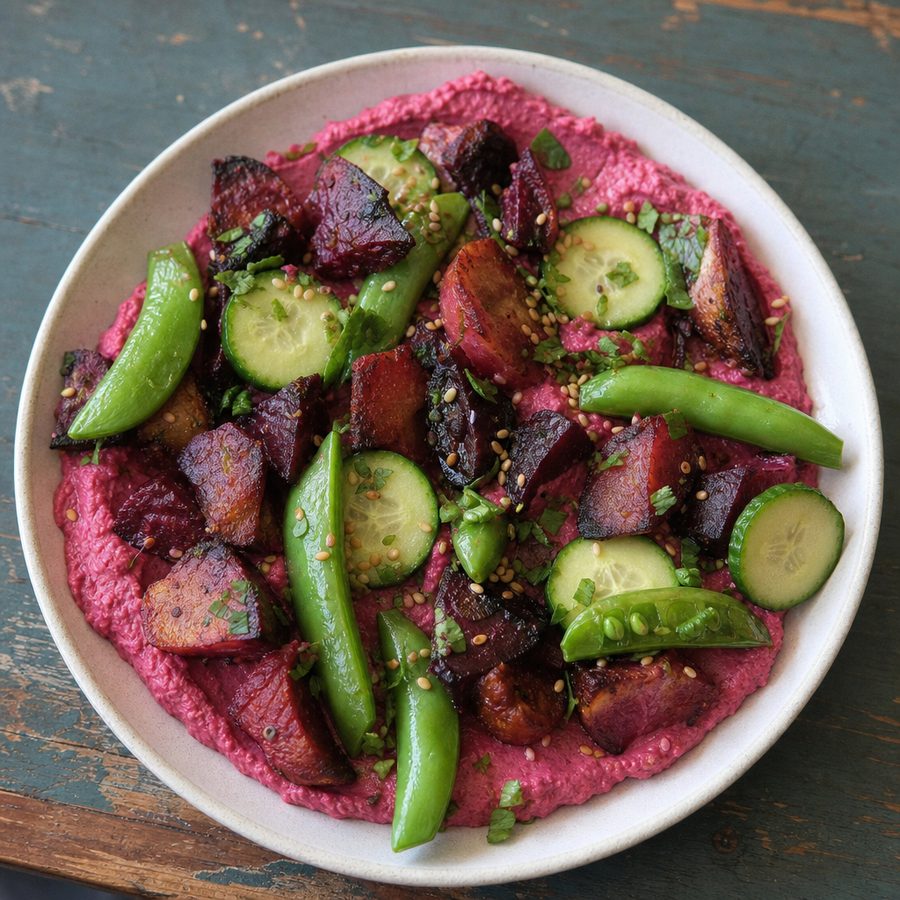
A silky, vivid-pink dip of roasted beets blended with tahini, cumin, garlic, lemon, and olive oil, served with crisp snap peas and cool cucumber rounds for dipping.
Why You'll Love This Recipe
Beets want the better part of an hour in the oven, which is why I roast them on a night when the oven is already busy with something else. Wrapped in foil they need no attention at all, and once they have cooled the dip itself is about five minutes in a food processor. That hour spent once covers snacks for several days, since the bowl keeps and the crisp raw vegetables alongside it are cut fresh each time. It turns a dip into a small, deliberate plate rather than a handful of chips, which is what makes it worth reaching for between meals.
The magic here is roasting the beets whole in their skins. Slow, dry heat concentrates their natural sugars and drives off the raw, dusty edge that boiled beets can have, leaving them mellow and deeply sweet. Tahini brings a gentle bitterness and body that keeps the sweetness in check, lemon lifts the whole thing, and cumin ties the earthy and tangy notes together. Blending it all in a food processor emulsifies the olive oil into the beets, which is what gives the dip its plush, spoon-coating texture.
Nothing in this is hiding. The beets bring fiber and the earthy pigments that give them their color, tahini and olive oil add richness and staying power from good fats, and the snap peas and cucumber add crunch and freshness with real water content. It reads as indulgent because of the creamy texture and vivid color, but it is built almost entirely from plants, so it satisfies without weighing you down.
Ingredients
- 2 medium beets
- 2 1/2 tbsp tahini
- 1 tbsp fresh lemon juice
- 1 clove garlic
- 1 tsp ground cumin
- 1 tbsp olive oil
- 1/4 tsp salt
- 2 cups snap peas
- 1 medium cucumber, cut into rounds
Instructions
- Roast the beets in foil, 45 to 55 minutes: Heat the oven to 400°F (200°C). Rinse the beets and trim the stems and roots but leave the skins on, then wrap each one snugly in foil and roast on a baking sheet for 45 to 55 minutes, until a knife slides into the center with no resistance. The foil traps steam so they cook in their own moisture, which is what makes the skins slip off afterward and keeps the flesh from drying out.
- Rub the skins off while they are warm: Unwrap the beets, let them cool until they are comfortable to handle, then rub the skins off with a paper towel or your fingers, working over the sink and wearing gloves if you would rather not stain your hands. Do it while they are still warm, because the skins slip away easily then and cling stubbornly once the beets are cold. Cut them into rough chunks.
- Have the garlic and lemon ready: Peel the garlic clove and squeeze the lemon, catching any seeds, before the processor comes out. Everything goes in at once from here, so having them ready keeps the blending to a single uninterrupted run rather than stopping to prep with beet-stained hands.
- Blend until glossy, then loosen: Put the beet chunks, tahini, lemon juice, garlic, cumin, olive oil, and salt in a food processor and blend until completely smooth and creamy, scraping down the sides, then add a splash of water and blend again until it turns glossy and spreadable. The water is what takes it from a thick paste to a dip, since tahini tightens as it is worked.
- Taste it and look at the color: Taste and balance with a little more lemon for brightness or a pinch more salt. It should taste earthy and tangy with a warm hum of cumin, and the color should be a vivid pink rather than a dull maroon, which is the sign the beets were roasted rather than boiled.
- String the snap peas: Rinse the snap peas and pat them dry, pulling off the tough string that runs along the seam of each pod, and slice the cucumber into rounds. The string is worth removing, because it does not soften and it catches between your teeth in what is otherwise a clean, crisp bite.
- Serve with a well for the oil: Spread the dip into a shallow bowl, make a shallow well in the surface with the back of a spoon, and drizzle olive oil into it, then arrange the snap peas and cucumber alongside. The well is practical rather than decorative, since it holds the oil where a scoop will pick it up instead of letting it run to the edge.
Variations
- Roasted garlic: Swap the raw garlic clove for a few cloves roasted alongside the beets until soft and golden. The sharp bite mellows into something sweet and nutty, giving a rounder, less pungent dip.
- Herb swirl: Blend in a handful of fresh dill, mint, or flat-leaf parsley, or sprinkle the chopped herbs over the top at serving. They add a green, cooling note that plays against the earthy beets.
- A little heat: Add a pinch of ground chili or a spoonful of harissa to the food processor for a warm, smoky kick. Start small and taste, since the sweetness of the beets can carry more heat than you expect.
- Citrus shift: Trade the lemon juice for fresh orange juice and a little zest. The dip turns slightly sweeter and more floral, a nice match for the cumin.
- More crunch on the side: Round out the dipping vegetables with radish wedges, endive leaves, or strips of bell pepper. It keeps the plate colorful and gives a mix of textures to scoop with.
Storage & Leftovers
Store the dip in an airtight container in the refrigerator, where it keeps its color and flavor for up to five days. Keep the snap peas and cucumber in a separate container so they stay crisp rather than softening against the moist dip.
This dip is meant to be eaten cold or at room temperature, so there is no reheating involved. After it has been in the refrigerator, let it sit on the counter for ten to fifteen minutes before serving so the olive oil softens and the flavors open back up; give it a quick stir to bring the texture back together.
For make-ahead, the dip actually improves after a few hours as the garlic and cumin settle in, so it is a good candidate to blend a day early. Slice the cucumber and string the snap peas the morning you plan to serve so the vegetables are at their crispest.
Notes & Tips
- Choose firm, heavy beets: Pick beets that feel dense for their size with smooth, taut skin. Soft or shriveled ones have lost moisture and roast up fibrous rather than tender. Similar-sized beets also cook at the same rate.
- Protect your hands and board: Beet pigment stains everything it touches. Peel over the sink, use a plastic cutting board rather than a porous wooden one, and wipe up drips quickly. A splash of lemon juice helps lift stains from your fingers.
- Stir the tahini first: Tahini separates in the jar, with oil on top and thick paste below. Stir it back together before measuring so the dip gets the right richness and does not turn out chalky or overly bitter.
- Loosen it gradually: Add water a small splash at a time while blending. The dip should be smooth enough to swipe a vegetable through but still hold a spoon's shape; too much water at once turns it thin and dull.
- Season at the end: Beets vary in sweetness, so taste before you call it done. If it tastes flat, it usually needs a squeeze more lemon rather than more salt to make the color and flavor pop.
- Double the batch: The dip keeps well for several days and the oven is already on, so roasting extra beets costs little effort. A bigger bowl means an easy snack ready to go all week.
Nutrition & Mindful Eating
- The beets, the tahini and the lemon are the whole dip. The beets bring earthy sweetness and the color, the tahini makes it rich and savory, and the lemon keeps something this dense from sitting heavy.
- Beets roasted rather than boiled concentrate their sugars, so they come out sweeter and deeper than they went in, and the betalain pigment behind that impossible color is the same thing that stains the cutting board.
- Tahini is ground sesame, thick and faintly bitter, and it gives the dip its savory backbone. It brings calcium, and its fat is what makes the texture smooth enough to coat whatever you drag through it.
- Snap peas snap, which is most of the point. They stay sweet and green and cold against a dip at room temperature, and the cucumber beside them brings water and a clean crunch that resets your mouth between scoops.
- Cumin toasted into the oil gives the dip its warm, faintly smoky floor, raw garlic in the blender keeps an edge on it, and salt is what pulls the sweetness of the beet forward so it does not read as merely earthy.
- As you eat, look at the color for a second before you dip, then notice the cold snap of the pea against the soft earthy dip, and let a snack be a genuine pause in the day.
Frequently Asked Questions
Can I use pre-cooked or canned beets to save time?
You can, and it will work in a pinch, but roasting raw beets whole gives a deeper, sweeter flavor and a less watery texture. If you use pre-cooked beets, drain them well and pat dry, and expect a milder, slightly more earthy result.
My dip turned out too thick and hard to blend. What went wrong?
Beets and tahini both thicken as they process, so the mixture can seize up. Stop the machine, scrape down the sides, and add a splash of water, blending again until it turns glossy and moves freely. Add water slowly so it does not go thin.
Why is my dip bitter?
Bitterness usually comes from the tahini or from raw garlic. Make sure the tahini is fresh and well stirred, and if the garlic is sharp, use a smaller amount or roast it first. A little more lemon juice also balances any lingering bitter edge.
What else can I dip besides snap peas and cucumber?
Any crisp raw vegetable works well, such as radish wedges, endive leaves, bell pepper strips, or carrot sticks. The dip is also good spread thickly onto a plate as a base under roasted vegetables.