
Roasted Eggplant Baba Ganoush with Fennel & Carrot
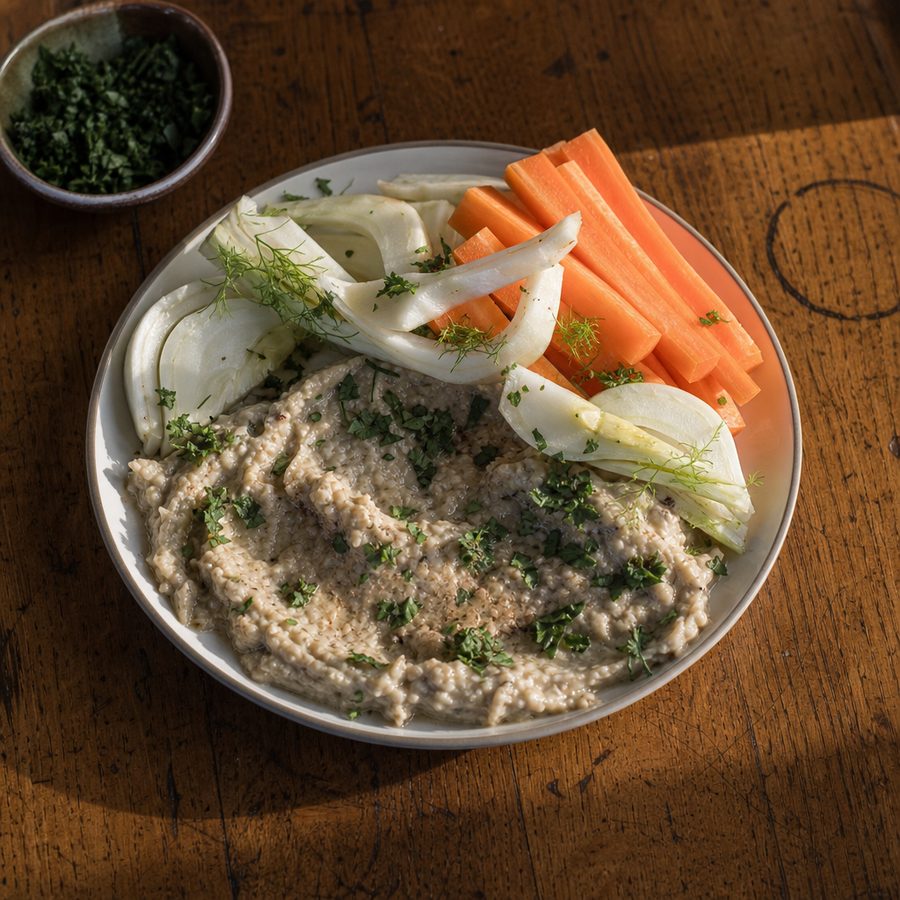
Silky fire-roasted eggplant whipped with tahini, lemon, and garlic, warmed with cumin and finished with parsley, served alongside wedges of fresh fennel and crisp carrot sticks.
Why You'll Love This Recipe
Eggplant is at its best in late summer, heavy for its size with tight, glossy skin, and that is the eggplant that collapses into something silky instead of seedy. Out of season they tend to be lighter, spongier, and more bitter, and no amount of tahini hides it. Roasted until the skin blackens and the whole thing caves in, then drained and whipped, one eggplant and a handful of pantry staples make a bowl that sits in the refrigerator for grazing over the next few days. It suits anyone who wants a cool, creamy snack that leans entirely on vegetables and sesame, and because raw fennel and carrot do the scooping rather than bread, it stays crunchy from the first bite to the last.
The whole character of the dish lives in how the eggplant is cooked. Roasting it at a high heat until the skin chars and the interior fully collapses drives off raw bitterness and leaves the flesh sweet, soft, and faintly smoky, which is the flavor that reads as authentic here. Draining that flesh before whipping is the small step most people skip, and it is the difference between a loose, watery spread and a thick one that holds a spoon-mark. Whisking the tahini with lemon and garlic first, before the eggplant goes in, lets those ingredients emulsify into a smooth base so the finished dip is silky rather than grainy.
The tahini brings richness and staying power, the lemon and garlic keep it bright, and the cumin adds gentle warmth underneath. The eggplant carries fiber, the tahini and olive oil contribute filling healthy fats, and the raw fennel and carrot add fresh crunch and their own fiber and vitamins. Together they make a snack that quiets hunger without weighing you down, which is exactly what you want between meals.
Ingredients
- 1 large eggplant
- 3 tbsp tahini
- 1 1/2 tbsp fresh lemon juice
- 2 cloves garlic
- 1 tbsp olive oil
- 1 tsp ground cumin
- 1/4 tsp salt
- 1 tbsp chopped parsley, for garnish
- 1 small fennel bulb, cut into wedges
- 2 medium carrots, cut into sticks
Instructions
- Roast the eggplant: Preheat the oven to 450°F (230°C) and line a baking sheet. Pierce the eggplant all over with a fork so that steam can escape, since a sealed eggplant at this heat will burst in the oven. Roast for 35 to 40 minutes, turning it once about halfway through, until the whole eggplant has collapsed, the skin is blackened and blistered, and it feels completely soft when pressed. Let it sit until cool enough to handle.
- Scoop and drain the flesh: Slice the cooled eggplant in half lengthwise and scoop the soft flesh away from the charred skin with a spoon. Transfer the flesh to a fine-mesh strainer set over a bowl and let the excess liquid drain for about 5 minutes; this is what keeps the finished dip thick rather than watery. Discard the skin and drained liquid.
- Prep the aromatics and vegetables: While the eggplant cools, peel and mince the garlic. Chop the parsley. Trim the fennel bulb, halve it through the core, and cut it into wedges, leaving the core attached, because it is the core that holds a wedge together while somebody is scooping with it. Peel the carrots and cut them into sticks.
- Whip the dip: In a medium bowl, whisk together the tahini, lemon juice, minced garlic, cumin, and salt until smooth and pale. Add the drained eggplant flesh and mash and stir vigorously until the dip is creamy and well combined, then stir in the olive oil until glossy. Build the tahini and lemon first and the eggplant second, since tahini seizes when acid hits it and it is far easier to work smooth in an empty bowl. Taste and adjust the salt and lemon.
- Finish and serve: Spread the dip into a shallow bowl, using the back of a spoon to make a few swooping grooves across the top, which give the oil somewhere to pool so that every scoop picks some of it up. Drizzle with a little more olive oil and sprinkle the chopped parsley over the surface. Arrange the fennel wedges and carrot sticks alongside for dipping.
Variations
- Mellow roasted garlic: Swap the raw garlic for a few cloves roasted alongside the eggplant until soft and golden. This trades the sharp bite for a sweet, mellow depth that lets the smoke of the eggplant come forward.
- Extra smoke: For a deeper char, roast the eggplant directly over a gas flame, turning with tongs until the skin is blackened all over before finishing it soft. It rewards you with a pronounced campfire smokiness through the whole dip.
- Fresh and herby: Fold chopped mint or cilantro into the dip along with the parsley, or in place of it. The extra herbs make it taste brighter and more garden-fresh, a good move for warm weather.
- A little heat: Stir in a pinch of Aleppo pepper or a little finely minced fresh chili with the cumin. It adds a gentle, building warmth that plays well against the cool eggplant and lemon.
- Toasted pine nut topping: Scatter toasted pine nuts over the finished dip for buttery crunch against the silky base; note that this adds nuts. Toast them dry in a skillet until just golden and fragrant before using.
Storage & Leftovers
Store the dip in an airtight container in the refrigerator, where it keeps well for about four days. The flavors actually deepen after the first few hours as the garlic and cumin settle in. Keep the cut fennel and carrots in a separate container, submerged in cold water or wrapped in a damp towel, so they stay crisp.
This dip is meant to be eaten cool and does not need reheating. If it has firmed up or the oil has separated in the cold, let it sit at room temperature for ten to fifteen minutes, then give it a brisk stir to bring back its creamy texture before serving. A fresh drizzle of olive oil on top revives both the look and the flavor.
To get ahead, roast, drain, and whip the dip up to two days before you need it and keep it covered in the fridge; hold off on the parsley and final olive oil until serving so they look fresh. You can also roast and drain the eggplant flesh a day ahead and store it on its own, then whip in the tahini and lemon just before serving.
Notes & Tips
- Pick the right eggplant: Choose one that feels heavy for its size with taut, glossy skin and a green stem; those tend to have fewer seeds and less bitterness, which gives you a sweeter, creamier dip.
- Cook it all the way soft: The eggplant is done only when it has fully deflated and offers no resistance when pressed. An underdone eggplant stays spongy and tastes raw, so give it the extra few minutes if the center still has any firmness.
- Do not skip the drain: Letting the scooped flesh sit in a strainer sheds the watery juices that would otherwise thin the dip. If you want it especially thick, press gently on the flesh with the back of a spoon to coax out more liquid.
- Season at the end, to taste: Tahini brands vary in bitterness and eggplants vary in sweetness, so taste before serving and adjust with a little more lemon for brightness or salt for balance until it tastes lively rather than flat.
- Keep the dippers crisp: Cut the fennel and carrots and hold them in a bowl of ice water in the fridge; they firm up and turn snappy, which makes them far more pleasant to scoop with than limp sticks.
- Make a bigger batch: The dip keeps for several days and only improves overnight, so it is worth doubling when you have the oven on. Store it without the garnish and finish each portion fresh as you go.
Nutrition & Mindful Eating
- The eggplant, the tahini and the lemon are the whole engine of this dip. Roasting collapses the eggplant into something silky, the sesame gives it body and richness, and the lemon keeps it lively all the way to the last scoop.
- Eggplant roasted until the skin blisters tastes nothing like eggplant raw. The flesh turns sweet and faintly smoky, and the soft fiber it carries is part of why a spoonful of this sits so comfortably.
- Tahini is ground sesame and very little else, which is why a couple of spoonfuls change the texture completely. It brings a mellow bitterness under the lemon, plus calcium and the fats that give the dip its staying power.
- Fennel and carrot are the reason this eats like a real snack. The fennel is crisp and faintly like licorice, the carrot is sweet and snappy and carries beta-carotene, and both stay firm enough to scoop without folding.
- Cumin bloomed in the oil, raw garlic and a handful of parsley are what you taste in the first second, warm and sharp and grassy, and the salt is there to pull the eggplant's sweetness forward where you can find it.
- As you eat, pay attention to the smoke in the eggplant and the snap of the fennel against it, and let this be a snack you sit down with rather than one you eat standing at the fridge.
Frequently Asked Questions
My dip turned out watery and loose. What happened?
The most common cause is skipping or shortening the drain. Eggplant holds a lot of liquid, and letting the scooped flesh sit in a strainer removes it. Press gently on the flesh to release even more, and it will thicken right up.
Why does mine taste bitter?
Bitterness usually comes from an underripe eggplant or one that was not roasted long enough. Choose a heavy, glossy eggplant and roast it until fully collapsed and charred. A touch more lemon and salt at the end also balances any lingering bitterness.
Can I make this without an oven?
Yes. Char the eggplant directly over a gas flame or on a grill, turning with tongs until the skin is blackened all over and the inside is completely soft, then scoop, drain, and continue as written. This route gives you even more smoky flavor.
What else can I serve it with besides fennel and carrots?
Any crisp raw vegetable works well as a scoop, such as cucumber spears, endive leaves, or strips of bell pepper. Keep them cut and chilled so they stay crunchy against the creamy dip.