
Roasted Halibut with Zucchini, Red Bell Pepper & Herbs
Flaky roasted halibut over garlicky zucchini and sweet red bell pepper, brightened with lemon, oregano, and fresh parsley.
Why You'll Love This Recipe
A clean, protein-forward plate comes off one pan here, fast and without much fuss or cleanup afterward. Halibut is a firm, mild white fish that even hesitant fish eaters tend to like, and roasting it over a bed of vegetables means the whole meal comes off a single sheet pan in about half an hour. It suits a weeknight when you want something light but filling.
The vegetables get a head start the fish does not need. The zucchini and red bell pepper go in first so they have time to soften and concentrate their sweetness, then the halibut is added partway through so it cooks just until it flakes and no longer. Fish overcooks in a matter of minutes, so giving the vegetables a head start keeps the fillets moist while everything finishes at the same moment. The garlic, oregano, and lemon perfume the vegetables and the pan juices, which then baste the fish as it roasts.
Protein from the halibut, tender and lightly caramelized vegetables sitting beside it, and a hit of bright acidity from the lemon and fresh parsley right at the end. It eats clean and fresh rather than heavy, yet the generous portion of fish and the fiber-rich vegetables keep you full. The olive oil carries the herb flavors and adds a satisfying richness without weighing the plate down.
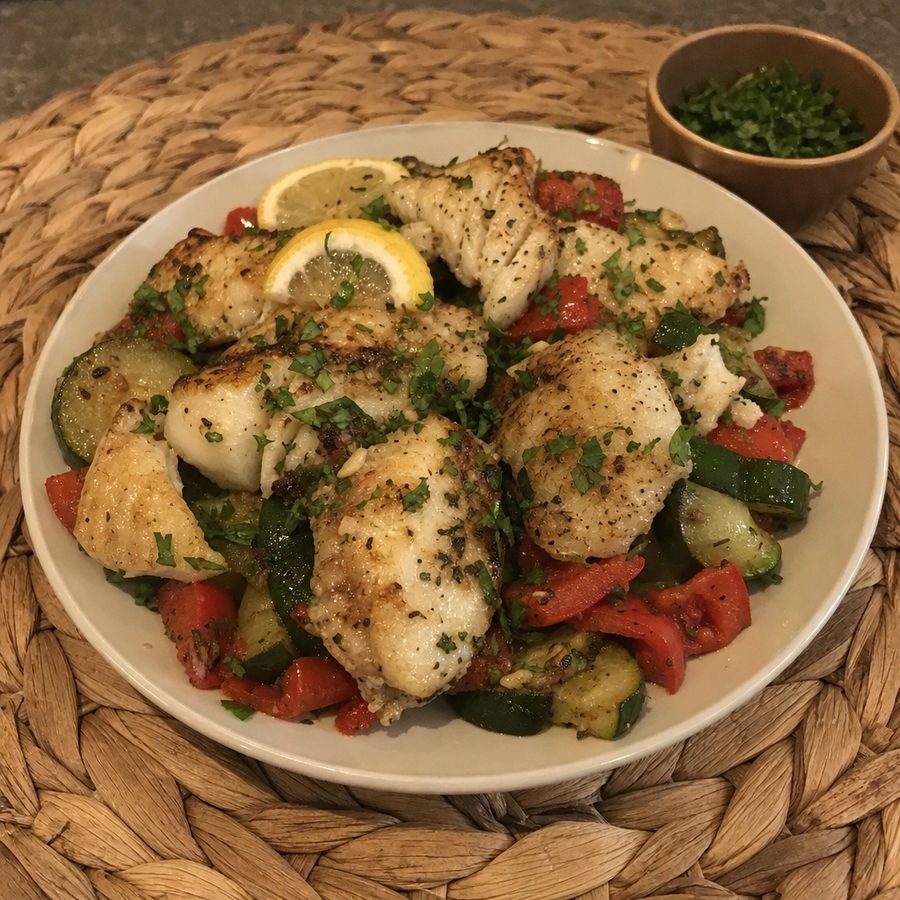
Ingredients
- 2 halibut fillets (about 6 oz each)
- 2 small zucchini, sliced into half-moons
- 1 large red bell pepper, sliced
- 2 tbsp olive oil
- 2 cloves garlic, minced
- 1 tsp dried oregano
- 2 tbsp chopped fresh parsley
- Juice of 1/2 lemon
- 1/2 tsp salt
Instructions
- Preheat and prep the pan: Preheat the oven to 400°F (200°C). Lightly brush a rimmed sheet pan with olive oil so that nothing sticks, since fish left to bond with bare metal comes off in pieces.
- Do the knife work: Trim the zucchini and slice it into half-moons about a quarter inch thick, because a thicker slice is still raw in the middle by the time the fish is done. Core the red bell pepper and cut it into thin strips. Peel and finely mince the garlic. Set the vegetables and garlic together in a large bowl.
- Season and roast the vegetables: Add olive oil, the minced garlic, dried oregano, and part of the salt to the bowl. Toss until the zucchini and pepper are evenly coated. Spread them in a single layer on the sheet pan and roast for 12 minutes, until they begin to soften and pick up color at the edges. The vegetables go in first, since they need twice as long as halibut and would still be squeaky if everything went in together.
- Add the halibut: Pat the halibut fillets dry with a paper towel, because a wet surface steams and comes out of the oven pale. Slide the pan out and tuck the fillets among the vegetables. Drizzle the fish with the remaining olive oil, squeeze the lemon juice over the top, and season with the remaining salt.
- Finish roasting: Return the pan to the oven and roast 10 to 12 minutes more, until the halibut turns opaque and flakes easily when nudged with a fork; an instant-read thermometer inserted into the thickest part should read 130 to 135°F (54 to 57°C), which is medium. The FDA gives 145°F (63°C) for seafood, and halibut at that point stops flaking and starts crumbling.
- Garnish and serve: Roughly chop the fresh parsley. Sprinkle it over the fish and vegetables and serve immediately, spooning the pan juices over each portion, since those juices are the only sauce here and there is not much of it.
Variations
- Swap the fish: Use cod, haddock, or another firm white fillet in place of halibut. Thinner fillets cook faster, so start checking a few minutes early for that opaque, flaky look.
- Richer fish: Use salmon instead of halibut for a fattier, more robust fillet; this adds an oily fish that browns more and may need a minute or two longer to reach doneness.
- Change the vegetables: Swap in halved cherry tomatoes, thin asparagus, or sliced fennel for the zucchini and pepper. Add quicker-cooking vegetables when the fish goes in so nothing turns mushy.
- Add a little heat: Toss a pinch of red pepper flakes in with the vegetables, or finish with a light dusting of smoked paprika for warmth without overpowering the fish.
- Briny finish: Scatter pitted olives or a spoonful of drained capers over the pan in the last few minutes for a salty, savory contrast to the sweet pepper and lemon.
Storage & Leftovers
Store leftovers in an airtight container in the refrigerator for up to two days. Fish is best eaten soon after cooking, so keep the flaked halibut and vegetables together and use them promptly for the best texture.
Reheat gently to avoid drying out the fish. Warm the halibut and vegetables in a covered oven-safe dish at 275°F (135°C) just until heated through, or use short bursts in the microwave at reduced power. A fresh squeeze of lemon after reheating revives the brightness.
To get ahead, do the knife work in advance: slice the zucchini and bell pepper and mince the garlic, then keep them refrigerated in a covered container. When it is time to cook, you can toss, roast, and add the fish straight away.
Notes & Tips
- Buy fillets of even thickness: Look for halibut fillets that are uniformly thick rather than tapering to a thin tail, so they cook evenly and finish at the same time. Ask the fishmonger for center-cut pieces if you can.
- Pat the fish dry: Blot the fillets well before they go on the pan. A dry surface takes on light color and holds its seasoning instead of steaming in surface moisture.
- Do not overcook: Halibut turns dry in a hurry. Pull it as soon as it flakes and looks opaque through the center; carryover heat will finish it on the pan.
- Cut vegetables the same size: Slicing the zucchini into even half-moons and the pepper into similar strips means they roast at the same rate, so you avoid scorched thin bits and underdone thick ones.
- Fresh versus dried herbs: The oregano is dried for a reason: it holds up to the heat and seasons the vegetables from the start. Save the parsley to add fresh at the end, where its color and grassy lift matter most.
- Add the lemon in stages: Some lemon juice goes on before roasting to flavor the fish, but a final squeeze at the table wakes everything up. Taste and adjust the salt then, too, since fish can take a little more than you expect.
Nutrition & Mindful Eating
- One pan, one temperature, three things that finish together. The halibut roasts to just-set, the zucchini softens and browns at the edges, and the red pepper releases enough sweet juice to season everything around it.
- Halibut has big clean flakes and a gentle flavor that takes seasoning well, which is why the oregano and lemon are enough to make it taste like something. It is dense with protein and holds enough fat through the fillet to stay moist in the oven.
- Red bell pepper brings the sweetness to this tray. Roasting concentrates it and slackens the flesh, and the same color that makes it look good on the plate is vitamin C and carotenoids going into the pan juices.
- Zucchini holds a lot of water, so it is worth giving it room. Spread out it browns and turns silky, crowded it steams, and either way it takes on the oil and the garlic and rounds out the plate.
- Dried oregano goes on before the heat so it has time to bloom in the oil, and the parsley and lemon go on after, raw and green and sharp, which is what makes the fish taste bright.
- As you eat, watch how cleanly the halibut breaks apart under a fork and how the lemon lifts the pepper underneath it, and take the meal sitting down, slow enough to feel when you have had enough.
Frequently Asked Questions
How do I know when the halibut is done?
The fish should look opaque all the way through and flake easily when you nudge it with a fork. If you use a thermometer, aim for 130 to 135°F (54 to 57°C) at the thickest part, since the fillet keeps cooking a little after it leaves the oven.
Can I use frozen halibut?
Yes. Thaw it fully in the refrigerator overnight, then pat it very dry before it goes on the pan. Cooking from frozen leaves too much surface water and makes the fish steam rather than roast.
Why did my vegetables turn out watery?
Zucchini releases a lot of moisture, so crowding the pan makes it steam. Spread the zucchini and pepper in a single layer with space between the pieces, and give them their full head start before the fish goes in.
What can I serve alongside this?
It stands on its own as a light plate, but a simple green salad or roasted potatoes rounds it out. Spoon the lemony pan juices over whatever you serve to carry the flavor across the plate.