
Roasted Trout with Fennel, Cherry Tomatoes & Olives
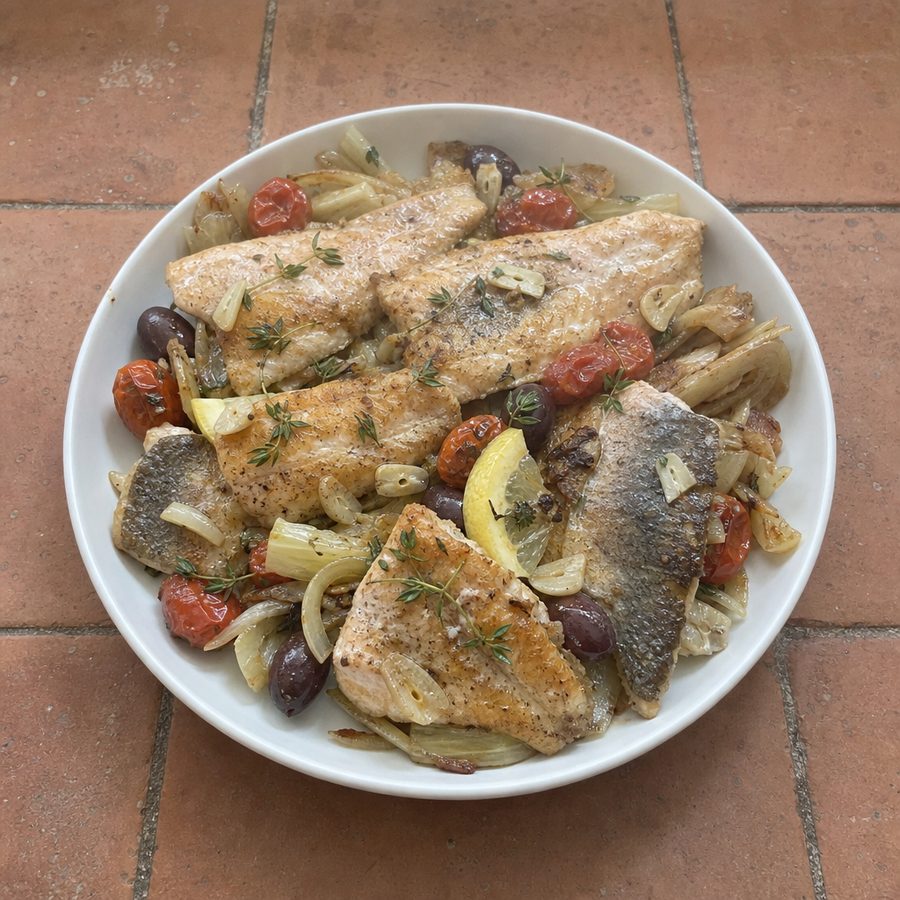
Delicate trout fillets roasted skin-side down over caramelized fennel, blistered cherry tomatoes, briny kalamata olives, and slivered garlic, finished with fresh thyme and a squeeze of lemon.
Why You'll Love This Recipe
This is a weeknight-friendly sheet-pan dinner for anyone who wants a light but filling plate that comes together on a single pan with almost no cleanup. Trout is quick-cooking and forgiving, so it suits cooks who feel nervous about fish, and the whole thing goes from raw ingredients to the table in about half an hour. It is a good fit for people watching their carbohydrate intake who still want a meal that feels complete and a little bit special.
The fennel, tomatoes, and olives go in well before the trout. The fennel, tomatoes, and olives get a head start in the hot oven so the fennel has time to soften and sweeten and the tomatoes begin to blister and release their juices, building a savory base before the fish ever touches the pan. Because trout is thin and delicate, it only needs the final stretch of roasting, so adding it partway through keeps it from drying out while the vegetables reach their full flavor. Roasting the fillets skin-side down protects the flesh from the hot metal and lets the fat under the skin baste the fish as it cooks.
Tender flakes of rich, mild fish sit against the sweet anise notes of caramelized fennel, the bright burst of roasted tomato, and the salty punch of olives, with lemon and thyme pulling all of it together. Trout brings protein and omega-3 fats, the vegetables add fiber and color, and olive oil rounds everything with heart-healthy fat, so the plate feels indulgent while staying light and nourishing.
Ingredients
- 2 trout fillets (about 6 oz each)
- 1 large fennel bulb, thinly sliced
- 1 1/2 cups cherry tomatoes
- 1/4 cup pitted kalamata olives
- 2 tbsp olive oil
- 2 cloves garlic, thinly sliced
- 1 tbsp fresh thyme leaves
- Juice of 1/2 lemon
- 1/4 tsp salt
Instructions
- Preheat the oven: Preheat the oven to 400°F (200°C) and lightly brush a rimmed sheet pan with olive oil, since trout skin welds itself to bare metal and tears when you lift the fillet.
- Prep the vegetables: Trim the stalks and root end from the fennel bulb, halve it lengthwise, and slice it thinly across the grain into thin half-moons. Peel and thinly slice the garlic cloves. Leave the cherry tomatoes whole and the pitted kalamata olives whole, because a whole tomato bursts in the oven and lets its juice out at the end rather than at the beginning.
- Roast the vegetables: In a bowl, toss the sliced fennel, cherry tomatoes, olives, and garlic with olive oil and half of the salt until evenly coated. Spread them in a single layer on the sheet pan and roast for about 15 minutes, since fennel takes far longer than trout and would be raw if everything went in together, until the fennel is softened and beginning to turn golden and some of the tomatoes have started to blister and split.
- Add the trout: Pull the pan from the oven and push the vegetables toward the edges to clear space in the center. Pat the trout fillets dry and lay them skin-side down in the cleared center, so that the skin takes the direct heat of the pan and the flesh cooks gently above it. Drizzle the fillets with the remaining olive oil, sprinkle with the fresh thyme leaves and the remaining salt, and squeeze the lemon juice over the top.
- Finish roasting: Return the pan to the oven and roast for another 10 to 12 minutes, until the trout turns opaque and flakes easily when nudged with a fork; the thickest part should reach about 145°F (63°C).
- Serve: Spoon the roasted tomatoes, fennel, olives, and their pan juices over each fillet and serve right away, because the pan juices are the whole sauce and they set into the pan as it cools.
Variations
- Salmon instead of trout: Swap the trout for skin-on salmon fillets. They are thicker, so give them a few extra minutes and pull them when the center is just opaque.
- Add a green: Tuck a handful of green beans or thin asparagus in with the fennel at the start so they roast alongside and add a fresh, crisp-tender bite.
- Citrus and herb lift: Add thin lemon slices and a scattering of fresh dill over the fillets before the final roast for a brighter, more aromatic finish.
- Warm spice: Toss the vegetables with a pinch of crushed red pepper flakes and a little smoked paprika for gentle heat and a smoky edge.
- Caper and shallot: Add drained capers and a thinly sliced shallot to the vegetables for extra brine and a mellow, sweet onion note.
Storage & Leftovers
Refrigerate leftovers in an airtight container within two hours of cooking. The trout and vegetables keep well for up to three days; the fish will firm up as it chills, which is normal.
Reheat gently to keep the fish from drying out. Warm the trout and vegetables together in a covered dish in a 275°F (135°C) oven until just heated through, or eat the leftovers cold or at room temperature, flaked over greens, where the fish and the briny vegetables actually shine.
To get ahead, slice the fennel and garlic a day in advance and store them in the refrigerator so the pan is ready to go. You can also roast the vegetables fully, refrigerate them, and simply spread them on the pan, add the fish, and finish roasting when you are ready to eat.
Notes & Tips
- Slice the fennel thin: The fennel is the one component that needs real time to soften. Slice it thinly and evenly so it caramelizes in step three rather than staying tough and stringy; use the bulb only and save the feathery fronds to sprinkle on at the end.
- Pat the fish dry: Blot the trout fillets with a paper towel before they go on the pan. A dry surface takes on a little color and keeps the fish from steaming in its own moisture.
- Watch for the flake: Trout is done the moment it turns opaque and separates into flakes when you nudge it with a fork. It goes from perfect to dry quickly, so start checking at the ten-minute mark.
- Buy fennel with the stalks on: A bulb sold with its stalks and fronds intact is usually fresher; look for firm, pale bulbs with no browning or splitting at the base.
- Season the olives lightly: Kalamata olives are already salty, so taste before adding more salt at the table. The olives and their brine do a lot of the seasoning for you.
- Round out the plate: This is light on its own; serve it with a simple leafy salad, a spoon of cauliflower mash, or roasted potatoes if you want a heartier meal.
Nutrition & Mindful Eating
- The fish and the vegetables cook in the same dish for a reason. The tomatoes burst and make liquid, the fennel softens into it, the olives salt it, and the trout takes on all three while it roasts.
- Trout is a fine-textured fish with a gentle flavor, which is why it wants neither much time nor much heat. It falls into soft pink flakes and carries the omega-3 fats and vitamin D that oily fish are known for.
- Fennel roasted long enough loses its sharpness and turns sweet and almost silky, the licorice note softening into something much rounder. Sliced thin it also brings fiber to a plate that is mostly fish.
- Cherry tomatoes are there to burst. Their skins split in the heat and the juice inside mixes with the oil to make the sauce, and that same heat concentrates both their sweetness and the lycopene they carry.
- Kalamata olives and thyme do the seasoning, one salty and winey, the other resinous, and the squeeze of lemon at the end lifts the whole pan so a rich fish still tastes bright on the fork.
- As you eat, let the fork find the fish and a burst tomato together and catch the salt of the olive behind them, then give the plate a little more time than the cooking took.
Frequently Asked Questions
Do I need to remove the skin from the trout?
No. Roasting the fillets skin-side down protects the delicate flesh from the hot pan and lets the fat under the skin keep the fish moist. The skin lifts away easily after cooking if you would rather not eat it, or you can leave it on.
How do I know when the trout is done?
The fish is ready when it turns from translucent to opaque and flakes apart easily when you nudge it with a fork. If you use a thermometer, the thickest part should read about 145°F (63°C). Because the fillets are thin, start checking early to avoid overcooking.
Can I use frozen trout?
Yes. Thaw the fillets fully in the refrigerator first, then pat them very dry before they go on the pan. Excess water from thawing will cause the fish to steam instead of roast.
My fennel came out tough. What went wrong?
Fennel needs to be sliced thinly and given its full head start in the oven before the fish is added. If it is cut too thick, it will not soften in time. Slice it thin and make sure it is beginning to turn golden before you add the trout.