
Salt & Vinegar Beet Chips
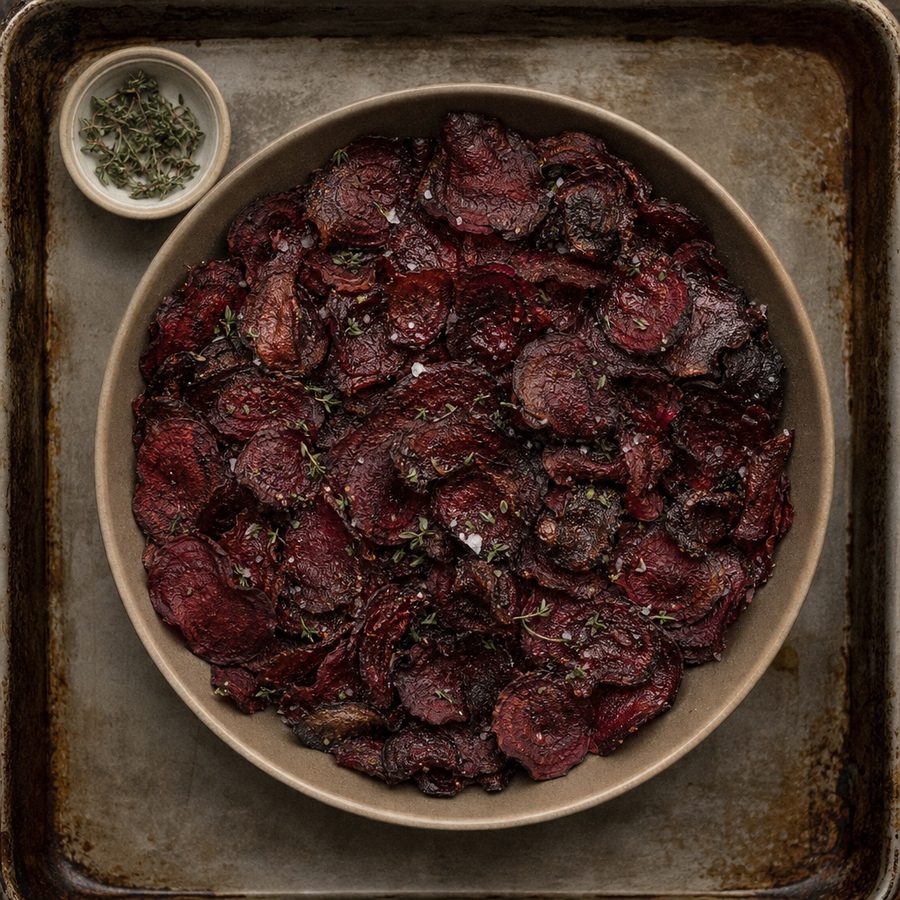
Thin rounds of ruby beet baked low and slow until crisp, tossed with olive oil, balsamic vinegar, fresh thyme, and flaky salt for a tangy, earthy crunch.
Why You'll Love This Recipe
These are a snack for anyone who craves the sharp, salty tang of a vinegar-dusted chip but wants it to come from a whole vegetable. Ruby beets are sliced paper-thin and baked until they shatter, giving you a crunchy handful with real earthy sweetness underneath the tang. They suit an afternoon slump, a lunchbox, or a bowl set out alongside drinks, and they are simple enough to make on a quiet weekend and keep on the counter.
A low oven, and no hurrying it. Baking at 300°F (150°C) slowly drives moisture out of the thin slices so they dry into a crisp instead of steaming and going limp. Blotting the beets before they are dressed removes surface water that would otherwise fight the oven, and the thin oil-and-balsamic coating carries flavor while helping the edges brown. The balsamic vinegar is what delivers that puckery, salt-and-vinegar snap, and the flaky salt added at the very end sits on the surface where your tongue reads it first.
A brittle, audible crunch gives way to a concentrated beet sweetness, sharpened by the vinegar and finished with bright thyme. Beets bring fiber and the natural plant pigments that give them their deep color, and the olive oil adds a little richness that makes the snack feel like more than air. It scratches the chip itch with an ingredient list you can read at a glance.
Ingredients
- 2 medium beets, scrubbed
- 1 tbsp olive oil
- 1 tbsp balsamic vinegar
- 1 tsp fresh thyme leaves
- 1/2 tsp flaky salt
Instructions
- Heat the oven and prep the pans: Preheat the oven to 300°F (150°C) and line two baking sheets with parchment paper. The low temperature is what dries the beets into crisp chips rather than scorching them, so give the oven time to come fully up to heat.
- Slice the beets thin: Scrub the beets clean under running water, then trim off the root tail and stem end. Using a mandoline or a very sharp knife, slice the beets into rounds about 1/16 inch thick. Aim for uniform thinness across every slice; slices of even thickness crisp at the same rate, while thick ones stay leathery in the center.
- Dry and dress: Blot the beet slices well on both sides with paper towels to pull off surface moisture, which is the enemy of crispness. Transfer them to a bowl and toss with the olive oil and balsamic vinegar until every slice glistens evenly.
- Arrange in a single layer: Lay the slices flat on the parchment in a single layer with their edges not touching, so hot air can circulate around each one. Pluck the fresh thyme leaves from their stems and sprinkle them over the slices.
- Bake slow: Bake for 20 minutes, then rotate the pans front to back and swap their oven positions. Continue baking another 8 to 12 minutes, removing any chips that have crisped and darkened early so they do not burn. The chips should look dry and matte with slightly curled edges; they will still be a touch pliable at the center, which is correct.
- Cool and finish: Let the chips cool on the pans for about 10 minutes; they firm up and turn fully crisp as they cool. Once cooled, toss gently with the flaky salt and serve.
Variations
- Warm spice: Sprinkle a little ground ginger over the slices along with the thyme for a warm, spiced edge that plays against the vinegar tang and keeps clear of nightshades.
- Rosemary and garlic: Swap the thyme for finely chopped fresh rosemary and add a pinch of garlic powder to the oil-and-balsamic toss for a more savory, herbaceous chip.
- Citrus zest finish: Grate a little orange zest over the chips right after they come out of the oven; the citrus oils brighten the earthy beet and lift the whole snack.
- Golden beet blend: Use a mix of ruby and golden beets for a two-tone batch; the golden ones are milder and a touch sweeter, and they stay pale so the color contrast shows.
- Warm spice dusting: Add a pinch of ground cinnamon and a whisper of clove to the toss for a chip with gentle warmth and a toasty depth behind the tang.
Storage & Leftovers
Store fully cooled chips in an airtight container at room temperature, where they keep their crunch for two to three days. Do not refrigerate them; the moisture in a fridge softens them quickly and turns the crisp edges leathery.
If they lose their snap, spread them on a parchment-lined sheet and warm in a 300°F (150°C) oven for a few minutes, then let them cool before eating. They re-crisp as they cool, just as they did on the first bake, so judge them once they are back at room temperature rather than straight from the oven.
To get ahead, you can scrub, slice, and blot the beets several hours in advance and hold the slices between dry paper towels. Bake them the day you want to serve, since the chips are at their best within a day or two of coming out of the oven.
Notes & Tips
- Choose firm, small-to-medium beets: Pick beets that feel heavy and firm with smooth skin; very large beets can be woody at the core and slice unevenly, which leaves you with soft centers.
- A mandoline earns its keep: Consistent 1/16-inch slices are the single biggest factor in even crisping. A hand-cranked or handheld mandoline gets you there far more reliably than a knife, and using its guard protects your fingers on the last slices.
- Wear gloves or work fast: Ruby beets stain hands and cutting boards. Slice on a surface you can scrub, and rub any pink off your fingers with a little lemon and salt if you skip gloves.
- Do not crowd the pans: Chips that touch trap steam between them and stay soft. If your beets fill more than two single layers, bake in batches rather than overlapping slices.
- Judge doneness after cooling, not in the oven: The chips finish crisping as they cool, so a slightly bendy center coming out of the oven is normal. Cool a test chip fully before deciding whether the batch needs a few more minutes.
- Salt at the very end: Adding the flaky salt after baking keeps the crystals crunchy and sitting on the surface, where you taste them most; salt tossed in before baking largely dissolves and disappears.
Nutrition & Mindful Eating
- Five things go on the tray and the oven does the rest. The beets give sweetness and color, the vinegar gives the sour edge, the oil helps them crisp, and the salt lands on top where you taste it first.
- Beets are sweet in a way that surprises people who only know them boiled, and slicing them paper thin means that sugar concentrates as the water leaves. The deep red comes from betalains, the same pigments that stain your fingers while you slice.
- Balsamic vinegar goes on before baking so it has time to cling and reduce, leaving a dark sweet-sour glaze across the surface of each slice. That sourness is what keeps a sweet root tasting like a snack.
- The chips are done when the edges have curled and the centers have lost their gloss, and the sound is the real test. Pulled early they bend, pulled at the right minute they snap.
- Thyme goes on with the oil and turns brittle and fragrant in the heat, and the flaky salt goes on the second the tray comes out, while the surface is still warm enough to hold it. Salt on the outside is what makes the sweetness of the beet read as flavor.
- As you eat, listen for the snap and let the sour land before the sweetness arrives underneath it, and notice the point where a few chips have already done what you wanted them to do.
Frequently Asked Questions
Why did my chips come out soft or chewy instead of crisp?
The usual culprits are slices that were too thick, leftover surface moisture, or crowding on the pan. Slice as thin and evenly as you can, blot the rounds dry before dressing them, keep them in a single layer with edges apart, and remember they only reach full crispness after cooling. If a cooled batch is still soft, give it a few more minutes at 300°F (150°C).
Do I need to peel the beets?
No. A good scrub under running water is enough, since the skin on a thin slice crisps up right along with the flesh. Just trim the root tail and stem end before slicing.
Can I make these without a mandoline?
Yes, but it takes care. Use your sharpest knife and go slowly to keep every slice around 1/16 inch thick. Uneven thickness is the main reason knife-cut batches have some crisp chips and some leathery ones, so consistency matters more than speed.
Why bake at such a low temperature instead of a hot oven?
The goal is to dry the beets out, not to roast them. At 300°F (150°C) the moisture leaves slowly and the sugars stay put, so the slices turn crisp and keep their color. A hotter oven browns and scorches the thin edges before the centers have a chance to dry, leaving you with burnt rims and soft middles.