
Sesame-Ginger Chicken with Carrot-Zucchini Noodles
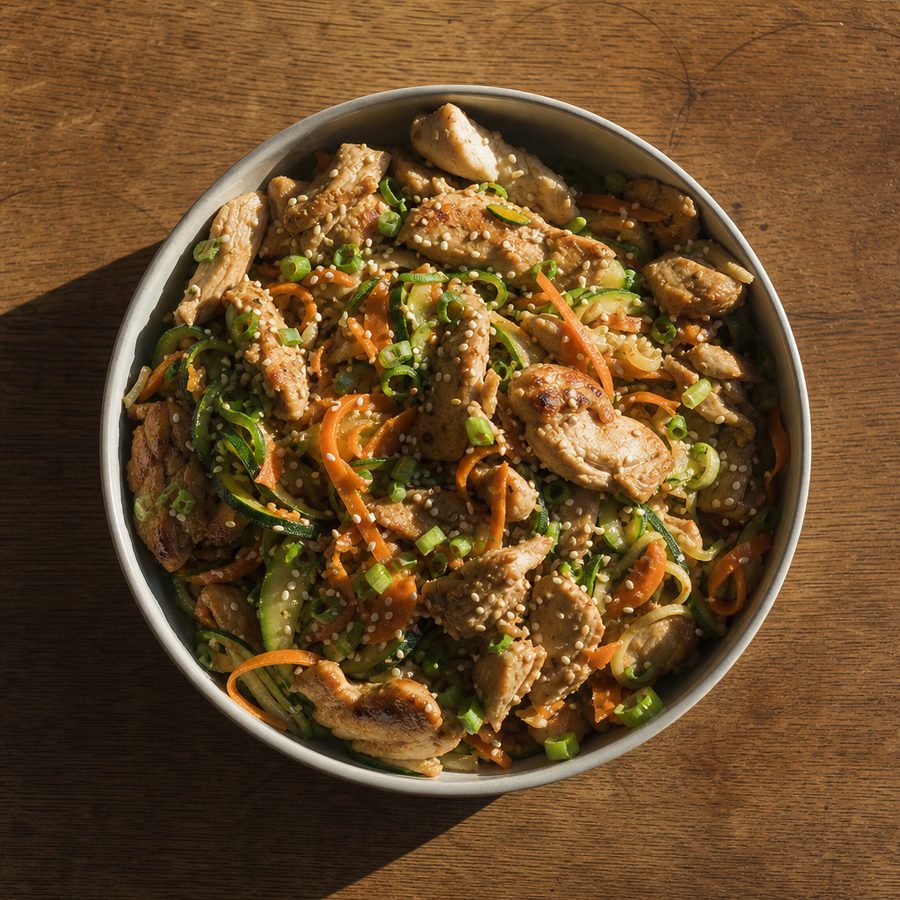
Tender slices of chicken breast glazed with coconut aminos, toasted sesame oil, fresh ginger, and garlic, tossed with ribbons of zucchini and carrot and finished with toasted sesame seeds and sliced scallions.
Why You'll Love This Recipe
Warm and savory in the middle of the day, without the heavy, sleepy afterward. The chicken carries the protein, the spiralized zucchini and carrot stand in for a bowl of noodles, and the whole thing comes together in the time it takes to heat a skillet and toss. It suits a busy weekday when you want real food but only have about twenty minutes to make it.
The flavor rests almost entirely on the glaze. Coconut aminos bring a rounded, faintly sweet saltiness, toasted sesame oil adds its deep nutty aroma, and fresh ginger and garlic give the sharp, warming edge that makes the dish taste bright rather than flat. Whisking the honey into that mixture before it hits the pan means it dissolves evenly and reduces into a light glaze that coats the chicken in the last minute of cooking. The vegetable noodles go in last and only briefly, so they pick up the glaze without collapsing into water.
Protein sits on one side of this bowl and a generous amount of vegetables sits on the other, and neither is an afterthought. The chicken keeps you full and steady, the zucchini and carrot add volume, color, and a fresh crunch, and the sesame seeds contribute a little richness and texture in every bite. It eats light but leaves you satisfied, and it delivers a good dose of fiber and protein alongside the flavor.
Ingredients
- 2 chicken breasts, sliced
- 2 medium zucchini, spiralized
- 2 medium carrots, spiralized
- 2 tbsp coconut aminos
- 1 tbsp toasted sesame oil
- 1 tbsp avocado oil
- 1 tbsp grated fresh ginger
- 3 cloves garlic, minced
- 1 tsp honey
- 1 tbsp sesame seeds
- 2 scallions, sliced
- 1/4 tsp salt
Instructions
- Prep the ingredients: Slice the chicken breasts crosswise into thin, even strips so they cook quickly and at the same rate. Peel and grate the fresh ginger on the fine side of a box grater, and mince the garlic. Thinly slice the scallions and set them aside for garnish. Run the zucchini and carrots through a spiralizer to make noodles, then snip the long strands once or twice with kitchen shears so they are easier to toss and eat.
- Mix the glaze: In a small bowl, whisk together the coconut aminos, toasted sesame oil, honey, grated ginger, and minced garlic until the honey dissolves and the glaze looks smooth.
- Sear the chicken: Heat the avocado oil in a large skillet over medium-high heat until it shimmers. Add the chicken strips in a single layer and cook, turning once, for 4 to 5 minutes until lightly browned on the outside and no longer pink in the center, reaching 165°F (74°C) on an instant-read thermometer. Pour in the glaze and toss to coat, cooking about 1 minute more until it thickens slightly and clings to the chicken.
- Add the noodles: Add the zucchini and carrot noodles to the skillet. Toss over medium heat for 2 to 3 minutes, using tongs to lift and turn them so they warm evenly, just until they soften slightly but still hold a crisp bite. Season with the salt.
- Garnish and serve: Remove the skillet from the heat and sprinkle the sesame seeds and sliced scallions over the top. Serve right away, while the noodles are still warm and crisp.
Variations
- Shrimp instead of chicken: Swap the chicken for peeled shrimp; this adds shellfish. Cook them just until pink and opaque, about two minutes per side, before glazing.
- Add a chili kick: Whisk a pinch of red pepper flakes or a little grated fresh chili into the glaze for gentle heat that plays well against the sweet ginger.
- Sweet potato noodles: Replace the zucchini with spiralized sweet potato for a heartier, slightly sweeter bowl. It needs a few extra minutes in the skillet and a splash of water to soften.
- Add mushrooms: Sear sliced shiitake or cremini mushrooms with the chicken for an earthy, savory depth and a little more body.
- Cashew crunch: Sprinkle chopped toasted cashews over the top with the sesame seeds for extra crunch; this adds nuts.
Storage & Leftovers
Store any leftovers in an airtight container in the refrigerator for up to three days. The vegetable noodles will keep releasing moisture as they sit, so the dish becomes a little saucier and softer over time; that is normal.
To reheat, warm it gently in a skillet over medium heat just until hot, tossing once or twice. A quick reheat keeps the vegetables from turning to mush, and it beats the microwave, which tends to steam the noodles and make them limp.
To get ahead, whisk the glaze and slice the chicken a day in advance and keep them covered in the refrigerator. You can spiralize the zucchini and carrots ahead too, but store them separately on a paper towel so they stay dry, and cook everything fresh when you are ready to eat for the best texture.
Notes & Tips
- Dry the chicken first: Pat the chicken strips dry with a paper towel before they hit the pan. Surface moisture steams the meat and keeps it pale, and dry strips brown far better in the hot avocado oil.
- Don't crowd the skillet: Give the chicken room in a single layer. If your skillet is small, sear it in two batches; piled-up strips release water and end up gray instead of browned.
- Salt the noodles at the end: Season the vegetable noodles with the salt only after they go in, not before. Salting raw zucchini early draws out water and leaves you with a watery skillet.
- Grate ginger while frozen: Fresh ginger grates cleanly and with less stringiness when it is very cold or frozen, and you can leave the thin skin on if you use a fine grater.
- Toast the sesame seeds: If your sesame seeds are raw rather than pre-toasted, dry-toast them in the skillet over medium heat for a minute or two until golden and fragrant before you start; it deepens their nutty flavor.
- Adjust the glaze to taste: Taste the glaze before it goes in the pan. Add a touch more honey if you want it rounder and sweeter, or a little more coconut aminos if you want it saltier and more savory.
Nutrition & Mindful Eating
- The chicken, the noodles and the sauce all come together in the last two minutes. The chicken browns first, the vegetables go in barely long enough to warm through, and the coconut aminos and sesame oil coat everything at once.
- Chicken breast is fine-grained and quick-cooking, which is why it is sliced thin here and moved fast. Cut across the grain it stays tender, and protein this dense is what turns a pan of vegetables into a real lunch.
- Carrot and zucchini noodles are long ribbons that behave differently from each other, the carrot staying sweet and crunchy, the zucchini turning tender in seconds. Between them you get color, sweetness and the fiber of two whole vegetables.
- Coconut aminos are savory and slightly sweet on their own, and with a spoonful of honey and a lot of grated ginger they reduce into a glaze that clings. The ginger is what keeps that sweetness from settling, warm and sharp at the back of every bite.
- Toasted sesame oil goes in off the heat so it keeps its perfume, and the sesame seeds and scallions go on last, one crunchy and nutty, the other green and raw. That is the layer you meet first at the table.
- As you eat, follow the ginger through each mouthful and notice the ribbons still holding their bite, and give this one your full attention rather than keeping one hand on something else.
Frequently Asked Questions
Why did my noodles turn out watery?
Zucchini holds a lot of water, and it releases it when heated or salted too early. Toss the noodles only for a couple of minutes over medium heat, season with the salt at the very end, and serve right away rather than letting the dish sit in the skillet.
Can I use pre-spiralized zucchini and carrots from the store?
Yes. They save time and work well here. Pat them dry before cooking, since packaged spiralized vegetables often carry extra moisture that can water down the glaze.
What can I use instead of coconut aminos?
Coconut aminos gives the dish its rounded, lightly sweet-salty backbone, and it is really the best fit here. There is no exact match, but you can get close by whisking a little extra honey and an extra pinch of salt into the glaze to rebuild that sweet-salty balance. Common swaps like tamari or soy sauce taste right but add soy, so they fall outside this dish's grain- and legume-free approach and are not a good fit.
How do I keep the chicken from drying out?
Slice it into thin, even strips, sear it just until it reaches 165°F (74°C) in the center, and pull it as soon as the glaze coats it. Thin strips cook in only a few minutes, so overcooking is the main risk.