
Sesame-Ginger Salmon Salad Bowl
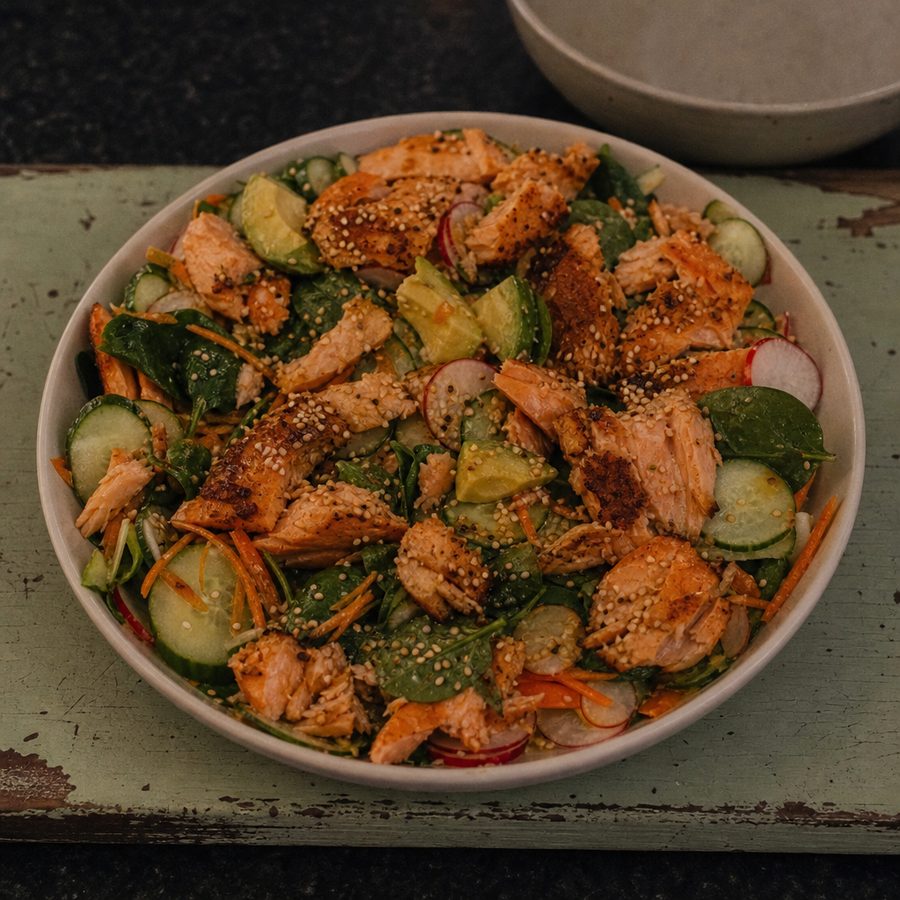
Warm seared salmon flaked over a cool tangle of baby spinach, thinly sliced cucumber and radish, shredded carrot, and creamy avocado, finished with a savory grated-ginger and toasted sesame dressing and a shower of toasted sesame seeds.
Why You'll Love This Recipe
This is a bright, protein-rich bowl for anyone who wants a lunch that eats like a proper meal but leaves them light rather than heavy. It pairs a warm, crisp-skinned piece of salmon with cool, crunchy raw vegetables, so it works whether you want something restorative at your desk or a quick plate that still feels a little special. Because everything but the fish is served raw, it comes together fast and rewards good, fresh produce.
Contrast, and a dressing that does a lot with a little. Searing the salmon over medium-high heat browns the surface and crisps the skin, building deep flavor and texture against the tender interior. The dressing leans on grated fresh ginger for warmth and bite, toasted sesame oil for a roasted nuttiness, coconut aminos for savory depth, and lime for a clean sour lift; whisking them together emulsifies the oil so it clings to the leaves instead of pooling at the bottom. Toasting the sesame seeds is not optional flavor-wise, it turns them from bland to fragrant and adds a delicate crunch on top.
It satisfies because it covers every texture and taste your palate looks for: rich fatty fish, creamy avocado, watery-crisp cucumber and radish, sweet shredded carrot, and a salty-tangy dressing tying it together. Salmon brings high-quality protein and the kind of fats that keep you full, while the pile of vegetables adds fiber, water, and volume so the bowl feels generous without being dense. It is the sort of lunch that steadies you through the afternoon rather than sending you looking for a snack an hour later.
Ingredients
- 2 salmon fillets (about 5 oz each)
- 4 cups baby spinach
- 1 cucumber, thinly sliced
- 1 large carrot, shredded
- 4 radishes, thinly sliced
- 1/2 avocado, sliced
- 2 tbsp sesame seeds
- 1 tbsp coconut aminos
- 1 tbsp toasted sesame oil
- 1 tbsp avocado oil
- 1 tbsp fresh lime juice
- 1 tbsp grated fresh ginger
- 1/4 tsp salt
Instructions
- Prep the vegetables: Rinse the baby spinach and spin or pat it dry. Thinly slice the cucumber into rounds. Peel and shred the carrot on the large holes of a box grater. Trim the radishes and slice them into thin coins. Halve the avocado, remove the pit, and slice the flesh while still in the skin, then scoop the slices out with a spoon. Grate the fresh ginger on a fine grater or rasp.
- Toast the sesame seeds: Set a dry skillet over medium heat and add the sesame seeds. Toast, shaking the pan often, for 1 to 2 minutes until the seeds turn golden and smell nutty. Tip them out onto a plate right away so they stop cooking, and wipe the pan out for the salmon.
- Whisk the dressing: In a small bowl, combine the coconut aminos, toasted sesame oil, fresh lime juice, and grated ginger. Whisk until the dressing looks blended and slightly thickened. Set aside so the flavors mingle while you cook the fish.
- Sear the salmon: Pat the salmon fillets completely dry with paper towel and season all over with the salt. Heat the avocado oil in the skillet over medium-high heat until it shimmers. Lay the fillets in skin-side down and press gently for a few seconds so the skin stays flat. Sear undisturbed for 4 to 5 minutes until the skin is crisp and the flesh has turned opaque up the sides, then flip and cook 3 to 4 minutes more until the center is just opaque and the fish flakes easily, about 125 to 130°F (52 to 54°C) at the thickest point, which is medium-rare. Cook it to the FDA figure of 145°F (63°C) if you would rather have it firm through the middle. Transfer to a plate to rest for a few minutes.
- Build the bowls: Divide the spinach among serving bowls and arrange the cucumber, shredded carrot, radish, and avocado over the top in loose piles. Set a salmon fillet on each, leaving it whole or breaking it into large flakes with a fork.
- Dress and serve: Whisk the dressing once more, then drizzle it over each bowl, reaching both the fish and the greens. Sprinkle generously with the toasted sesame seeds and serve right away while the salmon is still warm.
Variations
- Leafy swap: Trade the baby spinach for baby kale, shredded napa cabbage, or a mix of tender greens. Sturdier leaves hold up better if you plan to let the bowl sit, and cabbage adds extra crunch.
- Turn up the heat: Whisk a pinch of red pepper flakes or a little thinly sliced fresh chili into the dressing for gentle warmth that plays off the ginger. Add a small amount and taste, since the heat builds as it sits.
- Add a crunchy topping: Finish with sliced almonds or a spoonful of pumpkin seeds alongside the sesame seeds for more texture. Note that almonds add tree nuts to the bowl.
- Citrus lift: Swap the lime juice for lemon, or add a few peeled orange or mandarin segments to the bowl for a sweeter, brighter note against the savory dressing.
- Change the fish: Use skin-on arctic char or trout in place of the salmon and sear it the same way, watching that thinner fillets cook a touch faster. This swaps one fish for another.
Storage & Leftovers
Store leftovers in an airtight container in the refrigerator for up to two days. For the best result, keep the salmon, the dressed-ready greens, the sliced avocado, and the dressing in separate containers, since the vegetables wilt and the avocado browns once everything sits together.
This bowl is meant to be eaten with the salmon warm, but leftover fish is good gently reheated or cold. To warm it without drying it out, set it in a covered skillet over low heat with a splash of water for a couple of minutes, just until warmed through; avoid the microwave on high, which toughens salmon and brings out a strong smell. Add the raw vegetables and dressing only after the fish is reheated.
To get ahead, sear the salmon, toast the sesame seeds, whisk the dressing, and slice the cucumber, carrot, and radish up to a day in advance and refrigerate them separately. Leave the avocado and the final assembly for serving time so the greens stay crisp and the avocado stays green.
Notes & Tips
- Buy even fillets: Ask for center-cut salmon pieces of similar thickness so they cook at the same rate. Thin tail-end fillets overcook quickly, so if yours taper, pull them a minute earlier.
- Dry fish sears better: Take the salmon out of the fridge and pat it very dry before it hits the pan. Surface moisture steams instead of browning and can make the fillet stick, so a dry surface and a properly hot pan are what give you crisp skin.
- Toast the seeds first: Toast the sesame seeds before you cook anything else and move them to a cool plate right away. They go from golden to burnt in seconds, and once they scorch the whole bowl tastes bitter.
- Grate ginger with the grain in mind: Use young, firm ginger and grate it on a fine rasp to catch the juice and leave the stringy fibers behind. For a milder dressing, use a little less; for more punch, add extra.
- Slice avocado last: Cut and add the avocado just before serving so it stays green and creamy. If you must prep ahead, brush the slices with a little of the lime juice to slow browning.
- Taste and balance the dressing: Dip a leaf in the dressing before you pour it. If it tastes sharp, add a touch more sesame oil; if it needs lift, add a squeeze more lime; if flat, a few extra drops of coconut aminos for savoriness.
Nutrition & Mindful Eating
- Hot fish, cold leaves and a dressing that goes on last make a bowl that changes as you eat it. The spinach wilts slightly under the salmon, the radish and cucumber stay cold and crisp, and the avocado softens the space between them.
- Salmon seared in a hot pan takes a browned crust on one side and stays soft in the middle, and the fat running through the fillet is where the omega-3s sit. Flaked over greens, it holds the bowl together and holds you through the afternoon.
- Radishes are the sharpest thing in the bowl, peppery and cold with a snap that carries all the way through a soft mouthful. Sliced thin they bring a clean bite of vitamin C and a pink edge to everything they touch.
- Baby spinach stays raw and tender under the warm fish, carrot ribbons bring sweetness and beta-carotene, and cucumber keeps everything cool and watery. Together they are the bulk of the bowl, and all three go in as they are.
- Grated ginger, lime juice, coconut aminos and toasted sesame oil whisked together make a dressing that is savory, sour and warm at the same time, and the sesame seeds over the top toast just enough to smell of themselves.
- As you eat, taste where the warm salmon meets the cold greens and how the ginger builds across the bowl, and let the last few forkfuls be as deliberate as the first.
Frequently Asked Questions
How do I know when the salmon is done?
The flesh turns from translucent to opaque and flakes easily when pressed with a fork, reading about 125 to 130°F (52 to 54°C) at the thickest part for a moist center. If you like it more well done, cook a minute or two longer, but pull it before it looks dry and pale all the way through.
Can I serve this cold or make it for meal prep?
Yes. The salmon is good warm, cold, or gently reheated, so it works well as a packed lunch. Keep the fish, dressing, avocado, and vegetables in separate containers and assemble just before eating so the greens stay crisp and the avocado stays green.
What can I use instead of coconut aminos?
Coconut aminos gives the dressing its savory, slightly sweet backbone. If you do not have it, the dressing will still taste bright from the ginger, sesame oil, and lime, though a little less deep; a splash more lime and a pinch of salt help make up the difference.
My skin never gets crisp, what am I doing wrong?
Usually the fish is too wet or the pan is not hot enough. Pat the fillets very dry, heat the oil until it shimmers, and lay the salmon in skin-side down without moving it for the first few minutes so the skin can render and crisp before you flip.