
Sesame Salmon & Bok Choy over Zoodles
Pan-seared salmon and halved baby bok choy in a glossy ginger-garlic glaze of coconut aminos and sesame oil, spooned over warm spiralized zucchini and finished with scallions and sesame seeds.
Why You'll Love This Recipe
This is a fast, single-skillet dinner for anyone who wants something clean and warming without a long ingredient list or a pile of dishes. The salmon carries the plate, the bok choy brings a gentle bitterness and crunch, and the zucchini noodles give you the comfort of a noodle bowl while staying light. It comes together quickly from a handful of fresh ingredients, which makes it realistic for a weeknight.
Everything cooks in sequence in the same pan, and each layer builds on the last. Searing the salmon first leaves behind fond and rendered fat that season the garlic and ginger; those aromatics then flavor the bok choy, and the coconut aminos reduce into a light glaze that clings to the greens. Steaming the bok choy only briefly keeps the stems crisp, and adding the zoodles at the very end for just a minute or two is the key detail: zucchini releases water fast, so a short toss warms it while keeping it from collapsing into a puddle. The sesame oil goes in at the very end, once the vegetables are already warm, so its toasty aroma lands fresh on the plate rather than cooking off.
Richness and freshness, held against each other. The salmon is a good source of protein and omega-3 fats, which help the meal feel substantial and steadying, while the bok choy and zucchini add fiber, water, and volume so the plate looks and eats generously. Coconut aminos and toasted sesame give it a savory, faintly sweet depth without leaning on added sugar, and the sesame seeds and scallions add texture and a fresh bite at the end. You finish it feeling nourished rather than heavy.
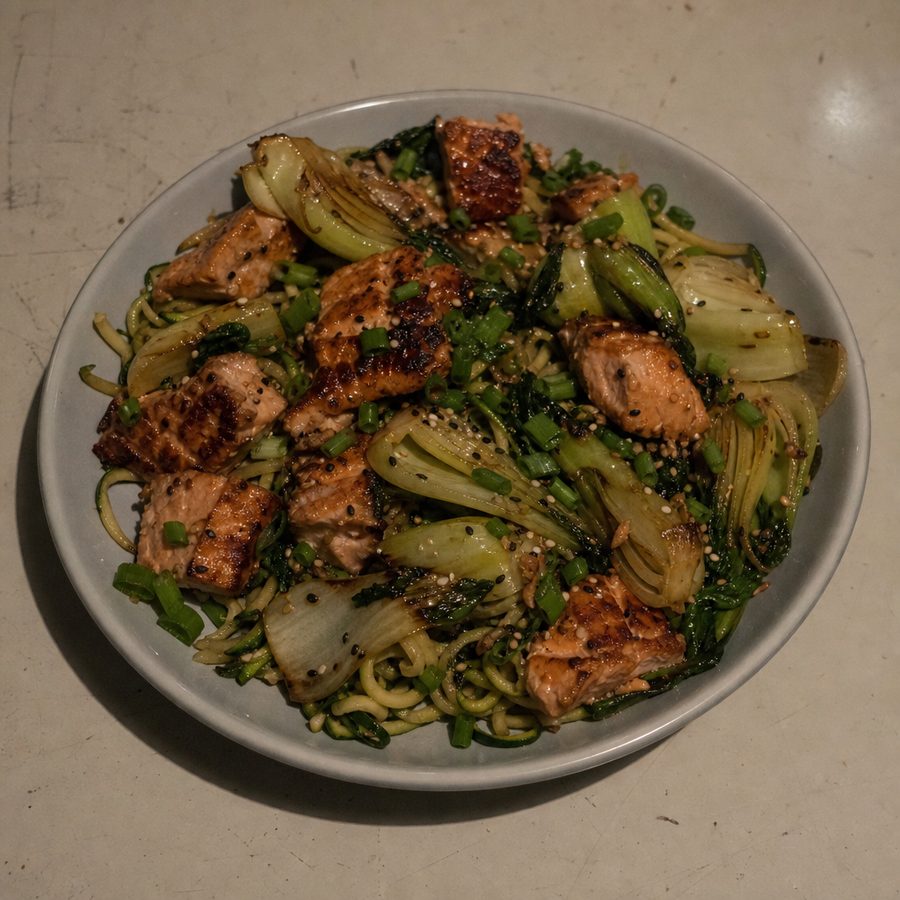
Ingredients
- 2 salmon fillets (about 6 oz each)
- 3 heads baby bok choy, halved
- 2 medium zucchini, spiralized
- 3 cloves garlic, minced
- 1 tbsp fresh ginger, grated
- 2 tbsp coconut aminos
- 1 tbsp sesame oil
- 1 tbsp avocado oil
- 2 scallions, sliced
- 1 tbsp sesame seeds
Instructions
- Prep the aromatics and vegetables: Mince the garlic and grate the ginger, keeping them together in a small dish. Slice the scallions thinly on a slight angle and set aside for garnish. Halve each head of baby bok choy lengthwise through the root so the leaves stay attached. Spiralize the zucchini into noodles and pat them with a towel to draw off surface moisture so they warm rather than steam later.
- Sear the salmon: Pat the salmon fillets thoroughly dry with paper towels and season the flesh side lightly if you like. Heat the avocado oil in a large skillet over medium-high until it shimmers. Lay the fillets in skin-side down and press each gently with a spatula for a few seconds so the skin stays flat against the pan. Sear undisturbed 4 to 5 minutes until the skin is crisp and the flesh has turned opaque most of the way up the side, then flip and cook 2 to 3 minutes more until the center is just opaque and flakes with gentle pressure (about 125 to 130°F (52 to 54°C), which is medium-rare rather than the 145°F (63°C) the FDA gives for seafood). Transfer to a plate and set aside.
- Start the bok choy: Lower the heat to medium and add the garlic and ginger to the same skillet. Stir constantly for about 30 seconds until fragrant but not browned. Arrange the bok choy halves cut-side down in the pan and cook 2 to 3 minutes until the cut faces pick up light color.
- Steam until crisp-tender: Pour in the coconut aminos and add a splash of water, then cover or tent loosely and steam about 2 minutes, until the stems are crisp-tender, a knife slides into the base with slight resistance, and the leaves have wilted.
- Warm the zoodles: Push the bok choy to one side of the skillet. Add the spiralized zucchini to the open space and toss with tongs 1 to 2 minutes, just until the noodles are warmed through and barely pliable but still have bite. Drizzle the sesame oil over everything and toss once more to coat.
- Plate and finish: Divide the zoodles and bok choy between plates, spooning any pan glaze over the top. Set a salmon fillet on each, then garnish with the sliced scallions and sesame seeds.
Variations
- Crushed red pepper heat: Add a pinch of crushed red pepper flakes along with the garlic and ginger for a warm, building heat that plays against the sesame.
- Citrus finish: Squeeze fresh lime or orange over the plated dish and add a little grated zest for a brighter, more aromatic glaze.
- Swap the protein: Use skin-on cod or large sea scallops in place of the salmon; both sear well in the same pan, though scallops need only a minute or two per side. This changes the fish.
- Mushroom depth: Slice cremini or shiitake mushrooms and cook them in the pan after the aromatics until browned, adding a meaty, savory layer under the greens.
- Carrot ribbon color: Peel a carrot into long ribbons and toss them in with the zucchini for the last minute so they warm and soften slightly, adding color and a touch of natural sweetness.
Storage & Leftovers
Store leftovers in an airtight container in the refrigerator for up to two days. Keep the salmon and vegetables together, but know that the zucchini noodles will continue to release water and soften over time, so they are best the day they are made.
To reheat, warm gently in a skillet over medium-low with a few drops of avocado oil, adding the salmon last and just long enough to take the chill off so it does not overcook and dry out. A brief, gentle warming keeps the fish tender; avoid the microwave if you can, since it tends to toughen salmon and turn the zoodles watery. Pour off any liquid the zucchini has shed before serving.
To get ahead, mince the garlic, grate the ginger, slice the scallions, halve the bok choy, and spiralize the zucchini earlier in the day and refrigerate them in separate covered containers. With the prep done, the actual cooking takes only a few minutes, and holding the components apart keeps the zoodles from weeping before they hit the pan.
Notes & Tips
- Dry salmon sears best: The single biggest factor in a crisp skin is dry fish. Pat the fillets very dry right before they hit the oil, and let the pan get properly hot so the skin releases on its own instead of sticking.
- Let it release before flipping: Salmon tells you when it is ready to turn: if it resists the spatula, give it another 30 seconds. A fillet that lifts cleanly has formed a proper crust.
- Take the chill off the fish: Let the fillets sit at room temperature for about 10 minutes before searing. Fish straight from the fridge cooks unevenly, leaving a browned exterior over a cold center.
- Choose firm, tight bok choy: Pick baby bok choy with crisp, pale stems and perky green leaves; limp or yellowing heads will cook down too soft and lose their crunch.
- Buy salmon of even thickness: Ask for center-cut fillets of similar thickness so they cook at the same rate; thin tail-end pieces finish faster and can overcook while you wait on the others.
- Toast for more aroma: If you want a deeper nutty note, warm the sesame seeds in a dry pan for a minute until fragrant before using them as garnish; watch closely, as they go from golden to burnt quickly.
Nutrition & Mindful Eating
- Three things cook in the same pan in roughly the time it takes to set the table. The salmon goes in first and sets a crust, the bok choy follows and keeps its stems firm, and the zucchini noodles go in last so they warm through and stay springy.
- Baby bok choy gives you two vegetables in one head. The stems stay juicy and crunchy while the leaves collapse into silk, and both carry vitamin C and calcium, which is a lot to find in something this mild.
- Salmon cooked skin side down until the fat renders comes out crisp on one face and just set through the middle, rich enough to stand up to a sauce this savory. The omega-3 fats it carries are part of why it tastes that way.
- Zucchini noodles are long green ribbons that want almost no heat. Tossed in at the end they keep a little bite and pick up the glaze in their curls, and they bring the water and fiber of a whole zucchini to the plate.
- Garlic and ginger hit the hot oil first and set the smell of the whole dish, the coconut aminos reduce around them into something glossy and savory, and sesame seeds and scallions go over the top for crunch and a green, sharp finish.
- As you eat, bite into a bok choy stem and notice how much water is still in it against the soft fish, and let dinner run at the pace of the meal rather than the pace of the day.
Frequently Asked Questions
How do I know when the salmon is done?
The flesh should turn opaque and flake with gentle pressure, with the center just barely translucent for a moist result. If you use a thermometer, pull it around 125 to 130°F (52 to 54°C) at the thickest part; it will finish carrying over as it rests on the plate.
How do I keep the zoodles from getting watery?
Pat the spiralized zucchini dry before cooking, season it only once it is in the hot pan, and toss it for just a minute or two. The goal is to warm the noodles through, not fully cook them, so they keep their bite.
Can I use regular bok choy instead of baby bok choy?
Yes. Cut mature bok choy into wedges or separate the stems from the leaves, and give the thicker stems a head start in the pan since they take longer to turn crisp-tender than the delicate leaves.
What can I use instead of coconut aminos?
Coconut aminos give a savory, lightly sweet glaze without soy. If you do not have it, a splash of a soy-free savory seasoning works, though the flavor and makeup will shift; note that standard soy sauce or tamari would add soy.