
Sheet-Pan Maple-Dijon Salmon with Brussels Sprouts & Delicata Squash
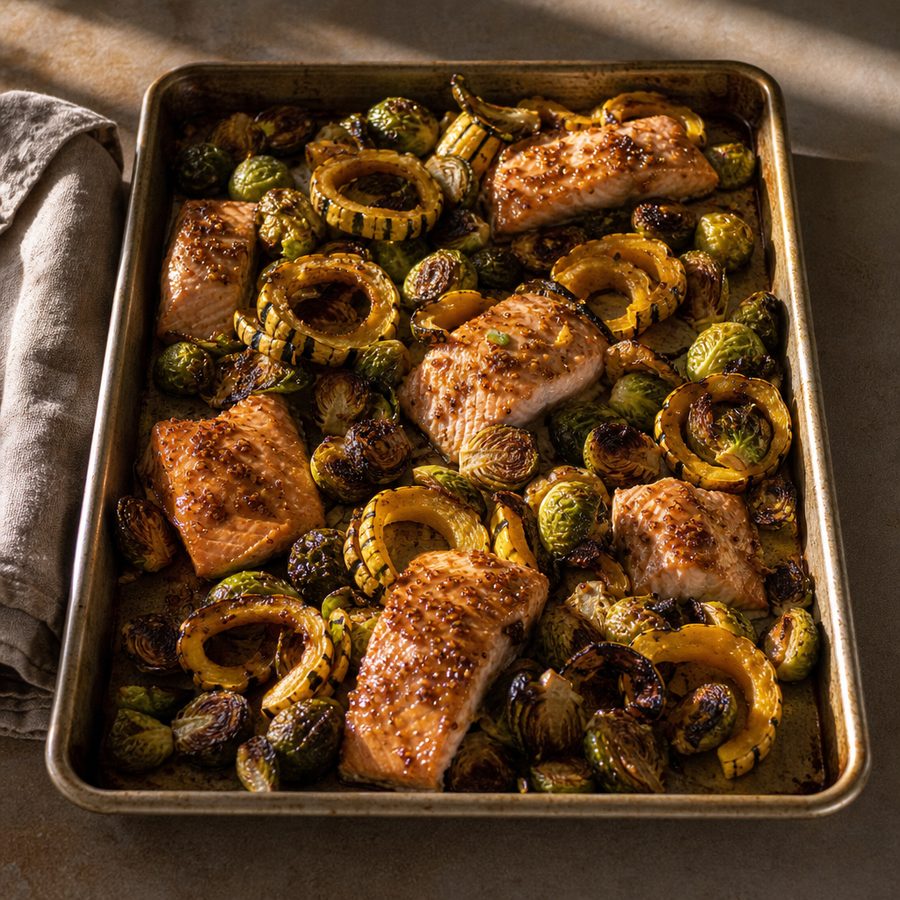
Rich salmon brushed with a maple and dijon glaze roasts alongside caramelized brussels sprouts and tender rings of delicata squash on a single sheet pan.
Why You'll Love This Recipe
This is a full dinner that comes together on one pan, which makes it a good fit for a weeknight when you want something warm and complete without a sink full of dishes. Rich, flaky salmon anchors the plate, while the brussels sprouts and delicata squash roast right alongside it, so the protein and the vegetables are ready at the same moment. It is the kind of meal that feels a little special but asks very little of you.
The salmon is the last thing to join the pan. The vegetables go in first because dense sprouts and squash need more time to caramelize than salmon needs to cook through, and adding everything at once would leave you with either raw vegetables or overdone fish. Roasting the sprouts cut-side down presses the flat surface against the hot pan so it browns and turns nutty, and the thin edible skin of delicata holds each half-moon together as it softens. The maple-and-dijon glaze goes on only at the end, where the sugar in the maple caramelizes into a burnished coat and the mustard cuts the richness with a sharp, tangy edge.
A rich, protein-heavy fish set against sweet, earthy vegetables. Salmon brings the kind of fat and protein that keeps you full for hours, the squash lends natural sweetness and body, and the brussels sprouts add fiber and a slightly bitter, roasted depth. Every bite has contrast: crisped edges, tender centers, a glaze that is both sweet and sharp. The plate stays interesting from the first forkful to the last.
Ingredients
- 4 salmon fillets (about 6 oz each)
- 3 cups brussels sprouts, halved
- 1 delicata squash, seeded and sliced into half-moons
- 1 tbsp maple syrup
- 1 tbsp dijon mustard
- 2 tbsp olive oil
- 1 tsp salt
Instructions
- Preheat the oven: Preheat the oven to 425°F (220°C) and line a large sheet pan with parchment paper. A single, uncrowded layer is what gives you caramelization instead of steam, so use the biggest pan you have.
- Prep the vegetables: Trim the dry stem ends from the brussels sprouts and cut each one in half through the core so the leaves stay attached. Halve the delicata squash lengthwise, scoop out the seeds and stringy pulp with a spoon, then slice each half crosswise into half-moons. The skin of delicata is thin and edible, so there is no need to peel it.
- Roast the vegetables: Toss the brussels sprouts and squash with the olive oil and half of the salt until evenly coated. Spread them cut-side down in a single layer on the sheet pan and roast for 15 minutes to give them a head start, since they take longer than the fish.
- Make the glaze: While the vegetables roast, whisk together the maple syrup, dijon mustard, and the remaining salt in a small bowl until smooth and glossy.
- Glaze and add the salmon: Pat the salmon fillets dry with a paper towel and brush the glaze over the tops. Pull the pan from the oven, stir the vegetables, and push them to the edges to clear space. Set the fillets skin-side down in the cleared center of the pan.
- Roast until just done: Return the pan to the oven and roast for 10 to 12 minutes more, until the vegetables are deeply browned and the salmon is just opaque and flakes with gentle pressure, about 125 to 130°F (52 to 54°C) at the thickest part for a moist center. The FDA number for seafood is 145°F (63°C), so give it a few more minutes on the tray if that is the one you follow.
- Serve: Divide the salmon and roasted vegetables among plates and serve warm, spooning any glaze from the pan over the top.
Variations
- Swap the squash: Trade the delicata squash for cubed butternut or peeled sweet potato when delicata is out of season. Both are denser, so cut them a little smaller and give the vegetables a few extra minutes before the salmon goes in.
- Add crunch with pecans: Sprinkle roughly chopped pecans over the vegetables for the last few minutes of roasting for a toasty crunch against the tender squash. This adds nuts.
- Broccoli instead of sprouts: Use broccoli florets in place of the brussels sprouts for a quicker-cooking, milder green. Watch them closely, as the tips brown fast under the higher heat.
- Herb finish: Strip fresh rosemary or thyme leaves over the pan before roasting for a woodsy, aromatic layer that plays against the sweet maple glaze.
- Warm spice: Whisk a pinch of smoked paprika or cayenne into the maple-dijon glaze for gentle heat and a smoky edge that balances the sweetness.
Storage & Leftovers
Store leftover salmon and vegetables in an airtight container in the refrigerator for up to three days. Keep the fish and vegetables together; the glaze holds up well and the flavors settle nicely overnight.
To reheat, warm portions in a 300°F (150°C) oven or toaster oven for about eight to ten minutes, which keeps the salmon moist and re-crisps the vegetables. Avoid the microwave if you can, since it tends to overcook the fish and turn it dry and strong-smelling. The salmon is also very good served cold, flaked over greens straight from the fridge.
To get ahead, halve the sprouts, seed and slice the squash, and whisk the glaze up to a day in advance, storing each in the refrigerator. When it is time to cook, the pan comes together in minutes and you go straight into the oven.
Notes & Tips
- Choose even fillets: Ask for center-cut salmon fillets of similar thickness so they finish cooking at the same time. Thin tail pieces overcook while a thick center is still translucent.
- Dry the fish first: Pat the salmon completely dry before glazing. A dry surface lets the maple-dijon cling and caramelize instead of sliding off in a watery layer.
- Do not peel the delicata: The skin on delicata squash is thin and softens completely as it roasts, so peeling is not worth the effort and the skin helps the rings hold their shape.
- Judge doneness by flake: Salmon is done when it turns from translucent to opaque and separates into flakes under light pressure from a fork. It keeps cooking a bit off the heat, so pull it just before it looks fully set.
- Give the sprouts room: Crowding the pan traps steam and leaves the sprouts pale and soft. If you are cooking a large batch, use two pans so everything browns rather than stews.
- Adjust the glaze to taste: For a sharper finish, lean on more dijon; for a rounder, sweeter coat, add a touch more maple. Taste the glaze before brushing and tune it to your liking.
Nutrition & Mindful Eating
- Salmon, squash and sprouts all roast at the same temperature, which is the whole trick here. The fish gives the plate its richness, the squash brings sweetness, and the sprouts bring the bitter, browned edges that keep the maple from taking over.
- Salmon goes from translucent to opaque in about the time the vegetables need, and it stays moist on its own fat, the omega-3 kind, which is also why a fillet this size eats so richly.
- Delicata squash has a thin skin you can eat, so it goes in sliced into half moons that collapse into something almost custardy at the center, and the orange flesh carries beta-carotene along with its sweetness.
- Brussels sprouts turn sweet and nutty at the cut face where they meet the hot pan, and the leaves that fall loose go crisp and dark. They bring fiber and vitamin C along with all that texture.
- Maple syrup and dijon mustard do the seasoning together, the syrup going caramelized and tacky under the heat and the mustard's sharpness cutting straight through it, with a pinch of salt pulling both forward.
- As you eat, notice how dark and tacky the glaze has gone at the edges of the pan and how the salmon gives way under a fork, and give yourself long enough at the table to feel the meal settle.
Frequently Asked Questions
Can I use frozen salmon?
Yes. Thaw the fillets fully in the refrigerator overnight, then pat them very dry before glazing. Excess water from frozen fish keeps the glaze from caramelizing and can leave the surface steamed rather than roasted.
My vegetables were done before the salmon. What happened?
Thicker fillets need the full time, so if your salmon runs large the vegetables may finish first. Lift the vegetables onto a plate and tent them loosely with foil to hold their warmth, then return them to the pan to reheat for the last minute or two while the fish finishes.
Do I need to remove the salmon skin?
No. Roast the fillets skin-side down; the skin protects the flesh from the hot pan and lifts away easily once cooked if you would rather not eat it. Many people enjoy it crisped.
How do I keep the maple-dijon glaze from burning?
Because the glaze contains maple syrup, it is added only for the final stretch of roasting rather than the full cook time. If your oven runs hot and the tops darken quickly, move the pan to a lower rack for the last few minutes.