
Shrimp & Cauliflower Rice Stir-Fry
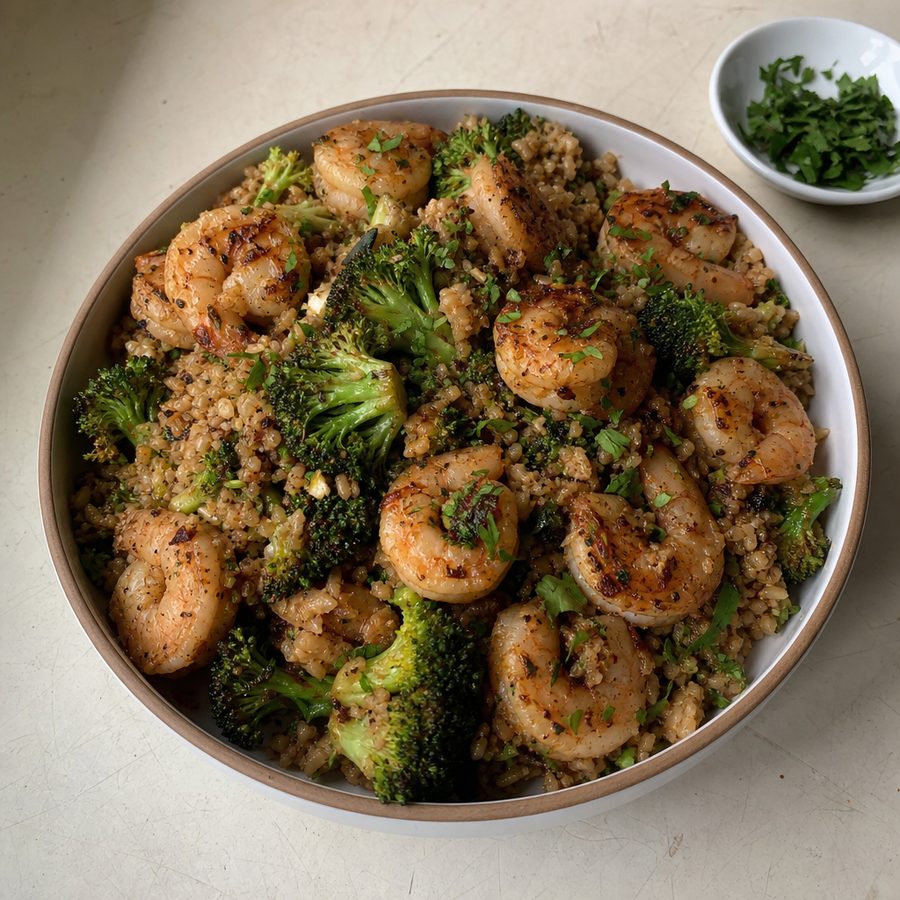
Plump shrimp and crisp-tender broccoli tossed with tender cauliflower rice in a glossy ginger-garlic glaze of coconut aminos, finished with fresh scallions.
Why You'll Love This Recipe
Warm and savory on the table in about twenty minutes, out of one fast pan and with no pile of dishes after. It leans on shrimp, which cooks in minutes, and cauliflower rice, which stands in for a grain while staying light. It suits busy weeknights, cooks who are watching their carbohydrates, and anyone who simply likes the clean, bright flavors of a ginger stir-fry.
The flavor comes from a simple trio: garlic and ginger bloomed in hot oil, then a splash of coconut aminos that reduces into a lightly sweet, salty glaze. Cooking the cauliflower rice long enough to drive off its moisture is what keeps the finished dish from turning watery, and searing the shrimp in the center of the pan gives them color and a firm, snappy texture rather than the soft, poached quality they get when crowded. Steaming the broccoli separately and adding it at the end keeps it green and crisp instead of gray and limp.
It is satisfying because the shrimp deliver a lot of protein, which is filling and helps steady your appetite, while the cauliflower and broccoli add fiber, volume, and a range of vitamins without any heaviness. A pound of shrimp across four bowls goes further here than it would on its own, since the cauliflower carries the bulk and the shrimp only has to carry the flavor. The result feels like a full, comforting bowl of stir-fry, but it eats light, so you finish the meal satisfied rather than heavy.
Ingredients
- 1 lb shrimp
- 1 medium head cauliflower, riced
- 3 cups broccoli florets
- 3 tbsp coconut aminos
- 3 tbsp avocado oil
- 1 tbsp grated ginger
- 4 cloves garlic
- 4 scallions
- 1/4 tsp salt
Instructions
- Prep the ingredients: Peel and devein the shrimp, then pat them dry with paper towels so they sear instead of steam. Mince the garlic and grate the ginger. Trim the broccoli into bite-size florets. Thinly slice the scallions, keeping the white and green parts. If you are starting with a whole head of cauliflower, cut it into chunks and pulse in a food processor until it looks like rice, or grate it on the large holes of a box grater.
- Steam the broccoli: Bring a shallow pot of water to a simmer, set the broccoli florets in a steamer basket above it, cover, and steam until bright green and just crisp-tender, about 3 minutes. Lift them out and set aside so they keep a little bite.
- Cook the cauliflower rice: Heat the avocado oil in a large skillet or wok over medium-high heat. Add the garlic and ginger and stir constantly until fragrant, about 30 seconds, being careful not to let them brown. Add the cauliflower rice, spread it out, and cook, stirring occasionally, until it softens and any released moisture cooks off, about 5 minutes.
- Cook the shrimp: Push the cauliflower rice to the sides of the pan and lay the shrimp in the center in a single layer. Cook until the undersides turn pink, about 1 to 2 minutes, then flip and cook until the shrimp are opaque throughout and curled into a loose C shape, about 1 to 2 minutes more. Overcooked shrimp tighten into a rubbery O, so pull them off the heat as soon as they turn opaque.
- Combine and finish: Return the steamed broccoli to the pan, pour in the coconut aminos, and add the salt. Toss everything together for about a minute until the glaze coats the shrimp and vegetables and everything is heated through. Turn off the heat, fold in most of the sliced scallions, and garnish the top with the rest.
Variations
- Add heat: Double the ginger and add a spoonful of grated horseradish with the garlic for a sharper, warmer glaze that skips the nightshades.
- Swap the protein: Use bite-size pieces of boneless chicken thigh in place of the shrimp; this adds poultry, and it needs a few extra minutes to cook through to opaque in the center.
- Brighten it: Finish with a squeeze of fresh lime juice and a little grated zest to lift the ginger and cut the savory glaze.
- Nutty finish: Sprinkle toasted sesame seeds or chopped cashews over the top for crunch; seeds and nuts are both left out on the autoimmune protocol.
- More vegetables: Toss in snap peas, shredded carrot, or sliced bok choy along with the cauliflower rice for extra color and crunch. Bell pepper works too if you are not avoiding nightshades.
Storage & Leftovers
Store leftovers in an airtight container in the refrigerator for up to three days. The cauliflower rice will release a little moisture as it sits, so give the container a quick stir before reheating and drain off any excess liquid.
Reheat gently in a skillet over medium heat with a small drizzle of avocado oil, tossing just until warmed through. Shrimp turn rubbery when they are cooked twice, so heat only until hot and pull it off the stove. A microwave works in a pinch, but use short bursts and stop as soon as it is warm.
To get ahead, prep the components in advance: rice the cauliflower, cut the broccoli, mince the garlic, grate the ginger, and slice the scallions, then store them in separate containers in the fridge. With everything ready, the actual cooking takes only a few minutes.
Notes & Tips
- Dry shrimp sear better: Take an extra minute to pat the shrimp really dry before they hit the pan. Surface moisture steams instead of sears, and dry shrimp brown faster and pick up more of the glaze.
- Buy a shortcut: Pre-riced cauliflower from the produce or freezer aisle works well here and saves the food-processor step. If using frozen, cook it a little longer to drive off the extra water.
- Don't crowd the pan: If your skillet looks packed, cook the shrimp in two batches. A crowded pan traps steam and the shrimp turn soft rather than getting a light sear.
- Watch the doneness cue: Shrimp are done the moment they turn opaque and curl into a loose C. A tight O shape means they went too far, so use color and shape rather than time as your guide.
- Adjust the seasoning: Coconut aminos is milder and a touch sweeter than soy sauce, so taste at the end and add a little more for depth or a pinch more salt if it needs it.
- Round out the plate: This bowl stands on its own, but a soft-boiled or fried egg on top, or a side of kimchi, makes it feel like a more substantial meal. Eggs are left out on the autoimmune protocol.
Nutrition & Mindful Eating
- The shrimp, the cauliflower and the broccoli each want a different amount of heat, so they go in at different moments and meet at the end. What you get is springy shrimp, toasted grains of cauliflower and broccoli still green at the core.
- Cauliflower rice is cauliflower broken down to fine pale grains, and in a dry hot pan those grains toast and take on a golden, faintly sweet flavor, along with the fiber and vitamin C they came with.
- Broccoli goes in early enough to blister against the pan and late enough to keep its bite, and it brings fiber and vitamin K under a surface that has gone dark in spots.
- Shrimp are the last thing in the pan because they need almost no time. They firm up, curl, and turn sweet, and the protein they carry is what turns a skillet of vegetables into dinner.
- Ginger, garlic and scallion whites hit the hot oil first and go fragrant in seconds, and coconut aminos poured down the side of the pan hiss, reduce and coat everything in something savory and faintly sweet.
- As you eat, catch the toasted edge on the cauliflower and the small snap still left in the broccoli, and slow your fork enough to find the ginger sitting underneath all of it.
Frequently Asked Questions
Can I use frozen shrimp?
Yes. Thaw them first by placing them in a colander under cold running water for a few minutes, then pat them thoroughly dry. Cooking shrimp straight from frozen releases too much water and leaves them tough and pale instead of seared.
How do I keep the cauliflower rice from turning mushy or watery?
Cook it over medium-high heat and give it enough time, about five minutes, for its moisture to cook off before you add anything else. Spreading it out rather than piling it up helps the water evaporate so the finished dish stays fluffy rather than soggy.
What can I use instead of coconut aminos?
Coconut aminos gives a mild, slightly sweet, salty glaze. Tamari or soy sauce will work if those fit your needs, though both are saltier and will change the flavor and make the dish contain soy and, in the case of standard soy sauce, wheat; start with less and taste.
Is this filling enough as a full dinner?
The shrimp deliver a substantial amount of protein and the vegetables add fiber and volume, so a bowl is satisfying on its own. If you want it heartier, top it with an egg or serve it alongside a scoop of a cooked grain of your choice, keeping in mind that eggs and grains are both left out on the autoimmune protocol.