
Spinach, Artichoke & Olive Egg Skillet
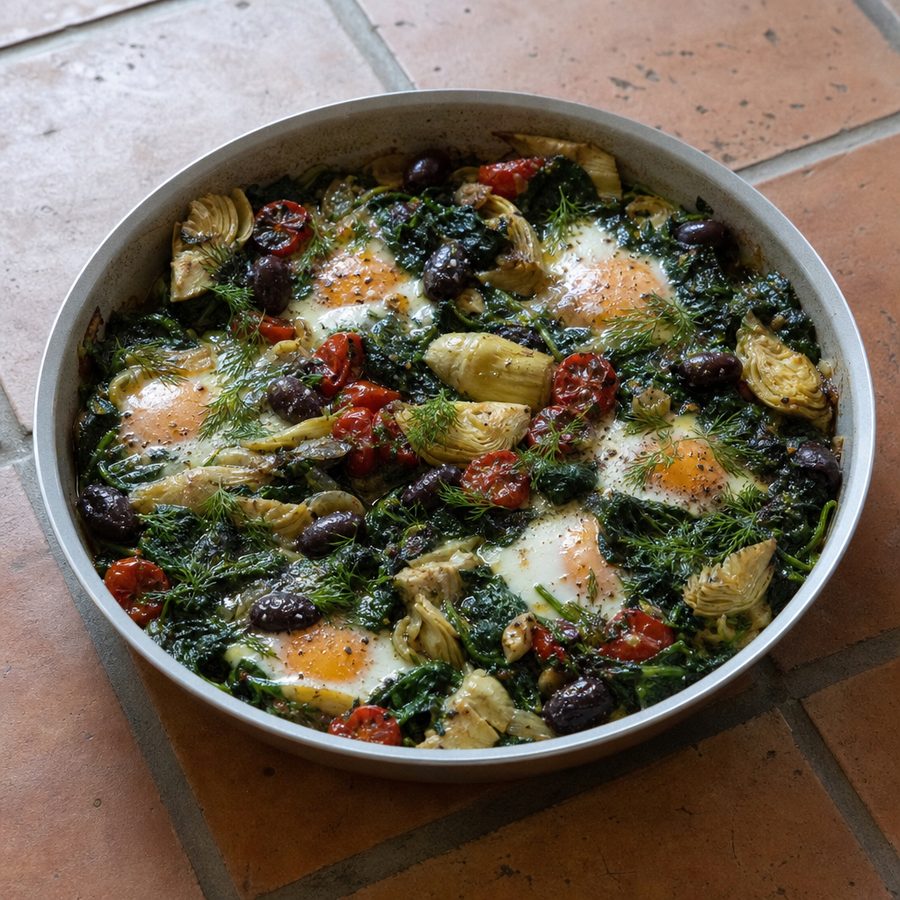
Tender wilted spinach, quartered artichoke hearts, and blistered cherry tomatoes cooked down with sliced shallot and garlic, then finished with eggs cracked into the greens, briny kalamata olives, fresh dill, and a bright squeeze of lemon.
Why You'll Love This Recipe
This is a one-skillet breakfast that leans on vegetables rather than starch to carry the meal, with eggs cooked right into a bed of greens. It suits anyone who wants a warm, savory start to the day that feels substantial without weighing them down, and it comes together in a single pan on a busy morning while still being nice enough to set on the table for a slow weekend brunch.
The method is what makes it work. Cooking the shallot and garlic first builds a savory base, then the tomatoes are given time to collapse so their juices form a light sauce that seasons the greens. Adding the spinach in handfuls keeps it from overflowing the pan and lets each batch wilt evenly. Covering the skillet traps steam so the eggs set gently on top without the vegetables underneath drying out, and the lemon and olives added at the end keep the flavors bright and briny instead of flat.
Soft eggs, silky greens, tender artichoke, bursts of sweet tomato, and salty olives, and all of it pulled together with fresh dill and lemon. The eggs bring protein that helps a meal hold you, while the spinach, artichokes, and tomatoes add fiber and volume so the plate feels generous. It is the kind of breakfast that tastes rich but leaves you comfortable rather than heavy.
Ingredients
- 2 tbsp olive oil
- 1 large shallot, thinly sliced
- 2 garlic cloves, sliced
- 1 cup artichoke hearts, quartered
- 1 cup cherry tomatoes, halved
- 5 cups fresh spinach
- 1/4 cup kalamata olives, halved
- 4 large eggs
- 2 tbsp chopped fresh dill
- 1 tbsp lemon juice
Instructions
- Prep the vegetables: Thinly slice the shallot and the garlic cloves. Quarter the artichoke hearts if they are whole, and halve the cherry tomatoes and the kalamata olives. Roughly chop the fresh dill and set it aside for garnish, since dill loses its perfume within a minute in a hot pan and it is the brightest thing on the plate.
- Soften the aromatics: Heat the olive oil in a large skillet over medium heat until it shimmers. Add the sliced shallot and cook, stirring occasionally, until soft and translucent, about 3 minutes. Add the sliced garlic, the artichoke hearts, and the cherry tomatoes and cook until the tomatoes begin to collapse and release their juices, 4 to 5 minutes, because those juices are the only liquid in the pan and the eggs need something to sit in.
- Wilt the spinach: Add the spinach a handful at a time, stirring and letting each addition wilt down before adding the next, since the whole pile at once will not fit in the skillet and the bottom layer scorches waiting for the top to collapse, until all of it has cooked down to soft, dark green ribbons, 2 to 3 minutes. Stir in the halved olives and the lemon juice, then spread the vegetables into an even layer.
- Add the eggs: Make four wells in the vegetables with the back of a spoon and crack one egg into each well, so that each egg sits against the hot pan rather than floating on the greens. Cover the skillet and cook until the whites are fully set but the yolks are still soft, 4 to 5 minutes. For firmer yolks, cook a minute or two longer.
- Garnish and serve: Sprinkle the chopped fresh dill over the top and serve warm, straight from the skillet, because the yolks go on firming in a hot pan and a few minutes on the counter is the difference between soft and set.
Variations
- Add a cooked protein: Crumble browned bulk sausage or flaked cooked salmon over the vegetables before you make the wells for the eggs; this adds meat or fish and makes the skillet heartier.
- Roasted red pepper: Stir in a handful of jarred roasted red peppers, drained and sliced, along with the artichokes for extra sweetness and a softer texture against the briny olives.
- Swap the herb: Trade the dill for chopped fresh parsley, basil, or mint, or use a mix, to shift the finish from grassy and bright toward peppery or sweet.
- Warm it up: Add a pinch of red pepper flakes with the garlic, or finish with a dusting of smoked paprika, for gentle heat and a deeper savory note.
- Extra brine and tang: Stir in a spoonful of drained capers with the olives, or add a squeeze more lemon at the end, for a sharper, more piquant skillet.
Storage & Leftovers
Leftovers keep well in an airtight container in the refrigerator for up to three days. The eggs firm up as they chill, so cooked-through yolks store better than runny ones; if you know you are saving a portion, cook those eggs a little more before you take the skillet off the heat.
Reheat gently to keep the eggs from turning rubbery. Warm a portion in a covered skillet over low heat with a splash of water to bring back moisture, or microwave in short bursts at reduced power, stopping as soon as it is heated through. A fresh squeeze of lemon and a little more dill after reheating wakes the flavors back up.
To get ahead, make the vegetable base through the wilted-spinach step, cool it, and refrigerate it. In the morning, reheat the vegetables in the skillet until steaming, make the wells, add the eggs, and cover to finish, so you only cook the eggs to order.
Notes & Tips
- Buy the right artichokes: Use artichoke hearts packed in water or brine rather than the marinated, oil-packed kind, which carry added seasonings and sugar that can throw off the clean flavor of the skillet. Drain and pat them dry so they brown rather than steam.
- Dry your spinach: If your spinach is wet from washing, spin or blot it first. Wet leaves release extra water into the pan and thin out the tomato juices, leaving the vegetables soupy under the eggs.
- Judge egg doneness by the whites: The eggs are ready when the whites are opaque and set but still jiggle slightly at the yolk. Because they finish under a cover, they carry over a bit after you uncover, so pull them a touch before they look fully firm if you like a soft yolk.
- Salt at the end, not the start: The olives are already salty, so wait until they are stirred in before you season at all, then taste. You may want less than you think, and it is easy to add more but impossible to take back.
- Use a lid that fits: A snug lid is what sets the tops of the eggs; if yours does not seal well, a sheet of foil or a baking sheet laid over the skillet traps enough steam to do the job.
- Serve it to share: This is built to come to the table in the pan and be spooned out, so bring the whole skillet over while it is hot rather than plating in the kitchen, and set out lemon wedges for anyone who wants an extra squeeze.
Nutrition & Mindful Eating
- Spinach, artichokes, olives and tomatoes cook down into a soft base and the eggs go straight in on top of it. The yolks break into all of it, which is what turns a pan of vegetables into breakfast.
- Eggs cooked this way stay soft, the whites just set and the yolks still loose, and each one brings complete protein along with choline, most of it sitting in the yolk you are about to break.
- Spinach loses most of its volume in about a minute, so a whole heap of it collapses into a few dark green ribbons, concentrating its folate and iron into something you can finish in one sitting.
- Artichoke hearts hold their shape and stay meaty and slightly tart, and kalamata olives bring the salt and the purple brine that makes this taste like the coast. Both carry fiber, the artichokes especially.
- Shallot and garlic soften in olive oil before anything else, cherry tomatoes burst and go sweet in the same pan, and the lemon and fresh dill go over right at the end where they stay bright and grassy.
- As you eat, break a yolk and watch it run into the greens, and let the smell of dill and warm olive oil hold your attention for a minute before you start on the rest of the morning.
Frequently Asked Questions
Can I use frozen spinach instead of fresh?
Yes. Thaw it fully and squeeze out as much water as you can with your hands or a clean towel, then stir it into the pan where you would add the fresh spinach and warm it through. It will not need the handful-by-handful wilting since it is already soft, but drying it well is essential or the pan will turn watery.
My eggs are done on top but the vegetables are watery. What happened?
That usually means there was extra moisture in the pan, most often from wet spinach or artichokes that were not drained and dried. Next time, pat those ingredients dry and let the tomatoes cook a minute longer so their juices reduce and cling to the vegetables before you add the eggs.
Can I make this for one, or scale it up for a crowd?
Both work. Keep the same method and just adjust the amount of each ingredient to the number of eggs you are cooking. For a larger batch, use a wider skillet so the vegetables sit in an even layer and you have room to space the wells, which keeps the eggs cooking evenly.
What can I serve alongside it?
It stands on its own, but it is lovely with lemon wedges for squeezing, sliced avocado, or a simple green salad. If you want something heartier to scoop up the greens and yolk, roasted vegetables such as cauliflower or zucchini, or a spoonful of mashed avocado, round it out.