
Thai Green Chicken & Eggplant Coconut Curry
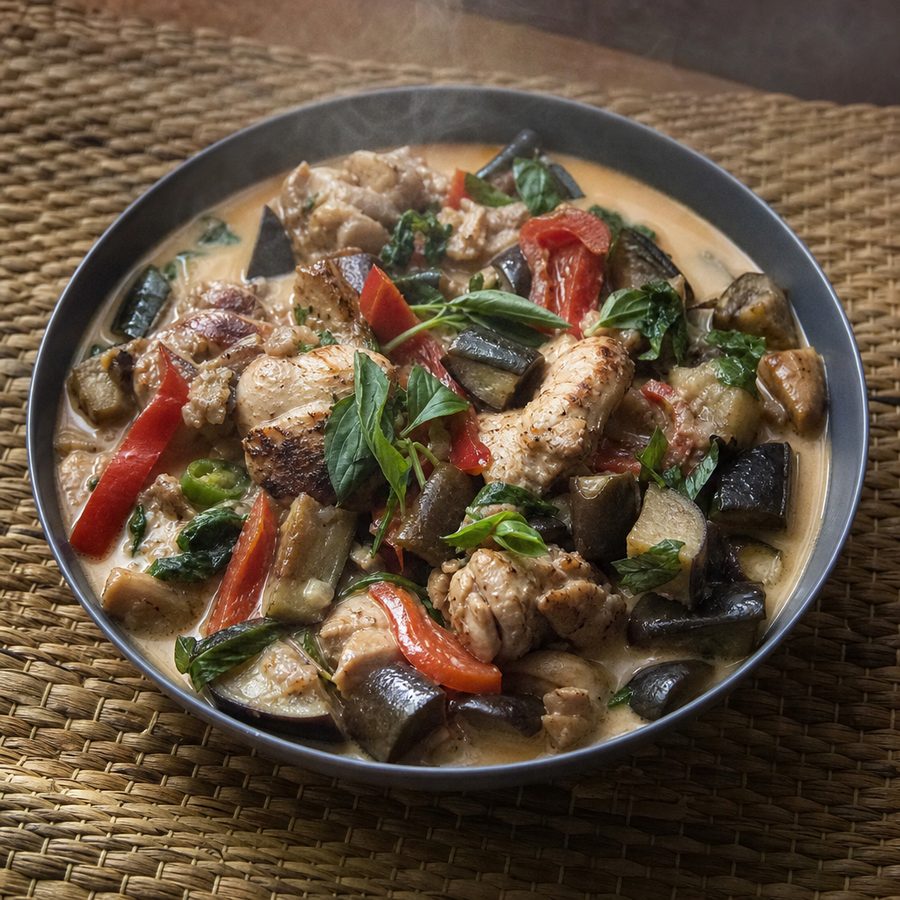
Tender chicken thighs and silky eggplant simmer with sweet red bell pepper in a coconut milk broth brightened by ginger, garlic, jalapeño, lime, and a generous handful of fresh Thai basil.
Why You'll Love This Recipe
This is a weeknight curry for anyone who wants a bowl that feels indulgent while leaning on vegetables and chicken. The eggplant and bell pepper do a lot of the work, soaking up the coconut broth until they turn silky, while the chicken thighs stay tender and act as a supporting player rather than the whole show. It comes together in one pot in well under an hour, which makes it realistic for a busy evening yet special enough to want again.
The aromatics get the pan to themselves first. Softening the onion first, then blooming the garlic, ginger, and jalapeño in the warm coconut oil pulls their flavors out into the fat so they carry through the whole dish instead of sitting on top. The acid and herbs go in at the very end on purpose: stirring the lime juice and Thai basil in off the heat keeps the lime sharp and the basil aromatic, since both fade if you boil them. Thai basil brings a distinct anise-and-clove note that ordinary sweet basil cannot replicate, and it is what makes the curry taste herb-forward.
The result is satisfying because it hits richness, freshness, and substance at once. Full-fat coconut milk gives the broth body and a lasting fullness, the chicken thighs contribute protein that keeps you steady, and the eggplant and pepper add fiber and real volume so a bowl actually fills you up. Finished with a squeeze of lime and a shower of cilantro, it tastes bright rather than heavy, and it reheats into something you look forward to the next day.
Ingredients
- 1 1/4 lb boneless skinless chicken thighs, cut into bite-size pieces
- 1 medium eggplant, cubed
- 1 (13.5 oz) can full-fat coconut milk
- 1 red bell pepper, sliced
- 1 small onion, thinly sliced
- 4 cloves garlic, minced
- 1 tbsp fresh ginger, grated
- 1 jalapeño, minced
- 1/2 cup fresh Thai basil leaves
- 2 tbsp fresh lime juice
- 2 tbsp coconut aminos
- 1/4 cup cilantro, chopped
- 1 tbsp coconut oil
Instructions
- Prep the aromatics and vegetables: Thinly slice the onion and mince the garlic. Peel and grate the ginger. Mince the jalapeño, removing the seeds and white ribs first if you want a milder curry. Slice the red bell pepper into thin strips and cut the eggplant into bite-size cubes. Pick the Thai basil leaves off their stems and roughly chop the cilantro. Squeeze the lime until you have a couple of tablespoons of juice ready.
- Cut the chicken: Cut the boneless skinless chicken thighs into bite-size pieces, patting them dry first so they brown rather than steam.
- Build the aromatic base: Melt the coconut oil in a large pot or deep skillet over medium heat. Add the onion and cook 3 to 4 minutes, stirring now and then, until softened and translucent. Stir in the garlic, ginger, and jalapeño and cook about 1 minute, just until fragrant, so the garlic does not scorch.
- Brown the chicken: Add the chicken pieces and cook, stirring, for 5 to 6 minutes until they are lightly browned on all sides. They will not be cooked through yet; they finish in the simmer.
- Add the vegetables and coconut milk: Stir in the eggplant and red bell pepper, then pour in the coconut milk and coconut aminos. Give the can of coconut milk a good shake first so the cream and liquid are combined. Bring everything to a gentle simmer.
- Simmer until silky: Reduce the heat to medium-low and simmer uncovered for 18 to 20 minutes, stirring occasionally, until the eggplant is meltingly soft and the chicken is cooked through with no pink in the center (165°F (74°C) on an instant-read thermometer). The broth will thicken slightly as it reduces.
- Finish and serve: Remove the pot from the heat and stir in the lime juice and most of the Thai basil, since both go flat over a live burner and the heat left in the pot is more than enough to wilt the leaves. Taste and add a squeeze more lime if it needs brightening; the coconut aminos have already salted the curry. Ladle into bowls and garnish with the remaining Thai basil and the chopped cilantro.
Variations
- Make it a seafood curry: Swap the chicken for peeled shrimp, stirring them in during the last few minutes of simmering just until pink and opaque so they stay tender; this adds shellfish.
- Load it with more vegetables: Add sliced mushrooms, cubed zucchini, or a handful of baby spinach along with the eggplant to stretch the broth further and pack in more plants; stir tender greens in at the very end just to wilt.
- Turn up the heat: For a spicier bowl, leave the jalapeño seeds in or add a sliced Thai bird chili with the aromatics; balance the extra fire with a touch more lime at the finish.
- Deepen the herb backbone: Bruise a stalk of lemongrass and drop in a few makrut lime leaves while it simmers, then fish them out before serving for a more layered, restaurant-style fragrance.
- Add a savory-salty depth: Stir in a splash of fish sauce with the coconut aminos for a rounder, more umami-rich broth; this adds fish.
Storage & Leftovers
Cool the curry, then store it in an airtight container in the refrigerator for up to four days. The flavors deepen overnight as the eggplant continues to drink in the coconut broth, so day-two portions often taste even better than the first.
Warm gently in a saucepan over medium-low heat, stirring often, until heated through; add a splash of water or a little extra coconut milk to loosen the broth, which thickens in the fridge. A microwave works in a pinch at reduced power, stirring halfway. Brighten the reheated bowl with a fresh squeeze of lime and a few torn basil leaves to wake it back up.
You can build the whole curry a day in advance and refrigerate it, holding back the lime juice and fresh herbs. Reheat gently, then stir in the lime and basil just before serving so they stay vivid. You can also do all the knife work earlier in the day: slice the onion and pepper, cube the eggplant, mince the garlic, ginger, and jalapeño, then keep it covered in the fridge so dinner is nearly hands-off.
Notes & Tips
- Choose the right eggplant: Pick an eggplant that feels firm, heavy for its size, and has glossy, unwrinkled skin; those are younger and less bitter, and they turn creamy rather than spongy in the broth. Cube it right before it goes in the pot, since cut eggplant browns quickly.
- Use Thai basil if you can find it: Thai basil, with its purple stems and narrow leaves, gives the anise-like flavor that defines this dish. If you can only find sweet Italian basil, it will still be good but milder and more peppery; add a little extra to make up for it.
- Shake the coconut milk: Full-fat coconut milk separates in the can, with thick cream on top and thin liquid below. Shake it well before opening, or scrape it all in and stir, so your broth is uniformly rich instead of greasy in spots.
- Season at the end, not the start: Coconut aminos is your main source of salt here, and it is milder and slightly sweeter than soy-style sauces. Wait until the curry has simmered and the flavors concentrated before deciding whether it needs another splash, so you do not oversalt early.
- Dial the heat to your table: Most of a jalapeño's heat lives in the seeds and white ribs. Remove them for a gentle warmth the whole family can eat, or leave them in for a real kick. You can always pass extra sliced chili at the table.
- Serve it with something to soak the broth: This curry makes a generous, brothy sauce that begs to be spooned over something. Cauliflower rice or a pile of steamed vegetables catches it beautifully and turns a bowl into a full plate.
Nutrition & Mindful Eating
- Chicken thighs, eggplant and coconut milk work as one thing here. The thighs stay juicy through a long simmer, the eggplant turns silky and drinks up the sauce, and the coconut milk holds all of it together.
- Eggplant starts spongy and ends up almost custardy, which is the whole point of putting it in a curry, and it brings a surprising amount of fiber for something that eats this soft.
- Thighs are the cut that forgives a simmer. Dark and well marbled, they stay tender the longer they sit in the sauce, and they carry protein along with the iron and zinc that make this bowl eat substantially.
- Red bell pepper goes in late so it keeps a firm snap against everything soft, and its color is carotenoid pigment and vitamin C, cutting a clean sweet line through the richness.
- Ginger, garlic and jalapeño cook down in coconut oil until they smell green and hot, coconut aminos add savory depth, and Thai basil and lime go over at the end where the anise in the basil stays intact.
- As you eat, see how completely the eggplant has given way and how the lime lifts the coconut milk, and let the bowl be a real pause in the evening rather than something you finish quickly.
Frequently Asked Questions
Can I use chicken breast instead of thighs?
Yes, but cut it into bite-size pieces and watch it closely, since breast meat dries out faster. Add it a little later or simmer just until it reaches 165°F (74°C). Thighs are recommended because they stay tender and juicy through the full simmer.
My curry is not bright green like at a restaurant. Is that normal?
Yes. Restaurant green curry gets its color from a blended green curry paste. This version builds flavor from fresh aromatics and herbs instead, so it looks more like a creamy coconut broth flecked with green rather than a solid green sauce. The taste is fresh and herb-forward.
Should I salt the eggplant first to remove bitterness?
It is not necessary here. A fresh, firm eggplant added straight to the pot turns silky and mild as it simmers in the coconut broth. Salting and draining is mainly useful for older, seedier eggplant or when frying, neither of which applies to this dish.
How do I make it less spicy for kids?
Remove the jalapeño's seeds and white ribs before mincing it, which takes out most of the heat while keeping the fresh pepper flavor. You can also use just part of the pepper, and pass extra sliced chili at the table for anyone who wants more.