
Tuna Avocado Collard Hand Rolls
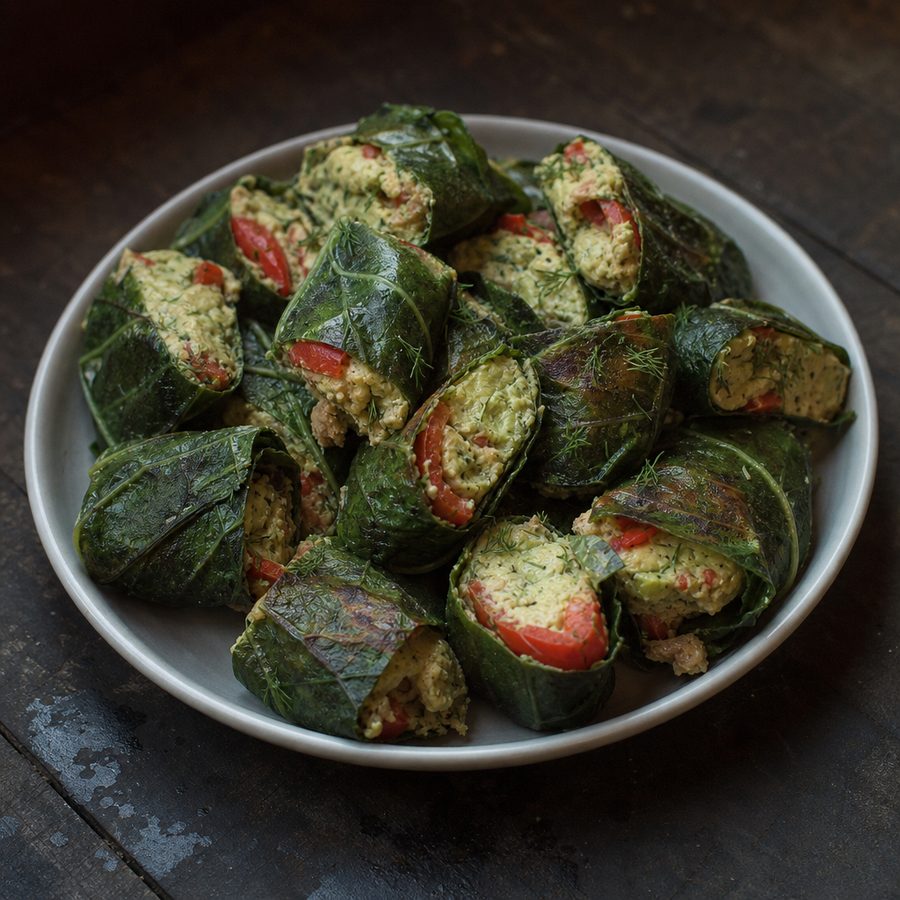
Creamy avocado-mashed tuna flecked with celery, dill, and dijon, wrapped with crunchy red bell pepper in tender blanched collard leaves and sliced into portable hand rolls.
Why You'll Love This Recipe
This is a no-cook lunch built around canned tuna and a ripe avocado, wrapped in a leaf instead of bread. It is for anyone who wants something they can pack and eat with their hands but is tired of sandwiches, and for cooks avoiding grains who still want the tidy, hold-in-one-hand format of a wrap. Everything comes together at the counter in the time it takes the blanching water to boil.
Boiling water for a few seconds is what makes a collard leaf fold. Raw collards are stiff and snap when you fold them; a brief blanch relaxes the fibers just enough to make the leaf bend like a soft tortilla while keeping it green and sturdy. Shaving the thick central rib flat is the other half of the trick, because a leaf that lies flat rolls tight and holds its shape when sliced. Mashed avocado does the work a mayonnaise would, binding the flaked tuna into a spreadable filling, while lemon and dijon cut its richness and keep it from tasting flat.
Most wraps flatten their textures out, and this one does the opposite: creamy avocado-bound tuna, the snap of raw celery and bell pepper, and the tender, faintly grassy leaf around it all. Tuna and avocado together make it filling, high in protein and rich in the kind of fats that keep you full through the afternoon, and the collard leaf and vegetables add real fiber. It eats light but does not leave you hungry an hour later.
Ingredients
- 2 cans tuna in water, drained
- 4 large collard green leaves
- 1 medium avocado
- 1 stalk celery, finely diced
- 1/2 red bell pepper, thinly sliced
- 1 tbsp dijon mustard
- 1 tbsp fresh lemon juice
- 1 tbsp fresh dill, chopped
- 1/4 tsp salt
Instructions
- Blanch the collard leaves: Bring a wide pot of water to a boil. While it heats, trim the thick stem end from each collard leaf and, holding your knife flat, shave down the raised central rib until it is level with the rest of the leaf so it can fold without cracking. Dip each leaf into the boiling water for 20 to 30 seconds, just until it turns bright green and pliable, then lift it straight into a bowl of ice water to stop the cooking. Lay the leaves on a towel and pat both sides dry.
- Prep the vegetables: Finely dice the celery. Core, seed, and thinly slice the red bell pepper into strips. Chop the fresh dill.
- Mash the avocado base: Halve the avocado, remove the pit, and scoop the flesh into a bowl. Add the fresh lemon juice and dijon mustard, then mash with a fork until creamy with just a few small lumps. The lemon keeps the avocado from browning and sharpens the mustard.
- Fold in the tuna: Open the cans of tuna and drain off the water, pressing the lid against the fish to squeeze out as much liquid as you can. Flake the tuna into the avocado mixture, then add the diced celery, chopped dill, and salt. Stir until the filling holds together and every flake is coated.
- Roll the leaves: Lay a dried collard leaf flat, vein-side up, with the stem end nearest you. Spoon a portion of the tuna filling in a log across the lower third of the leaf and lay a few strips of red bell pepper alongside it. Fold the two sides inward over the ends of the filling, then roll up snugly away from you like a burrito, keeping firm, even pressure so the roll stays tight.
- Slice and serve: Set each roll seam-side down so it holds its shape, then slice in half on a diagonal with a sharp knife. Arrange the halves cut-side up to show the filling and serve.
Variations
- Spicy: Mix a pinch of cayenne or a spoonful of minced jarred jalapeno into the filling, or lay a thin slice of fresh chile alongside the bell pepper for heat that builds as you eat.
- Herb swap: Trade the dill for chopped fresh chives, tarragon, or flat-leaf parsley. Tarragon leans anise and elegant, parsley keeps it clean and bright.
- Extra crunch: Add thin matchsticks of cucumber or shredded carrot inside the roll for more snap and a touch of sweetness against the creamy tuna.
- Salmon instead of tuna: Swap the canned tuna for drained canned salmon for a richer, softer filling; this changes the fish but keeps the same method.
- Nori wrap: Use toasted nori sheets in place of the collard leaves for a saltier, sea-forward version; skip the blanching step since nori is ready to roll straight from the package.
Storage & Leftovers
The rolls keep in an airtight container in the refrigerator for up to two days. The avocado in the filling is best the day it is made, so lean toward eating them sooner; a squeeze of lemon pressed against the cut faces before you seal the container helps hold the color.
These are meant to be eaten cold and do not need reheating, which is part of their appeal for a packed lunch. If the leaves have tightened up in the cold and taste a little stiff, let the rolls sit at room temperature for ten or fifteen minutes before eating to soften them again. Do not warm them, as heat turns the avocado dull and the leaves limp.
To get ahead, blanch and dry the collard leaves and dice the vegetables up to a day in advance and store them separately in the refrigerator. Mash the avocado and mix the filling just before rolling so the avocado stays bright and the leaves stay crisp.
Notes & Tips
- Pick pliable leaves: Choose large, dark collard leaves that are unblemished and not too dry at the edges. Bigger leaves give you more surface to roll and are far more forgiving; small or torn ones split when you fold them.
- Judge the blanch by color: The leaf is ready the instant it flips from dull to vivid green and drapes when you lift it from the water. Any longer and it goes soft and tears, so keep the dip brief and have the ice water ready before you start.
- Dry the leaves well: A wet leaf makes a soggy roll and slides apart as you fold. Pat both sides thoroughly with a towel, paying attention to the folds where water hides in the ribs.
- Drain the tuna hard: Press the lid firmly against the fish to wring out the packing water. Excess liquid thins the avocado and makes the filling loose, so the drier the tuna, the tighter the roll holds.
- Season to taste at the end: Tuna brands vary in saltiness, so taste the filling before rolling and adjust with a little more lemon for brightness or a pinch more salt if it reads flat.
- Serve alongside: These make a full lunch on their own, but a handful of cherry tomatoes or a few cucumber spears on the side rounds out the plate without competing with the flavors.
Nutrition & Mindful Eating
- The tuna, the avocado and the raw vegetables work together in every bite. The tuna gives the filling its savory backbone, the avocado makes it creamy enough to hold together, and the celery and red bell pepper keep it crisp.
- Tuna packed in water comes out of the tin firm and flaky, so it takes on the mustard and lemon almost immediately, and the dense, complete protein it carries is what gives these rolls their staying power.
- Avocado is what turns a pile of flaked fish into a filling. Mashed through the tuna it goes silky and rich, and its monounsaturated fats help your body take up the fat-soluble vitamins in the greens and pepper.
- A collard leaf is sturdy enough to roll and still snaps a little when you bite through it, which is what keeps these from going soft in your hand, and the leaf brings folate, fiber and vitamin K along with that structure.
- Dijon mustard, dill and lemon juice are what make the filling taste like something rather than plain fish. The mustard sharpens it, the dill goes green and faintly anise, and a pinch of salt draws all three forward.
- As you eat, notice how the cool crunch of the leaf gives way to the creamy filling, and take the rolls one at a time so you can register when you have had enough.
Frequently Asked Questions
Can I eat the collard leaves raw instead of blanching them?
You can, but raw collards are stiff and tend to crack when you fold them, and the roll will taste noticeably tougher. The quick dip in boiling water softens the leaf so it bends without breaking and mellows its bite, which is why it is worth the extra couple of minutes.
How do I keep the avocado from turning brown?
The lemon juice mashed into the filling slows browning considerably. If you are making the rolls ahead, press a little extra lemon against the cut faces and store them in an airtight container so as little air as possible reaches the avocado.
Will these hold together in a lunch bag?
Yes, as long as you roll them tightly and set them seam-side down. Draining the tuna well and drying the leaves keeps the filling firm so the rolls do not unravel. Pack them snugly so they cannot shift and unroll in transit.
Can I use a different green for the wrap?
Large chard leaves or napa cabbage leaves work with the same quick blanch, and toasted nori rolls without any blanching at all. Choose a leaf that is broad and flexible; small or brittle greens will tear when you fold them.