
Pineapple Coconut Chia Pudding
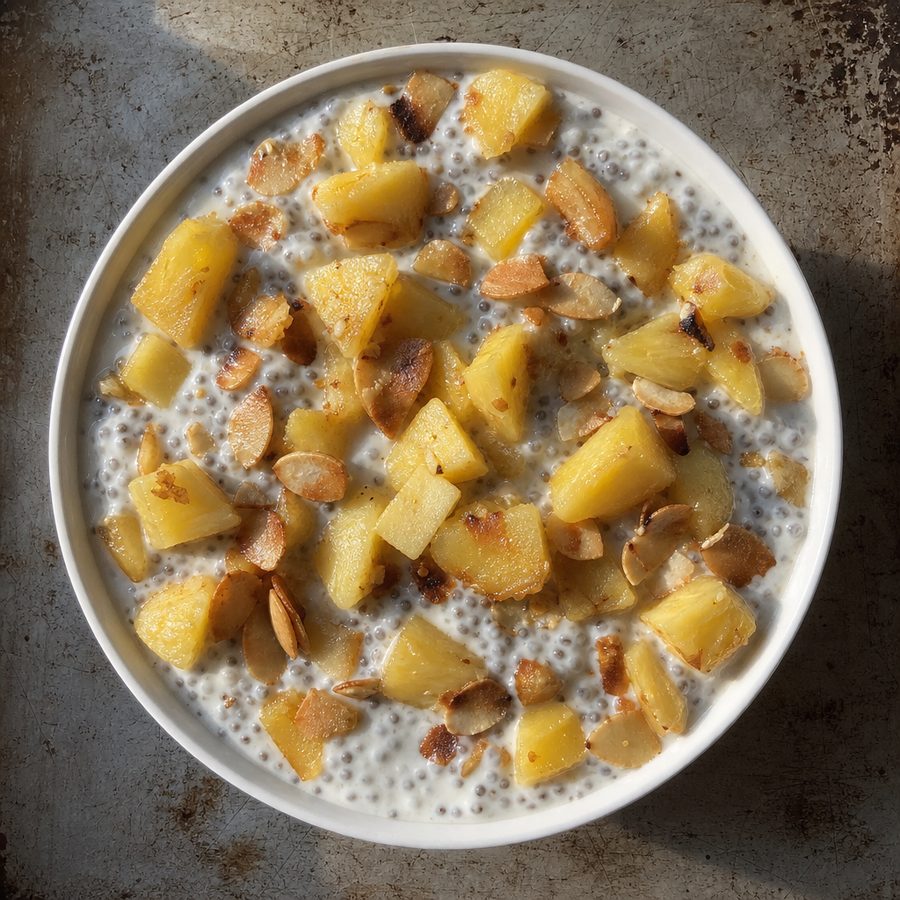
A creamy overnight chia pudding whisked with coconut milk, maple syrup, and a squeeze of lime, then crowned with fresh diced pineapple and crunchy pumpkin seeds.
Why You'll Love This Recipe
Cool, filling, and ready to grab straight from the refrigerator on a morning when there is no time to make anything. It leans tropical, with sweet pineapple and rich coconut carrying the flavor, and it comes together with a whisk and a night in the refrigerator. Because it holds well for days, it suits busy mornings, meal-prep routines, and anyone who would rather not cook before the day starts.
Chia seeds absorb many times their weight in liquid, and given enough time in the coconut milk they turn a thin mixture into a soft, spoonable pudding without any cooking or thickeners. The early second whisk is the quiet trick, because it stops the seeds from settling into a dense clump at the bottom while the rest stays watery. Lime juice cuts the richness of the coconut and keeps the pineapple tasting bright rather than flat.
Creamy pudding, juicy fruit, and the crisp snap of pumpkin seeds all turn up in the same bite, which is why a jar of it never gets monotonous. It is high in fiber and offers plant-based protein and healthy fats, so it holds you through the morning instead of leaving you hungry an hour later. The natural sweetness of ripe pineapple does most of the work, and the maple syrup rounds it out.
Ingredients
- 9 tbsp chia seeds
- 3 cups diced pineapple
- 2 1/4 cups coconut milk plus water to 3 cups
- 1/2 cup pumpkin seeds
- 2 tbsp maple syrup
- 1 tbsp lime juice
- 1/4 tsp salt
Instructions
- Mix the base: In a bowl or lidded jar, whisk together the chia seeds, coconut milk topped up with water, maple syrup, lime juice, and salt until no dry clumps of chia remain and the liquid looks evenly speckled, since a dry clump never hydrates and turns up later as grit in the middle of a spoonful.
- Whisk again early: Let the mixture stand for about five minutes, then whisk once more. Chia seeds sink and clump quickly, so this second stir breaks up any pockets that have started to gel and keeps the finished pudding smooth rather than lumpy.
- Chill to set: Cover and refrigerate at least four hours, or overnight, because the seeds need that long to swell the whole way through rather than only at the surface. The pudding is ready when it is thick enough to hold a spoon upright and the seeds have swollen into soft, gel-coated beads with no liquid pooling on top.
- Prep the toppings: While the pudding sets, or just before serving, trim the pineapple and cut the flesh into small, even dice so that each spoonful gets a bite of fruit. Keep the pumpkin seeds handy for crunch.
- Assemble and serve: Give the set pudding a quick stir to loosen it, since it always sets firmer at the bottom of the jar than at the top, then spoon it into bowls, and top each with the diced pineapple and a generous sprinkle of pumpkin seeds. Serve cold.
Variations
- Mango swap: Trade the pineapple for diced ripe mango for a softer, honeyed sweetness that is a little less tart.
- Toasted coconut: Add a sprinkle of unsweetened coconut flakes, toasted in a dry pan until golden, for deeper coconut flavor and extra crunch on top.
- Ginger lime: Whisk a little grated fresh ginger into the base along with the lime juice for a warm, zippy edge that plays well with the pineapple.
- Berry finish: Scatter fresh raspberries or blueberries over the top alongside the pineapple for a tart contrast and a burst of color.
- Vanilla note: Stir a splash of vanilla extract into the base before chilling for a rounder, dessert-like flavor that softens the tang of the lime.
Storage & Leftovers
Stored in a covered container, the chia base keeps well in the refrigerator for up to five days. For the best texture, store the pudding separately and add the diced pineapple and pumpkin seeds only when you are ready to eat, since the fruit releases juice and the seeds soften if they sit in the pudding.
This is meant to be eaten cold and needs no reheating. If it has firmed up more than you like after a few days, simply stir in a splash of coconut milk or water to loosen it back to a creamy, spoonable consistency before topping and serving.
For easy mornings, portion the finished base into individual jars once it has set. Grab a jar, add fresh pineapple and pumpkin seeds on top, and breakfast is ready in under a minute with no measuring or mixing.
Notes & Tips
- Pick a ripe pineapple: Choose a pineapple that smells sweet at the base and gives slightly when pressed; a green, hard one will taste sharp and won't bring the same natural sweetness that lets you keep the maple syrup light.
- Watch the whisking window: The single most important step is that second whisk a few minutes in, before the seeds lock into place. Skip it and you'll get a solid clump at the bottom under a layer of thin liquid.
- Adjust the sweetness last: Pineapple ripeness varies, so taste the pudding once it has set and drizzle in a little more maple syrup only if it needs it, rather than oversweetening the base up front.
- Coconut milk choice: Full-fat coconut milk gives the richest, most pudding-like result.
- Keep the seeds crisp: Add the pumpkin seeds right before eating. Their crunch is the best textural contrast in the bowl, and it disappears within minutes if they sit in the wet pudding.
- Double the batch: The base scales and stores beautifully, so make a large batch at the start of the week and portion it into jars; only the fresh toppings need daily attention.
Nutrition & Mindful Eating
- Chia, coconut milk and pineapple are the three moving parts. The chia does the setting, the coconut milk supplies the richness, and the pineapple keeps a very creamy spoonful from ever feeling heavy.
- Chia seeds swell in liquid until each one is wrapped in its own gel, which is what turns a jar of coconut milk into pudding, and that same soluble fiber is why a small jar sits with you for hours.
- Pineapple is bright, acidic and almost fizzy against the coconut, and it brings vitamin C along with bromelain, an enzyme that breaks down protein and has long been associated with easier digestion.
- Pumpkin seeds go on at the last minute so they stay crisp, snapping against the soft pudding, and they carry magnesium and plant protein into a jar that would otherwise be all softness.
- Lime, a thread of maple syrup and a pinch of salt are what decide whether this tastes flat or finished. The lime sharpens, the maple rounds it out, and the salt makes the coconut taste more of itself.
- As you eat, feel the cold weight of the spoon and the way the pineapple flashes sour against the coconut, and eat it from a bowl at the table rather than standing with the refrigerator door open.
Frequently Asked Questions
Why is my pudding runny instead of thick?
It usually needs more time, or the seeds settled and clumped. Make sure you whisk again a few minutes after mixing so the chia disperses evenly, then give it a full four hours or overnight in the fridge. If it's still thin, stir in a little more chia and chill again.
Can I use canned pineapple instead of fresh?
Fresh gives the brightest flavor and the best texture, but canned pineapple packed in juice works in a pinch; drain it well first so the extra liquid doesn't thin the pudding, and expect a slightly softer, sweeter result.
Is this too high in fat because of the coconut milk?
The fat here comes largely from the coconut milk and seeds and is part of what makes the pudding creamy and filling.
Can I eat this warm?
It's designed to be eaten cold, and that's when the texture is best. Warming it changes the coconut milk and softens the fresh pineapple, so it's really meant as a chilled, spoon-from-the-fridge breakfast.