
Plantain and Coconut Breakfast Porridge
Ripe plantain simmered in coconut milk with mashed banana and cinnamon until it turns into a smooth, gently sweet, warming porridge with no grains or eggs.
Why You'll Love This Recipe
This is a soft, soothing breakfast for anyone who wants something warm and comforting without grains, eggs, or dairy. It suits mornings when your stomach wants gentle food, and it works equally well for a small child, a recovering appetite, or anyone simply tired of the usual bowl of oats. Everything cooks in one pot in about fifteen minutes, so it fits a busy weekday as easily as a slow weekend.
The porridge works because ripe plantain does the job a grain normally would. As it simmers in coconut milk it breaks down into a naturally thick, starchy base, while the coconut milk adds richness and a faint sweetness that keeps the plantain from tasting flat. Blending rather than mashing turns that starchy base velvety. The banana goes in at the end and off the boil so its bright, fresh sweetness stays intact instead of cooking away, and the cinnamon warms the whole bowl.
It satisfies because the plantain and banana bring real substance and steady, slow-burning carbohydrate, while the fat in the coconut milk makes each spoonful feel full and rounded so you are not hungry an hour later. Both fruits contribute fiber and potassium, and the whole thing is naturally sweet without a spoonful of added sugar. The result is a bowl that feels like a treat but eats like real nourishment.
Ingredients
- 2 large ripe plantains, peeled and chopped
- 1 1/2 cups canned coconut milk
- 2 ripe bananas, mashed
- 1 1/2 tsp ground cinnamon
- 1/4 tsp salt
Instructions
- Peel and chop the plantains: Ripe plantains have thick, stubborn skins, so cut off both ends, run a shallow lengthwise slit through just the peel, and lift it away in sections until the flesh is bare. It should be soft and yellow underneath. Chop the peeled plantains into rough half-inch pieces so they cook evenly.
- Simmer the plantain: Combine the chopped plantain, coconut milk, and salt in a saucepan. Bring to a gentle bubble over medium-low heat, then simmer, stirring now and then so the bottom does not catch, for about 10 minutes, until the plantain is very soft and mashes easily against the side of the pot.
- Mash or blend: Mash the plantain directly in the pot with a potato masher or the back of a fork for a rustic texture, or transfer to a blender and blend for a silky-smooth porridge. Add a splash of water to loosen it to the thickness you like, since plantain keeps setting as it stands and a porridge that looks right in the pot is stiffer in the bowl.
- Mash the banana and sweeten: Mash the peeled bananas smooth with a fork. Stir the mashed banana and cinnamon into the porridge and warm through, stirring, for about 2 minutes, until it is heated evenly and fragrant.
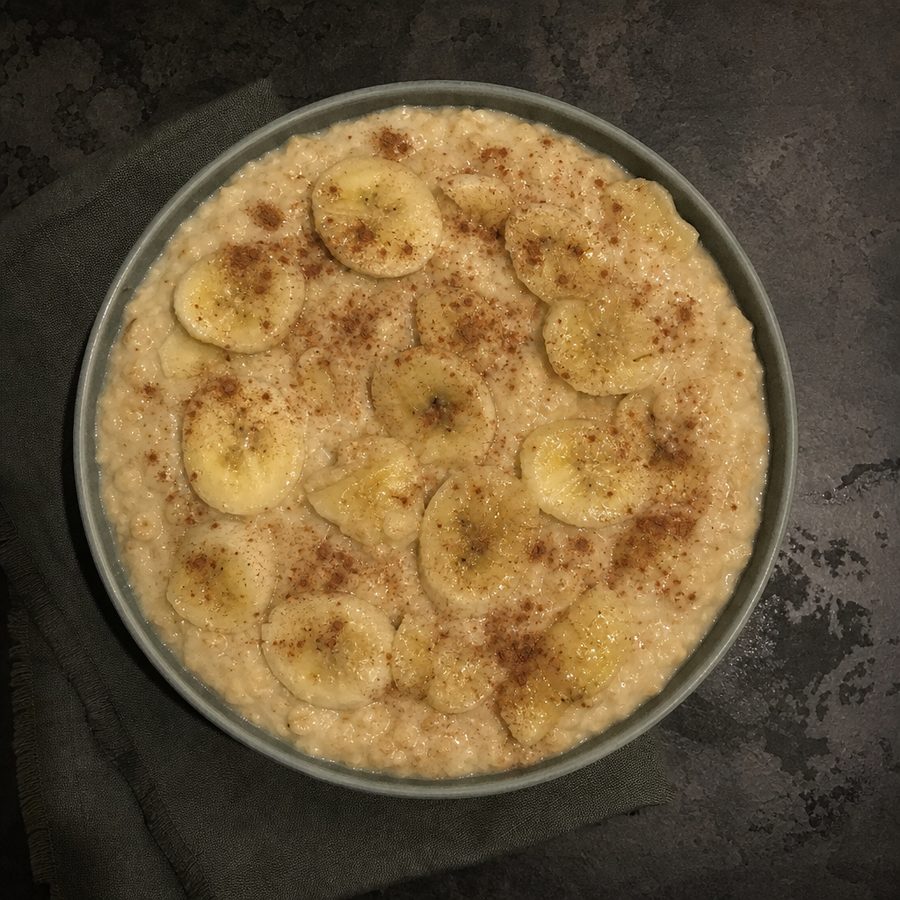
- Serve: Ladle the porridge into bowls when it is still loose enough to pour. Top with a few extra slices of banana and a light dusting of cinnamon, and serve warm, because this is a porridge that thickens on the table.
Variations
- Coconut-topped: Finish each bowl with a handful of toasted coconut flakes for a little crunch and a deeper coconut flavor against the smooth porridge.
- Warm spice: Stir a pinch of ground ginger or a little grated fresh ginger in with the cinnamon for a gently warming, slightly peppery lift.
- Vanilla: Add a splash of pure vanilla extract when you stir in the banana for a rounder, dessert-like aroma.
- Berry topped: Spoon fresh or gently warmed blueberries or sliced strawberries over the top for tartness and color that cut the richness.
- A touch sweeter: For a more dessert-leaning bowl, drizzle a little maple syrup on top; note this adds sugar.
Storage & Leftovers
Cool any leftover porridge, then keep it in an airtight container in the refrigerator for up to three days. It will thicken noticeably as it chills, which is normal.
To reheat, warm it gently in a saucepan over low heat, stirring in a splash of water or a little extra coconut milk to bring it back to a spoonable consistency. The microwave is fine. Break the set porridge apart with a spoon before it goes in, or the middle stays cold while the edges bubble.
To get ahead, simmer and mash the plantain base and refrigerate it on its own. In the morning, reheat the base, then stir in freshly mashed banana and cinnamon so that fresh-fruit brightness is there when you serve.
Notes & Tips
- Pick the right plantain: Use plantains whose skins have turned mostly yellow to black with soft flesh underneath. Green plantains are starchy and bland and will not break down or sweeten the way ripe ones do.
- Shake the coconut milk: Canned coconut milk separates into thick cream and thin liquid in the can. Shake it well before opening, or scoop in both parts, so the porridge cooks up evenly rich rather than greasy in spots.
- Control the thickness: This porridge sets thicker as it cools and thickest in the fridge. Loosen it at any point with a splash of water or extra coconut milk until it falls easily off the spoon.
- Judge doneness by feel: The plantain is ready when a piece crushes with no resistance against the side of the pot. If it still feels firm in the center, give it a few more minutes before you mash.
- Adjust the sweetness with the banana: The riper and browner the bananas, the sweeter the finished bowl. Use very spotty bananas if you like it sweet, or barely-ripe ones for a milder, less sugary result.
- Serve it warm: This bowl is at its best fresh off the stove while it is loose and fragrant. If it sits and stiffens, a quick reheat with a splash of water brings it right back.
Nutrition & Mindful Eating
- Plantain and banana carry the sweetness and the body, and the coconut milk turns them into something you can eat with a spoon. Blended and warmed together they thicken on their own, so the pot does most of the work.
- Plantain is firm and starchy going into the blender and turns soft and faintly sweet once it is cooked, giving the porridge its body along with the slow-digesting starch that makes a mild bowl surprisingly sustaining.
- Ripe banana is where most of the sweetness comes from, dissolving completely into the pot, and it brings potassium and vitamin B6 along with that honeyed flavor.
- Coconut milk is the richness. Its fat is what makes the porridge taste creamy and what carries the flavor of the fruit further, so a bowl this plain still eats like something made for you.
- Cinnamon stirred in as the pot warms makes the whole kitchen smell sweeter than the bowl actually is, and a pinch of salt at the end is what keeps fruit and coconut from going one-note.
- As you eat, hold the bowl long enough to feel its warmth and taste how smooth each spoonful is, and let the quiet of a porridge like this set the pace for the rest of your morning.
Frequently Asked Questions
Can I use green or barely ripe plantains?
It is best not to. Green plantains are firm, starchy, and savory, and they will not soften into a smooth, sweet porridge. You want plantains with heavily yellow-to-black skins and soft flesh so they break down easily and bring their own sweetness.
Why is my porridge grainy or lumpy?
That usually means the plantain was not fully cooked before mashing. Let it simmer until a piece collapses with no resistance, then blend rather than hand-mash for the smoothest result, adding a splash of water to loosen it.
It came out too thick. How do I fix it?
This porridge naturally firms up as it cools. Just stir in a splash of water or a little more coconut milk over low heat until it loosens to a consistency you can spoon easily.
Is this sweet enough without adding sugar?
For most people, yes; the ripe plantain and banana provide plenty of natural sweetness. If you want it sweeter, reach first for riper, spottier bananas, and only then consider a drizzle of maple syrup on top, which adds sugar.