
Pork and Apple Cabbage Skillet
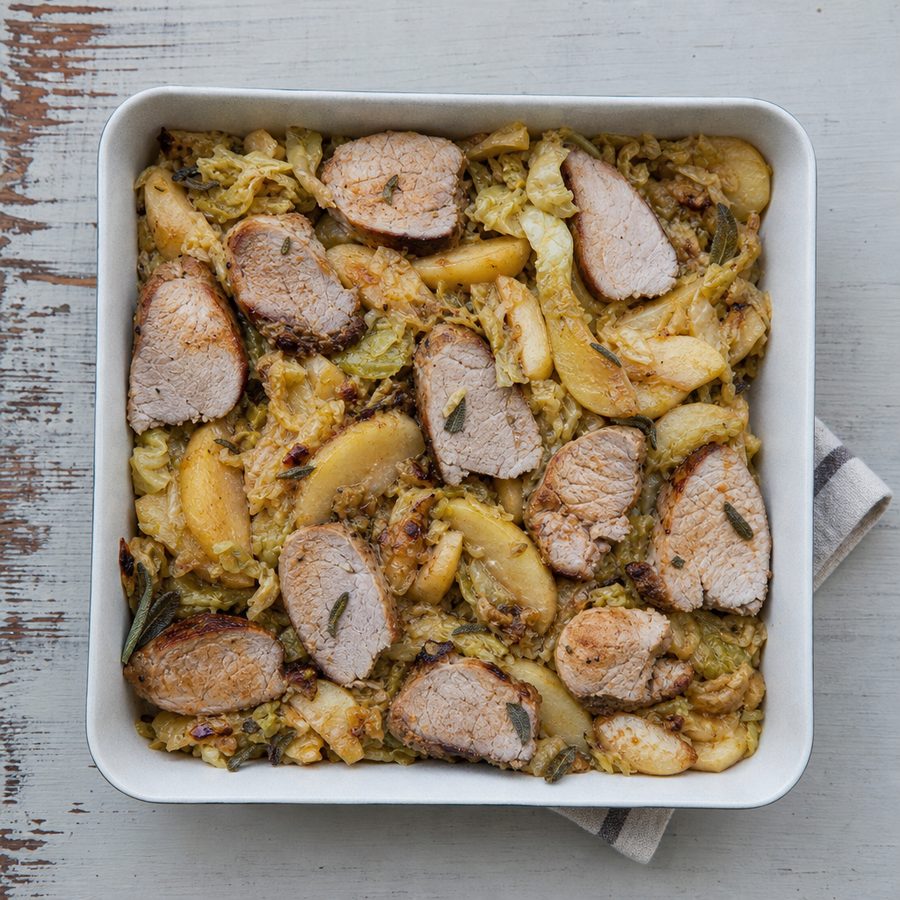
Seared pork tenderloin sliced over sage-braised green cabbage, onion, and sweet apples finished with balsamic vinegar and topped with cool slices of avocado.
Why You'll Love This Recipe
A tender, savory cut of meat set against sweetness and tang, and the whole thing comes together on the stovetop in about half an hour. It suits anyone who wants a warm, hearty plate built entirely from whole foods. It is a good fit for a weeknight when you want something that feels like a proper meal but leaves you only one pan to wash.
The magic is in cooking everything in the same skillet in sequence. Searing the pork first builds a golden, flavorful crust and leaves browned bits in the pan; when the cabbage and onion go in next, they pick up all of that flavor as they soften. The apples and balsamic vinegar go in last so the fruit keeps some bite and the vinegar reduces into a light glaze that ties the sweet, savory, and tangy elements together. Fresh sage, added with the apples, gives the whole dish an earthy, slightly peppery herb note.
Pork tenderloin is one of the most tender cuts available, so this plate delivers a generous amount of protein without heaviness. The cabbage and onion bring fiber and a satisfying volume, the apples add natural sweetness and more fiber, and the avocado on top contributes creamy richness and healthy fats that make the meal feel complete and keep you full. It is the kind of dinner that is light on your stomach but satisfying.
Ingredients
- 1 1/2 lb pork tenderloin
- 1/2 small head green cabbage, thinly sliced
- 2 apples, cored and sliced
- 1 onion, sliced
- 1/4 cup olive oil
- 1 avocado, sliced
- 1 1/2 tsp chopped fresh sage
- 1 tbsp balsamic vinegar
- 3/4 tsp salt
Instructions
- Prep the vegetables and fruit: Thinly slice the green cabbage and set it aside. Peel the onion and slice it into thin half-moons. Core the apples and slice them into thin wedges; leave the skins on for color and texture. Finely chop the fresh sage. Wait to slice the avocado until just before serving so it stays green.
- Sear the pork: Pat the pork tenderloin dry with paper towels, then rub it all over with a little of the olive oil and half of the salt. Heat a large skillet over medium-high until it is hot. Lay the tenderloin in the dry-hot pan and sear about 3 minutes per side, turning to brown all sides, until deeply golden. The pork will not be cooked through yet. Transfer it to a plate or cutting board and tent loosely with foil.
- Soften the cabbage and onion: Add the remaining olive oil to the same skillet over medium heat. Stir in the sliced onion and cabbage along with the remaining salt. Cook, stirring often, 6 to 8 minutes, until the cabbage wilts and turns tender and the onion is soft and translucent. Scrape up any browned bits left from the pork as it cooks.
- Add the apples and finish the braise: Stir in the sliced apples, chopped sage, and balsamic vinegar. Cook about 4 minutes, until the apples soften slightly but still hold their shape and the balsamic coats everything in a light glaze.
- Check the pork and rest it: Return the tenderloin to a corner of the skillet or check it on the board; the safe internal temperature is 145°F (63°C) at the thickest part, measured with an instant-read thermometer. If it needs more time, settle it into the cabbage and cook a few minutes more until it reaches temperature. Let the pork rest at least 5 minutes so the slices stay juicy.
- Slice and serve: Slice the rested pork crosswise into medallions. Spoon the cabbage and apples onto plates, lay the pork over the top, and finish with fresh slices of avocado.
Variations
- Use pork chops: Swap the tenderloin for boneless pork chops. Sear them the same way and cook until they reach an internal temperature of 145°F (63°C); thinner chops will finish faster than a whole tenderloin.
- Go with red cabbage: Use red cabbage in place of green for a deeper color and a slightly sweeter, earthier flavor. It may take a couple of extra minutes to turn tender, and the balsamic will tint everything a rich purple.
- Switch the herb: Trade the sage for chopped fresh rosemary or thyme. Both are woodsy and stand up well to the apples and pork; use a little less rosemary, as its flavor is stronger and more piney.
- Add fennel: Slice a bulb of fennel thin and cook it along with the onion and cabbage. It softens into a mellow, faintly sweet, anise-like note that pairs naturally with the pork and apples.
- Drizzle with honey: For a more caramelized, dessert-like sweetness, drizzle a little honey over the apples as they cook. This adds sugar to the dish, so add it sparingly and taste as you go.
Storage & Leftovers
Store leftovers in an airtight container in the refrigerator for up to 3 to 4 days. Keep the sliced pork and the cabbage-apple mixture together; add fresh avocado only when you serve, since cut avocado browns quickly and does not keep well.
Reheat gently in a skillet over medium-low heat with a splash of water to keep the cabbage from drying out, stirring until warmed through. Keep the rounds short if you use the microwave. Tenderloin is delicate enough that a little too much heat leaves it dry.
To get ahead, slice the cabbage, onion, and apples and chop the sage up to a day in advance and keep them in separate covered containers in the fridge. The apples may brown a little once cut, which is only cosmetic and disappears once they cook down with the balsamic.
Notes & Tips
- Pick the right apple: Reach for a firm, crisp variety like Honeycrisp, Fuji, or Gala. Softer apples such as Red Delicious turn mushy in the pan, while a firm apple keeps its shape and gives you a pleasant bite against the tender cabbage.
- Do not skip the thermometer: Tenderloin goes from juicy to dry in a matter of minutes. An instant-read thermometer pulled at 145°F (63°C) is the single best way to nail it; the temperature will climb a few degrees as it rests.
- Slice the cabbage thin: The thinner you cut the cabbage, the faster and more evenly it wilts, and the better it soaks up the flavor from the pan. A thin, even slice also makes the finished dish easier to eat with a fork.
- Adjust the sweet-tang balance: Taste after the apples cook down. If it leans too sweet for you, add a few more drops of balsamic vinegar; if it is too sharp, let it cook another minute so the vinegar mellows.
- The avocado is optional: The sliced avocado adds creaminess and healthy fat, but the dish stands on its own without it. Leave it off if you are packing lunches to reheat, since it does not hold up to storage.
- Rest before slicing: Give the pork a few minutes under foil before you cut it. Slicing too soon lets the juices run out onto the board instead of staying in the meat, leaving the slices drier on the plate.
Nutrition & Mindful Eating
- Pork, cabbage and apple all go into the same skillet and come out tasting of each other. The pork leaves a savory fond behind, the cabbage wilts down and soaks it up, and the apple collapses into a sweetness that ties both together.
- Pork tenderloin is fine-textured and quick-cooking, so it wants a hot pan and a short stay in it, coming out juicy in thick medallions, and the dense protein it carries is what makes this a real dinner.
- Cabbage cooked in the fat left behind by the pork goes soft, sweet and slightly golden, a long way from how sharp it is raw, and it brings fiber and vitamin C along with all that volume.
- Apple and onion cook down at about the same rate, the apple turning jammy and the onion going sweet, and between the pectin in one and the prebiotic fiber in the other they are quietly why this pan tastes so rich.
- Sage crisps in hot olive oil, balsamic vinegar hits the pan at the end and reduces to a dark sweet-sour glaze, and sliced avocado over the top cools the whole thing back down.
- As you eat, find the sweet and sour edge the balsamic left in the pan and see how completely the apple has folded into the cabbage, and take the first few forkfuls slowly enough to taste all three at once.
Frequently Asked Questions
How do I keep the pork tenderloin from drying out?
Sear it over high heat to build the crust, then cook only until an instant-read thermometer reads 145°F (63°C) at the thickest point, and let it rest under foil before slicing. Tenderloin cooks quickly, so pulling it at the right temperature and resting it are what keep the slices juicy.
Can I make this without the avocado?
Yes. The avocado adds creaminess and healthy fat, but the pork, cabbage, and apples are a complete and satisfying meal on their own. Leave it off entirely, or serve it on the side for anyone who wants it.
What kind of apple works best here?
A firm, crisp apple like Honeycrisp, Fuji, or Gala holds its shape and keeps a little bite after cooking. Softer apples break down into mush, so avoid varieties like Red Delicious for this dish.
The cabbage seems like a lot before it cooks. Is that normal?
Yes. Cabbage cooks down dramatically as it wilts, losing much of its volume in the pan. Pile it in, stir it as it softens, and it will shrink to the right amount within a few minutes.