
Pork Tenderloin and Apple Slaw Collard Wraps
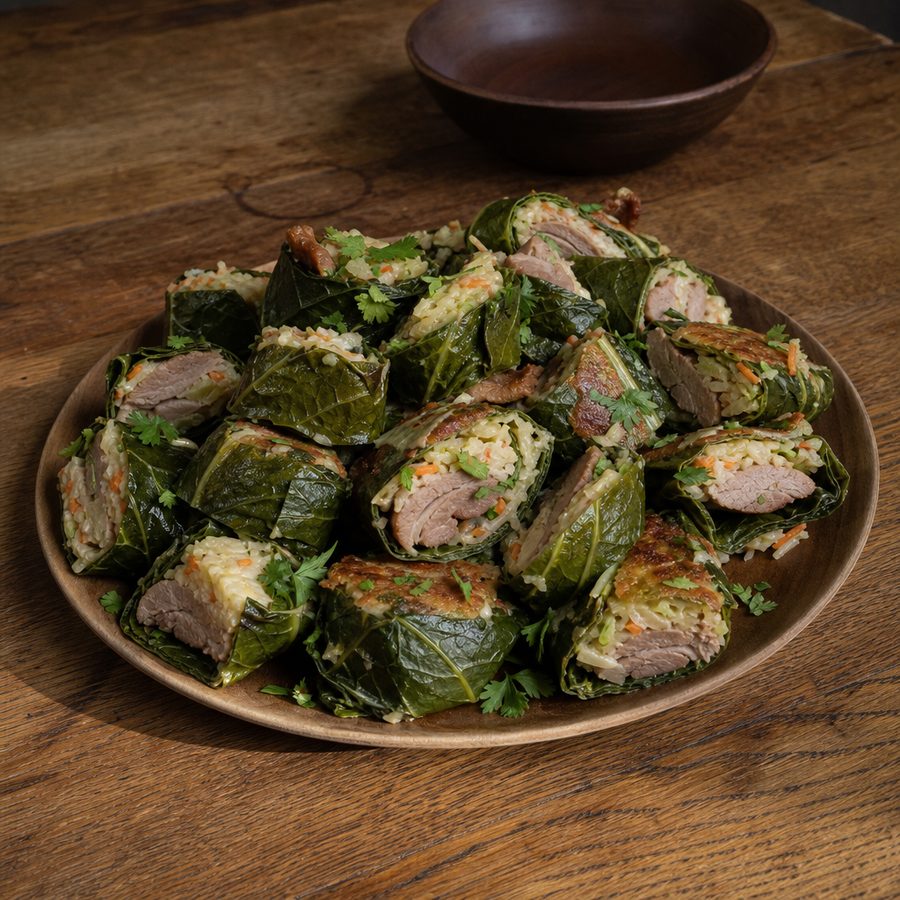
Sliced pork tenderloin, a crisp apple-and-cabbage slaw, and creamy avocado rolled inside tender blanched collard leaves and brightened with lemon, chives, and fresh sage.
Why You'll Love This Recipe
This is a fresh, hand-held lunch for anyone who wants something light but filling, and who is avoiding grains, dairy, and other common triggers. Pork tenderloin does the heavy lifting on protein, while a blanched collard leaf stands in for a tortilla or bun, so the whole thing eats like a wrap without any bread. It travels well and comes together from a handful of whole ingredients, which makes it a good choice for packed lunches or a quick plate at home.
A stiff green becomes a supple wrapper, and that is the move. Blanching the collard leaf for just half a minute is the key move: it turns a stiff, slightly bitter green into a supple, foldable wrapper that won't crack when you roll it, while keeping enough backbone to hold the filling. Against that soft leaf you get the crunch of raw cabbage and apple, the silk of avocado, and warm, sage-scented pork. The lemon and olive oil in the slaw keep everything bright and stop the cabbage from tasting flat.
A wrap can be a real meal when it is built like this. The pork tenderloin is a mild, high-quality protein that keeps you full, the cabbage and collards bring fiber and a real vegetable presence, and the avocado adds a dose of unsaturated fat that makes the wrap feel rich rather than skimpy. Because the apple and lemon carry most of the flavor, you get sweetness and brightness without relying on sugar or heavy sauces, so you finish lunch feeling steady rather than weighed down.
Ingredients
- 4 cups cooked pork tenderloin, sliced
- 8 large collard leaves, blanched
- 4 cups shredded cabbage
- 1 large apple, julienned
- 1 large avocado, sliced
- 3 tbsp olive oil
- 1 1/2 tbsp lemon juice
- 3 tbsp chopped chives
- 1 tsp chopped fresh sage
- 1/2 tsp salt
Instructions
- Slice the pork and let it come up from cold: Cut the cooked tenderloin crosswise into thin slices if it did not come that way, working across the grain so the fibers are cut short and every slice stays tender. Leave the slices on the board while you build the rest, because pork straight from the refrigerator never really warms through in the brief toss it gets at the end. If you are starting from a raw tenderloin, season it all over, sear it in a hot skillet until every side is deeply browned, then lower the heat and cook it to 145°F (63°C), about 18 to 22 minutes in all, and rest it before slicing.
- Blanch the collard leaves: Bring a wide pot of salted water to a boil and set a bowl of ice water nearby. Trim the thick lower stem from each collard leaf and shave down the raised center rib so the leaf lies flat. Slip the leaves into the boiling water for about 30 seconds, until they turn bright green and pliable, then lift them straight into the ice water. Drain and pat each leaf dry with a towel.
- Prep the slaw components: Shred the cabbage into thin ribbons. Core the apple and cut it into thin matchsticks. Chop the chives, and finely chop the sage. Halve and pit the avocado and cut it into thin slices.
- Dress the slaw: In a bowl, toss the shredded cabbage and julienned apple with olive oil, lemon juice, chopped chives, and salt until every strand is lightly coated. Let it sit a few minutes so the cabbage softens slightly while staying crunchy.
- Warm the pork with sage: Set a skillet over low heat with a spoonful of the olive oil, add the sliced pork and the chopped sage, and turn it for about a minute, just until the slices are warm and the sage has given up its scent into the oil. Keep the heat low, since the pork is already cooked and a hot pan would tighten the slices and squeeze out what juice they have left.
- Assemble the wraps: Lay a collard leaf flat, vein side up. Arrange a few avocado slices down the center, top with warm pork, then pile on the apple slaw. Fold in the sides, roll the leaf up snugly around the filling like a burrito, and slice each wrap in half on the diagonal.
Variations
- Poultry swap: Replace the pork with thin slices of cooked chicken or turkey breast for a lighter, milder wrap; season and warm it the same way with the sage.
- Seafood filling: Fold in flaked cooked salmon or cold poached shrimp in place of the pork for a briny, cooling version; this adds fish.
- Herb switch: Trade the sage for chopped dill or tarragon, which lean grassy and anise-like and pair especially well with the apple and lemon.
- Pear instead of apple: Use a firm, barely ripe pear cut into matchsticks in place of the apple for a softer, more floral sweetness in the slaw.
- Extra crunch: Add julienned fennel or thin half-moons of cucumber to the cabbage for more texture and a cool, fresh bite alongside the pork.
Storage & Leftovers
The pork and the dressed slaw keep well in separate airtight containers in the refrigerator for up to three days. Avocado is best sliced fresh, since it browns once cut, so hold off on slicing it until you are ready to build the wraps.
These are meant to be eaten cold or at room temperature, so there is no real reheating needed. If you prefer the pork warm, gently rewarm the slices in a skillet over low heat just until they lose their chill, then assemble; avoid a hard reheat, which dries out the tenderloin. Blanched collard leaves can be brought back to flexibility by letting them sit at room temperature for a few minutes out of the cold.
To get ahead, cook and slice the pork, blanch and dry the collard leaves, and shred the cabbage a day in advance, storing each separately. Dress the slaw and slice the apple and avocado the day you plan to eat, then roll the wraps in a couple of minutes.
Notes & Tips
- Shave the collard rib: The most common cause of a torn wrap is that raised center stem. Run a knife flat along it to shave it down level with the leaf so it folds without cracking.
- Pick the right apple: A firm, tart-sweet apple such as Honeycrisp or Granny Smith holds its crunch in the slaw and won't turn mealy; softer apples go limp once dressed.
- Don't over-blanch: Thirty seconds is enough. Pull the leaves the moment they turn vivid green and go floppy; longer and they get slippery and prone to tearing when you roll.
- Rest before slicing pork: Let the tenderloin sit off the heat before you cut it, and slice across the grain into thin pieces so each bite stays tender rather than chewy.
- Keep avocado from browning: Toss the avocado slices with a little of the lemon juice if you are prepping ahead; the acid slows the browning and keeps them looking fresh.
- Season the slaw to taste: Cabbage soaks up salt and acid, so taste after it has sat a few minutes and add a squeeze more lemon or a pinch more salt if it tastes flat.
Nutrition & Mindful Eating
- Warm pork against a cold raw slaw inside a leaf that snaps when you bite it. That contrast is the recipe, and the avocado spread inside is what keeps everything from sliding apart.
- A collard leaf is broad, sturdy and faintly bitter, which is exactly what a sweet slaw wants around it. It holds its shape as you roll it, and it brings folate, fiber and vitamin K into the structure of the wrap.
- Raw cabbage and apple shredded fine stay crisp for hours and turn sweeter as the lemon works into them, and between the pectin in the apple and the fiber in the cabbage the slaw is doing more than crunching.
- Pork tenderloin sliced thin against the grain stays tender even once it has cooled, which is what makes it work inside a cold wrap, and its dense protein is why a couple of these carry you through the afternoon.
- Sage, chives and lemon pull in different directions on purpose. The sage is warm and slightly musty, the chives are sharp and green, and the lemon with a little salt keeps the apple from reading as dessert.
- As you eat, keep the wrap in both hands and notice the snap of the leaf before the softness inside, then take a breath between wraps so lunch has a beginning and an end.
Frequently Asked Questions
Can I make these ahead for lunch during the week?
Yes. Cook and slice the pork, blanch and dry the collard leaves, and shred the cabbage up to a day ahead, storing each separately. Dress the slaw and slice the avocado and apple the day you eat, then roll the wraps just before serving so nothing goes soggy or brown.
Do I have to blanch the collard leaves, or can I use them raw?
Blanching is worth the extra minute. Raw collard leaves are stiff and bitter and tend to crack when you roll them, while a quick 30-second dip makes them supple and mellow so they wrap tightly and eat more like a soft tortilla.
What kind of apple works best in the slaw?
Reach for a firm, tart-sweet variety like Honeycrisp or Granny Smith. They stay crisp after they are cut and dressed, whereas softer apples turn mealy and watery once they sit in the lemon and oil.
Are these wraps good cold, or do they need to be warm?
They are designed to be eaten cold or at room temperature, which makes them ideal for packing. If you like the pork warm, gently rewarm the slices in a skillet just until the chill is gone before assembling, since a hard reheat can dry out the tenderloin.