
Pork Tenderloin and Barley Kale Salad
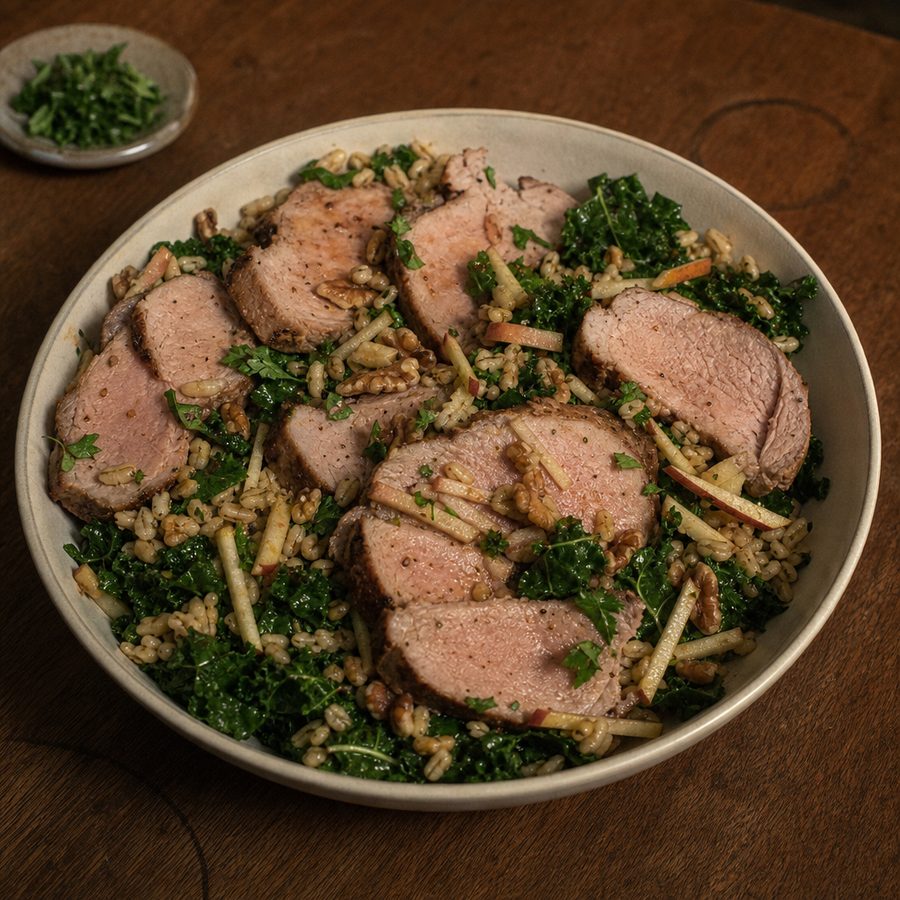
Seared pork tenderloin and chewy barley tossed with massaged kale, matchsticked apple, and toasted walnuts in a tangy dijon-balsamic dressing.
Why You'll Love This Recipe
This is a warm, main-dish salad built to eat like a full meal rather than a side. It suits anyone who wants something hearty at midday that still leaves them clear-headed for the afternoon, and it works well for cooks who like to lean on a batch of grain and a roasted pork tenderloin to carry them through several days. Because it comes together from a few sturdy components, it also travels well to a desk or a packed lunch.
The whole plate is built on contrast. Massaging the kale breaks down its fibrous structure so the raw leaves turn tender and lose their bitterness, giving them a texture that stands up to the other ingredients instead of fighting them. The chewy barley, crisp matchsticked apple, and toasted walnuts each bring a different bite, while the dijon-and-balsamic dressing pulls it together with a sharp, faintly sweet edge that keeps every forkful lively.
Protein, whole grain, and fat, all working together. The pork tenderloin gives real staying power, the barley and kale add bulk and fiber that fill you up slowly, and the walnuts and olive oil round it out so the meal feels rich rather than sparse. The apple and honey add just enough brightness to keep it from tasting heavy, so you finish full but not weighed down.
Ingredients
- 3 cups sliced cooked pork tenderloin
- 3 cups cooked barley
- 6 cups chopped kale
- 1 large apple, matchsticked
- 2/3 cup walnuts, toasted
- 4 tbsp olive oil
- 1 tbsp dijon mustard
- 1 1/2 tbsp balsamic vinegar
- 2 tsp honey
- 1/4 tsp salt
- 1/4 tsp black pepper
Instructions
- Bring the barley down to room temperature: Spread the cooked barley out in a shallow bowl and run a fork through it to break up any clumps, then leave it while you work, since hot barley dropped onto massaged kale wilts it down to nothing in about a minute. If you are starting from dry barley, rinse it under cool water and simmer it in salted water until the grains are tender and chewy with a little bite left in the center, about 30 to 40 minutes, then drain it well.
- Slice the pork into medallions: Cut the cooked tenderloin crosswise into thin medallions, working across the grain rather than along it, because the fibers run the length of a tenderloin and cutting through them is what keeps every slice tender. Leave the medallions on the board rather than in the refrigerator so they are not fridge-cold when they meet the salad. If you are starting from a raw tenderloin, season it, sear it on all sides in a hot skillet, cook it to 145°F (63°C), about 15 to 20 minutes in all, and rest it before slicing.
- Massage the kale: Strip the kale leaves from their tough stems and chop them. Place the kale in a large bowl with a little of the olive oil and a pinch of the salt, then massage the leaves between your fingers for about 2 minutes until they darken, soften, and turn glossy and reduced in volume, since raw kale is tough enough to chew through and the oil and the pressure together break it down the way heat would.
- Toast the walnuts: Toast the walnuts in a dry skillet over medium heat, tossing often, until fragrant and lightly golden, about 4 to 5 minutes, then tip them onto a plate, since a hot dry skillet goes on toasting them after the burner is off and walnuts turn bitter quickly. Once cool, roughly chop them.
- Whisk the dressing: In a small bowl, whisk together the remaining olive oil, dijon mustard, balsamic vinegar, honey, and salt until the dressing is smooth and emulsified.
- Assemble the salad: Cut the apple into thin matchsticks last, because cut apple browns within a few minutes of meeting the air. Add the cooled barley and apple to the massaged kale, pour over the dressing, and toss well to coat. Fold in the warm sliced pork and garnish with the toasted walnuts.
Variations
- Swap the grain: Use cooked farro, wheat berries, or brown rice in place of the barley for a different chew. Farro and wheat berries keep the same nutty, hearty character and contain gluten, like barley.
- Change the protein: Sliced seared chicken breast or turkey tenderloin works in place of the pork and cooks much the same way, giving a firmer, milder result.
- Trade the nut: Toasted pecans or sliced almonds can stand in for the walnuts; both still add nuts to the dish and bring a similar toasty crunch.
- Brighten the fruit: Swap the apple for matchsticked firm pear or a handful of pomegranate seeds for a juicier, more floral sweetness against the greens.
- Add cheese: Crumble in a little feta or shaved parmesan for a salty, savory note; this adds dairy to the dish.
Storage & Leftovers
Stored in an airtight container in the refrigerator, the assembled salad keeps for about three to four days. The massaged kale holds up unusually well and even softens pleasantly as it sits, though the walnuts lose some crunch over time.
This dish is good both cold and warm. To take the chill off, warm a portion gently in a skillet over low heat or in short bursts in the microwave just until the pork is no longer cold; avoid overheating, which can dry out the pork and wilt the greens further.
To make ahead, cook the barley and sear and slice the pork up to three days in advance and keep them refrigerated separately. Massage the kale and whisk the dressing when you have a moment, then assemble just before eating, holding the walnuts and apple until the last minute so they stay crisp.
Notes & Tips
- Choose the right kale: Lacinato (dinosaur) kale massages down more tender and less stringy than curly kale, but either works; whichever you use, strip out the thick central ribs, which stay tough no matter how long you massage.
- Don't skip the massage: The kale should visibly shrink and turn deep green and slick when it is ready. Underworked kale stays stiff and bitter, so keep going the full two minutes even if it feels like a while.
- Cook the pork to temperature: Pork tenderloin dries out fast, so pull it at 145°F (63°C) and let it rest. An instant-read thermometer is the surest way to catch it at the moment it is juicy and faintly pink in the center.
- Pick a firm, tart apple: A crisp variety like Honeycrisp, Fuji, or Granny Smith holds its shape and brings acidity; softer apples turn mealy once dressed.
- Keep the apple from browning: Cut the apple matchsticks last, or toss them with a little of the balsamic vinegar, so the flesh stays pale and fresh until you serve.
- Adjust the dressing to taste: Taste before tossing and tip the balance to suit the meal: a little more honey softens the bite, a splash more balsamic sharpens it, and an extra pinch of salt makes all the flavors read louder.
Nutrition & Mindful Eating
- Barley, kale and pork give this salad three textures that hold up against each other, chewy against sturdy against tender, and the pork sliced warm over the top carries the protein that makes a grain salad eat like lunch.
- Barley cooked until it is plump and chewy is the backbone of the bowl, drinking up the dressing as it cools, and the beta-glucan fiber it is rich in is part of why something this substantial stays with you.
- Kale massaged with a little olive oil and salt softens and darkens within minutes, losing its raw stiffness while keeping enough structure to stand up to warm meat, and it carries vitamin K, vitamin C and lutein in every dark leaf.
- Apple and toasted walnuts are the interruptions. The apple is cold, sweet and crisp, the walnuts are warm and faintly bitter, and the plant-based omega-3 fat in the nuts rides along with that crunch.
- Dijon mustard, balsamic vinegar, honey and cracked black pepper whisk into a dressing that is sharp, sweet and a little hot all at once, and it is what makes barley and kale taste like a dish you actually want.
- As you eat, taste how much of the mustard and vinegar the barley has taken on, and how the apple keeps arriving cold against the warm pork, and slow down enough to let a salad be a proper lunch.
Frequently Asked Questions
Can I serve this salad cold instead of warm?
Yes. It is designed to be flexible, and it eats well cold straight from the refrigerator. Folding in the pork while it is still warm gives the nicest contrast, but a fully chilled bowl is just as good, especially for a packed lunch.
My kale still tastes bitter after massaging. What went wrong?
It usually means it needs more time or more acid. Massage until the leaves are visibly softened and glossy, and if bitterness lingers, toss it with a bit more of the dressing; the balsamic and honey mellow the sharp edge.
Can I use pearl barley or does it have to be hulled?
Either works. Pearl barley cooks faster and turns out softer, while hulled barley keeps more of its outer bran and stays chewier and more filling. Just cook whichever you have until tender with a little bite left.
How do I keep the pork from drying out?
Sear over medium-high heat, use a thermometer, and pull the tenderloin at 145°F (63°C), then let it rest before slicing. Overcooking is the main cause of dry pork, since this cut has very little fat to protect it.