
Pork Tenderloin in Mushroom Dijon Cream
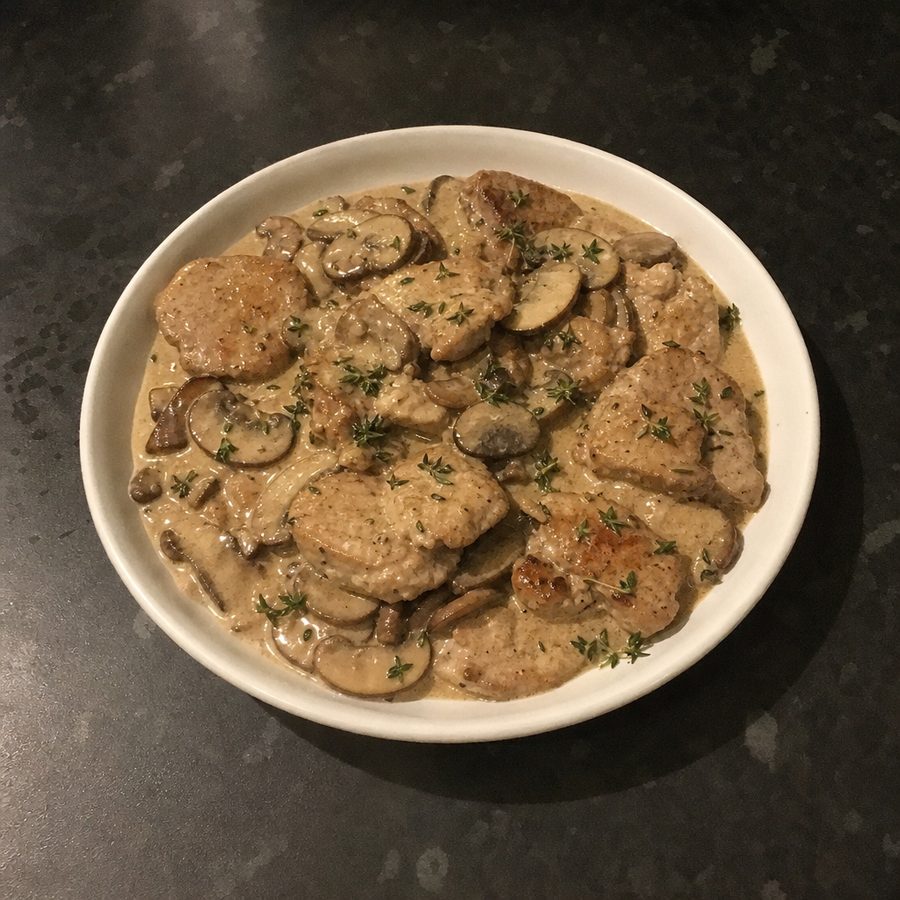
Tender seared pork tenderloin medallions finished in a silky coconut-milk and Dijon mustard sauce with browned mushrooms, garlic, fresh thyme, and wilted baby spinach.
Why You'll Love This Recipe
This is a quick weeknight main with a pan sauce doing most of the persuading. Pork tenderloin is the most tender cut of pork, and cutting it into medallions gives you a fast-cooking, crowd-pleasing dinner with a restaurant-style pan sauce. It suits anyone who wants a warm, savory plate that comes together in about half an hour but tastes like it took longer, and it is friendly to those watching their carbohydrate intake without feeling like a compromise.
The pan gets layered, one step at a time. Searing the medallions builds a browned crust that gives the meat deep, roasted flavor and leaves fond on the bottom of the skillet. That fond dissolves into the coconut milk to form the base of the sauce, while the mushrooms are browned rather than steamed so they turn meaty and concentrated. Dijon mustard cuts the richness with a gentle sharpness, and fresh thyme and garlic tie it all together. Because the pork finishes cooking in the simmering sauce, it stays juicy instead of drying out.
It satisfies on both the plate and the palate. Pork tenderloin delivers a large amount of protein that keeps you full, while the butter, olive oil, and coconut milk make the sauce rich and comforting. The mushrooms add savory depth, and the spinach folds in an earthy green note along with color. It is the kind of meal that feels indulgent but leaves you steady rather than sluggish.
Ingredients
- 1 1/4 lb pork tenderloin, sliced
- 3 1/2 tbsp olive oil
- 3 tbsp butter
- 3 cups sliced mushrooms
- 3/4 cup coconut milk
- 1 tbsp Dijon mustard
- 1 1/2 tsp fresh thyme
- 3 cloves garlic, minced
- 2 1/2 cups baby spinach
- 3/4 tsp salt
- 1/4 tsp black pepper
Instructions
- Slice and season the pork: Trim any silverskin from the pork tenderloin and slice it crosswise into medallions about one inch thick. Press each piece lightly with your palm so it is an even thickness, then season both sides with the salt and a few grinds of pepper, dividing it evenly among the medallions. Let the medallions sit at room temperature while you prepare everything else.
- Prep the aromatics and vegetables: Wipe the mushrooms clean and slice them. Peel and finely mince the garlic. Strip the fresh thyme leaves from their stems. Rinse the baby spinach and spin or pat it dry.
- Sear the pork: Heat the olive oil in a large skillet over medium-high heat until it shimmers. Add the medallions in a single layer without crowding and sear undisturbed until a deep golden crust forms, about 2 minutes per side. The pork should still be slightly underdone in the center at this point; it will finish in the sauce. Transfer the medallions to a plate and set aside.
- Brown the mushrooms and garlic: Lower the heat to medium and melt the butter in the same skillet. Add the sliced mushrooms and spread them out; cook without stirring for a minute or two so they release their water and begin to color, then stir occasionally until browned and tender, about 6 minutes total. Add the minced garlic and cook until fragrant, about 30 seconds.
- Build the sauce: Pour in the coconut milk and whisk in the Dijon mustard and thyme leaves. Scrape up any browned bits from the bottom of the pan. Bring to a gentle simmer and cook until the sauce thickens slightly and coats the back of a spoon, about 4 minutes.
- Combine and finish: Return the pork medallions and any juices from the plate to the skillet, settling them into the sauce. Add the baby spinach and turn everything gently until the spinach wilts and the pork is warmed through. The pork is done when it reaches 145°F (63°C) at the center and is just faintly pink; rest a couple of minutes before serving.
Variations
- Extra-creamy finish: Stir a spoonful of cream cheese or heavy cream into the sauce at the end for a plusher texture. This adds dairy.
- Peppercorn edge: Add coarsely crushed black peppercorns to the sauce along with the Dijon for a bistro-style au poivre bite.
- Bright and herby: Finish with a handful of chopped fresh parsley or tarragon and a squeeze of lemon to lift the richness of the coconut cream.
- Bacon and mushroom: Crisp chopped bacon in the pan first and use its rendered fat to sear the pork, then crumble it back in at the end. This adds pork belly and more fat.
- Chicken instead of pork: Swap the pork medallions for thin chicken cutlets, searing them the same way and finishing them in the sauce until cooked through. This uses poultry in place of pork.
Storage & Leftovers
Store leftovers in an airtight container in the refrigerator for up to three days. Keep the pork submerged in the sauce so it stays moist, and let everything cool before sealing to avoid condensation thinning the cream.
Reheat gently in a covered skillet over low heat, adding a splash of water or extra coconut milk to loosen the sauce as it warms. Avoid a hard boil or the microwave on high, which can toughen the pork and cause the coconut cream to separate. Warm just until heated through.
To get ahead, you can slice the pork, clean and slice the mushrooms, and mince the garlic a day in advance, storing each in the refrigerator. You can also make the full mushroom sauce ahead and refrigerate it, then rewarm it and finish the seared pork and spinach just before serving so the meat stays tender.
Notes & Tips
- Choose the right mushrooms: Cremini (baby bella) mushrooms give the deepest, meatiest flavor here, but white button work well too. For an earthier result, use a mix that includes shiitake or oyster mushrooms.
- Do not crowd the pan: Sear the medallions and brown the mushrooms in a single uncrowded layer, working in batches if needed. Pile them in and they steam and turn gray instead of developing color and flavor.
- Full-fat coconut milk matters: Use canned full-fat coconut milk, not the carton drinking kind, and stir the can well first. The higher fat content is what lets the sauce thicken and stay smooth rather than watery.
- Use a thermometer: Pork tenderloin is easy to overcook. An instant-read thermometer pulled at 145°F (63°C) in the thickest medallion is the surest way to keep it juicy and just faintly pink.
- Adjust the mustard to taste: Dijon strength varies by brand. Start with less, taste the sauce after it simmers, and whisk in more for a sharper, tangier finish, or a pinch of salt to round it out.
- What to serve alongside: Spoon the extra sauce over cauliflower mash, sauteed green beans, or roasted broccoli to soak it up without adding a heavy starch.
Nutrition & Mindful Eating
- Pork, mushrooms and greens share a single pan here, and that is the point. Each one leaves something behind for the next, so the spinach goes in last and finishes in the mustard cream that the meat and the mushrooms already built.
- Spinach collapses to almost nothing in a hot pan, which is how a large handful ends up in one serving, and the folate, iron and vitamin K come with a faintly mineral, grassy note that cuts against the rich sauce.
- Garlic softens into the coconut milk and loses its raw edge entirely over the few minutes it cooks, leaving a mellow sweetness underneath everything, and it carries the sulfur compounds that gave it that bite in the first place.
- Black pepper and thyme go in early enough to bloom in the fat, while the dijon mustard arrives at the end where its sharpness stays intact. That contrast, woodsy and warm underneath, bright on top, is most of what you taste.
- Pork this tender eats quickly, so a dinner built on it is worth slowing down for. The protein does the heavy lifting on how long it holds you, with the thiamin from the pork and the selenium from the mushrooms riding along.
- As you eat, pay attention to the way the sauce clings to each slice and to the woodsy smell coming up off the pan, and let the last few bites be slow enough that you can tell when you have had enough.
Frequently Asked Questions
Will the sauce taste like coconut?
Not strongly. Full-fat coconut milk reads mostly as richness and body here, and the Dijon mustard, garlic, thyme, and browned mushrooms round it into a savory pan sauce rather than a sweet or tropical one. If you want even less coconut character, choose a brand without added sweeteners.
Why did my sauce separate or look oily?
Coconut milk can split if it boils hard or reduces too far. Keep it at a gentle simmer, and if it looks broken, pull the pan off the heat and whisk in a small splash of water to bring it back together.
Can I use pork chops or a pork loin instead of tenderloin?
Yes. Boneless chops or slices of the larger pork loin work, though they are less tender and may need a minute or two longer to cook through. Keep the pieces an even thickness and cook to 145°F (63°C) at the center.
How do I keep the pork from drying out?
Sear the medallions just until browned, then let them finish in the simmering sauce rather than cooking them fully in the dry pan. Pull them at 145°F (63°C) and give them a short rest; the residual heat carries them the rest of the way while they stay juicy.