
Provencal Ratatouille
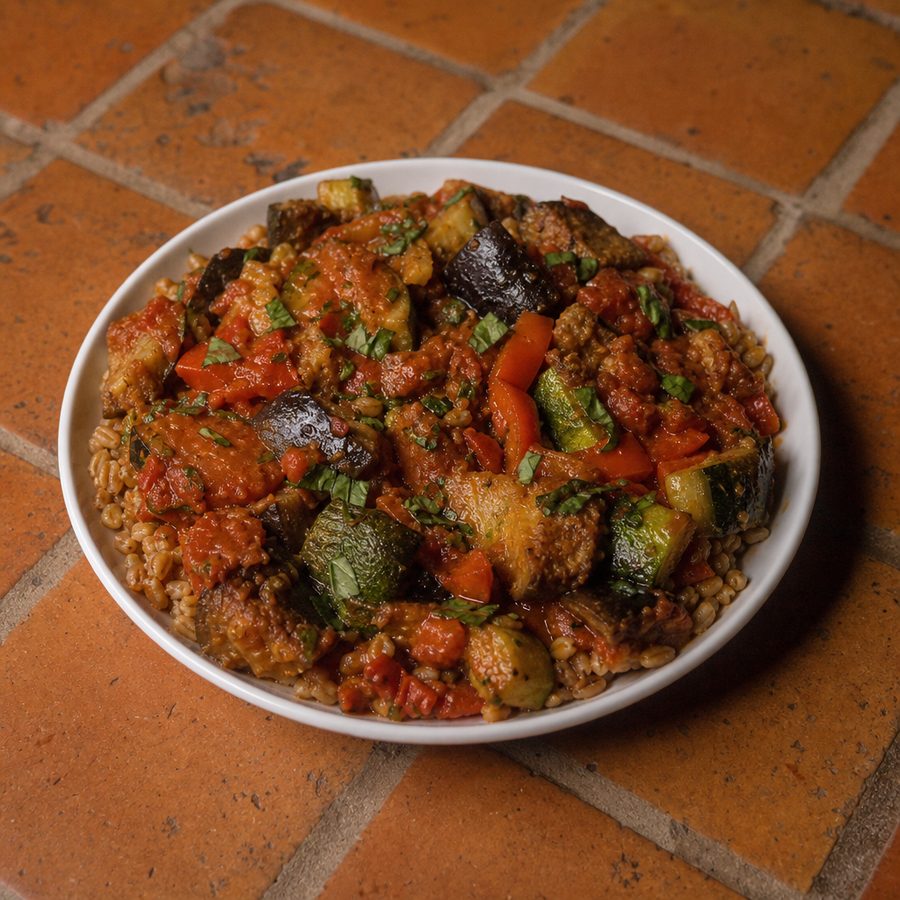
A rustic stew of golden-browned eggplant, zucchini, and bell peppers simmered with onion, garlic, oregano, and thyme in crushed tomatoes, folded with fresh basil and spooned over nutty farro.
Why You'll Love This Recipe
This is a slow-simmered vegetable stew for anyone who wants a hearty, plant-forward dinner that still feels comforting. It leans on humble late-summer vegetables, eggplant and zucchini and bell peppers, and turns them into something warm and savory, spooned over a bowl of chewy farro. It is a good fit for a relaxed weeknight when you want a single pan of food that reheats well and tastes even better the next day.
The eggplant gets the pan to itself before anything else goes in. Eggplant is spongy and bland when it is just steamed into a sauce, but searing the cubes in olive oil until they are golden gives them a rich, almost meaty depth that carries the whole dish. Cooking the onion, peppers, and garlic with the dried oregano and thyme next lets the herbs bloom in the oil, and a gentle twenty-minute simmer melds everything without turning the zucchini to mush.
The textures differ from forkful to forkful, and the plate stays with you afterward. The farro brings a chewy heft and fiber that keeps you full, while the tomatoes and fresh basil keep every bite bright rather than heavy. Olive oil rounds it all out with a silky richness, so a bowl feels indulgent even though it is built almost entirely from vegetables and a whole grain.
Ingredients
- 1 large eggplant, cubed
- 2 zucchini, cubed
- 2 bell peppers, chopped
- 2 cups crushed tomatoes
- 1 onion, diced
- 5 cloves garlic, minced
- 1 1/2 tsp oregano
- 1 1/2 tsp thyme
- 4 tbsp olive oil
- 3 cups cooked farro
- 1/2 cup basil
- 1/2 tsp salt
Instructions
- Cook the farro: Rinse the farro under cool water. Simmer it in a pot of salted water until the grains are tender but still chewy, about 25 to 30 minutes. Drain off any extra water and set the farro aside, since grains left sitting in their cooking water keep swelling and go soft.
- Prep the vegetables: Cube the eggplant into bite-size pieces, cube the zucchini, chop the bell peppers, dice the onion, and mince the garlic, keeping the eggplant a little larger than the rest, because it collapses further than anything else in the pan. Tear or roughly chop the basil leaves.
- Brown the eggplant: Warm the olive oil in a large, wide pan over medium-high heat. Add the eggplant in a single layer and saute, turning occasionally, until the cubes are golden on several sides and softened, about 8 minutes. Remove the eggplant to a plate and set aside, so that it browns properly on its own rather than steaming under everything that comes next.
- Cook the aromatics: To the same pan, add the onion, bell peppers, garlic, oregano, and thyme. Cook over medium heat, stirring often, until the onion is translucent and the peppers have softened, about 6 minutes, since this is where the sweetness of the stew comes from and there is nothing later that can put it back.
- Simmer the stew: Return the browned eggplant to the pan and add the zucchini and the crushed tomatoes. Stir to combine, then reduce the heat and simmer gently, stirring now and then, until the zucchini is tender and the sauce has thickened, about 20 minutes.
- Season and serve: Stir in the salt, taste, and adjust if needed. Stir in most of the fresh basil off the heat, because basil turns black and tastes of nothing after a minute in a hot pan, then spoon the ratatouille over the farro and garnish with the rest.
Variations
- Smoky and spicy: Add a pinch of smoked paprika and a little crushed red pepper with the aromatics for a warmer, smokier stew with gentle heat.
- Extra-herbal finish: Stir in chopped fresh parsley or a spoonful of capers at the end for a brighter, more briny lift alongside the basil.
- Swap the grain: Serve the ratatouille over cooked brown rice or quinoa instead of farro for a naturally gluten-free base.
- Add a little heat: Stir a pinch of red pepper flakes in with the garlic for a gentle warmth that plays against the sweetness of the peppers.
- Roasted-vegetable version: Roast the eggplant, zucchini, and peppers on a sheet pan at 425°F (220°C) until caramelized, then fold them into the simmered tomato for a deeper, drier finish.
Storage & Leftovers
Cooled leftovers keep well in an airtight container in the refrigerator for up to four days. Store the ratatouille and farro separately if you can, so the grains do not soak up all the sauce and go soft.
To reheat, warm the ratatouille in a pan over medium heat with a splash of water to loosen the sauce, stirring until it is hot through. The microwave will do. Cover the bowl and stir once or twice. Heat the farro separately and combine the two at the table.
This dish is a natural make-ahead. The stew's flavor deepens overnight as the herbs and tomato settle into the vegetables, so cooking it a day before you plan to serve is worth doing. Cook the farro fresh or up to a few days ahead and keep it refrigerated until you are ready to plate.
Notes & Tips
- Give the eggplant room: Brown the eggplant in a single uncrowded layer. If the pan is packed, the cubes steam and stay pale instead of turning golden; work in two batches if your pan is small.
- Salt the eggplant first if you have time: Toss the cubed eggplant with a little salt and let it sit in a colander for twenty minutes, then pat dry. This draws out excess moisture so it browns faster and soaks up less oil.
- Pick firm zucchini: Choose zucchini that feel heavy and firm with taut skin. Softer ones release more water and can go mushy in the simmer, so add them toward the end as the recipe does.
- Fresh basil goes in last: Stir the basil in off the heat or just before serving. Long cooking dulls its color and perfume, and you want that fresh aroma on top.
- Adjust the acidity: If the tomatoes taste sharp, a small pinch of the salt or a moment more simmering rounds them out. Taste before serving and correct the seasoning then, not at the start.
- Double the batch: This stew scales easily and keeps for days, so making extra is worth it. Cook a larger pot and portion it over freshly warmed farro through the week.
Nutrition & Mindful Eating
- Eggplant, zucchini, peppers and tomatoes cook down together until each one has given up its own liquid and taken on some of the others, and the farro underneath turns all that into a bowl you can eat as dinner.
- Eggplant is the ingredient that changes most. Firm and squeaky raw, it goes silky once the oil and the heat get into it, and that deep purple skin, worth leaving on, is where its anthocyanins sit.
- Farro stays chewy no matter how long the vegetables have simmered, which gives the dish something to push against, and its fiber and plant protein are what make the bowl feel like a meal.
- Dried oregano goes in early and turns almost meaty over the long simmer, while the basil is torn in off the heat and stays green and peppery. The two herbs are doing separate jobs and you can taste both.
- Olive oil is not a background ingredient here. It carries the garlic and the herbs through the whole pot, it helps the lycopene in the cooked tomatoes come across, and it is why the vegetables taste round rather than watery.
- As you eat, notice how soft the eggplant has gone against the bite of the farro, and let each spoonful sit long enough that the herbs and the sweetness of the peppers register before the next one.
Frequently Asked Questions
Do I have to peel the eggplant?
No. The skin holds color and nutrients and helps the cubes keep their shape during the simmer. Just trim the stem end and cube it. If your eggplant is large with tough skin, you can peel it in stripes, leaving some skin on.
My ratatouille turned out watery. What happened?
Zucchini and eggplant both release a lot of moisture. Make sure you brown the eggplant well first, and let the stew simmer uncovered long enough for the sauce to thicken. If it is still loose, keep it on the heat a few more minutes.
Can I make this without farro?
Yes. The ratatouille is good over any cooked whole grain, such as brown rice or quinoa, or simply on its own in a bowl. Farro adds a pleasant chew, but the stew stands on its own.
Can I use fresh tomatoes instead of crushed?
You can. Use ripe, in-season tomatoes, chop them, and simmer a little longer to break them down into a sauce. Fresh tomatoes are more watery, so expect a slightly longer cook to thicken.