
Southwest Quinoa Stuffed Peppers
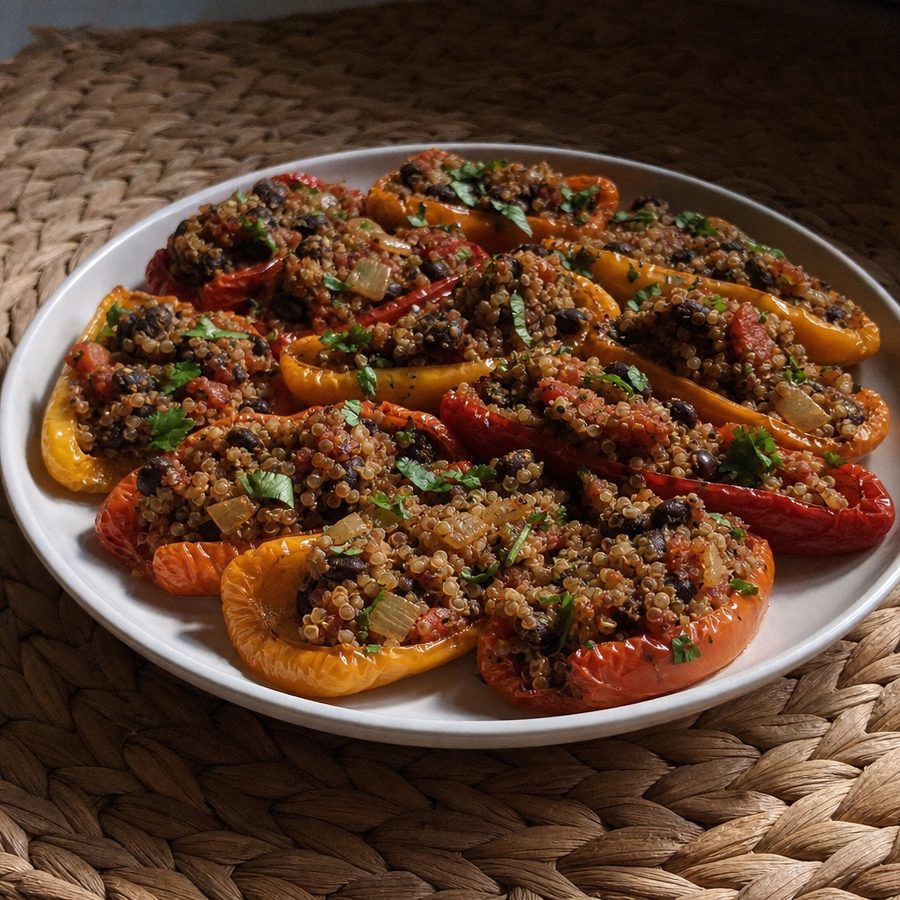
Tender roasted bell pepper halves filled with a smoky quinoa and black bean mixture studded with sweet corn, onion, garlic, and crushed tomatoes, finished with fresh cilantro and a savory hit of nutritional yeast.
Why You'll Love This Recipe
These stuffed peppers are a hearty, one-dish dinner for anyone who wants a filling plate built entirely from plants. The peppers act as edible bowls for a warm, spiced grain-and-bean mixture, so the meal comes together in a single baking dish with a skillet for the filling. It suits a weeknight when you want something wholesome and forgiving, and it scales easily to feed a table or to leave leftovers for lunches.
Flavor gets built in layers before anything goes in the oven. Blooming the cumin and chili powder in hot oil with the onion and garlic pulls out their aromatic oils so the spices taste round rather than raw and dusty. Cooking the filling down in the skillet first means it goes into the peppers already seasoned and cohesive, so the baking time is spent softening the peppers instead of trying to cook a cold, loose filling through. Covering with foil traps steam to tenderize the peppers, and the final uncovered stretch dries the surface so the tops firm up.
What makes this satisfying is the combination of quinoa and black beans, which together bring real staying power and a pleasant chew against the soft roasted pepper. The corn adds little bursts of sweetness, the crushed tomatoes keep everything moist, and the nutritional yeast lends a savory, almost cheesy depth without any dairy. It is high in fiber and a good source of plant protein, so it eats like a full meal rather than a side, and the fresh cilantro at the end keeps each bite bright.
Ingredients
- 4 large bell peppers, halved
- 3 cups cooked quinoa
- 2 1/2 cups black beans, drained
- 1 cup corn kernels
- 1 onion, diced
- 3/4 cup crushed tomatoes
- 4 cloves garlic, minced
- 2 tsp cumin
- 2 tsp chili powder
- 3 tbsp olive oil
- 4 tbsp nutritional yeast
- 1/2 cup cilantro
- 1/2 tsp salt
Instructions
- Cook the quinoa: Rinse the quinoa in a fine-mesh strainer under cool running water for about 30 seconds to wash off its bitter coating. Combine it with water in a saucepan, bring to a boil, then lower to a gentle simmer, cover, and cook until the grains are tender and you can see the little curled germ ring, about 15 minutes. Fluff with a fork and set aside.
- Prepare the peppers: Preheat the oven to 400°F (200°C). Slice each bell pepper in half lengthwise through the stem, then pull out the seeds and white membranes. Arrange the halves cut-side up in a baking dish so they sit level and can hold the filling.
- Build the filling base: Dice the onion and mince the garlic. Warm the olive oil in a large skillet over medium heat, add the onion, and cook until softened and translucent, about 5 minutes. Add the garlic, cumin, and chili powder and stir for about 1 minute, until fragrant and the spices coat the onion.
- Finish the filling: Drain and rinse the black beans. Stir the cooked quinoa, black beans, corn kernels, and crushed tomatoes into the skillet. Cook, stirring, until everything is heated through and the mixture looks glossy rather than watery, about 4 minutes. Season with the salt and nutritional yeast and stir to combine, then taste and adjust the salt.
- Stuff and bake covered: Spoon the filling into each pepper half, mounding it gently. Cover the baking dish tightly with foil and bake for 30 minutes, until the peppers are tender when pierced with a knife.
- Uncover and garnish: Remove the foil and bake for 5 more minutes to dry the tops slightly. While it finishes, chop the cilantro. Sprinkle the cilantro over the peppers before serving.
Variations
- Extra smoky: Swap some of the chili powder for chipotle powder or stir in a spoonful of minced chipotle in adobo for a deeper, smokier heat.
- Green and fresh: Fold in chopped spinach or kale with the tomatoes and let it wilt into the filling for more greens and color.
- Bright and tangy: Finish each serving with a squeeze of lime and diced avocado for creaminess and a citrus lift.
- Grain swap: Use cooked brown rice or farro in place of the quinoa for a chewier bite; farro adds gluten.
- Cheesy top: Sprinkle shredded cheese over the peppers before the uncovered bake so it melts and browns; this adds dairy.
Storage & Leftovers
Store leftover stuffed peppers in an airtight container in the refrigerator for up to four days. Let them cool to room temperature first so condensation does not pool in the container and make the filling soggy.
To reheat, place a pepper on a plate, cover loosely, and warm in the microwave until heated through, or return them to a covered dish in a 350°F (175°C) oven until hot in the center. The oven keeps the tops from turning mushy and revives the roasted texture better than the microwave.
To get ahead, make the filling up to two days in advance and refrigerate it separately from the halved peppers. When you are ready to eat, stuff and bake as directed, adding a few extra minutes since the filling starts cold.
Notes & Tips
- Pick sturdy peppers: Choose bell peppers that are firm and blocky with flat sides and level bottoms so the halves sit still in the dish and hold their filling without tipping.
- Rinse the quinoa: Do not skip rinsing the quinoa. Its natural saponin coating tastes soapy and bitter, and a quick rinse under cool water washes it away for a cleaner, nuttier flavor.
- Drain the beans well: After rinsing the black beans, shake off as much water as you can so the filling stays thick rather than watery inside the peppers.
- Nutritional yeast is the savory secret: The nutritional yeast is what gives the filling its cheesy, umami backbone. If you want it even richer, add a little more and taste as you go.
- Adjust the heat to taste: Chili powder blends vary in heat. Start with the amount called for, taste the filling before stuffing, and add a pinch more chili powder or cumin if you want it bolder.
- Serve it as a full plate: These stand on their own, but a scoop over greens or alongside warm tortillas rounds them into a larger meal and catches any filling that spills.
Nutrition & Mindful Eating
- The filling and the pepper cook into each other. Quinoa, beans and corn go in seasoned and dry, then take on the sweetness the pepper releases as it bakes, so what you spoon out at the end tastes like one thing.
- Bell peppers are the dish here, not the container. Baking turns them sweet and floppy and concentrates their flavor, and they hold plenty of vitamin C, which helps your body take up the iron sitting in the beans and quinoa.
- Quinoa and black beans together give the filling its body, one small-grained and nutty, the other soft and creamy, and between them they bring complete protein and enough fiber to make a stuffed pepper a real dinner.
- Nutritional yeast is a strange looking flake that tastes deeply savory, and stirred through the filling it gives the whole thing a rounded, cheesy depth along with a set of B vitamins.
- Cumin and chili powder toasted in the oil at the start are what make this smell the way it does, warm and a little smoky, and the cilantro scattered over the finished peppers is cold and sharp against all that softness.
- As you eat, cut down through the pepper so every forkful has some of the soft wall with the filling, and let the meal take the time it takes rather than rushing the last few bites.
Frequently Asked Questions
Can I use dried black beans instead of canned?
Yes. Soak dried black beans overnight, then simmer them in fresh water until tender, about an hour to an hour and a half, and drain well before adding them to the filling in place of the canned beans.
My filling turned out watery. What happened?
The most common causes are beans that were not drained thoroughly or crushed tomatoes that were very loose. Cook the filling in the skillet a little longer until it looks glossy and holds together before you stuff the peppers.
How do I know when the peppers are done?
They are ready when a knife slides into the side of a pepper with little resistance and the flesh is tender but still holds its shape. If you prefer softer peppers, leave the foil on for a few extra minutes.
Can I freeze these?
Yes. Let the baked peppers cool completely, wrap them individually, and freeze for up to three months. Thaw overnight in the refrigerator and reheat in a covered dish in the oven until hot in the center.