
Buttered Roast Pork Loin
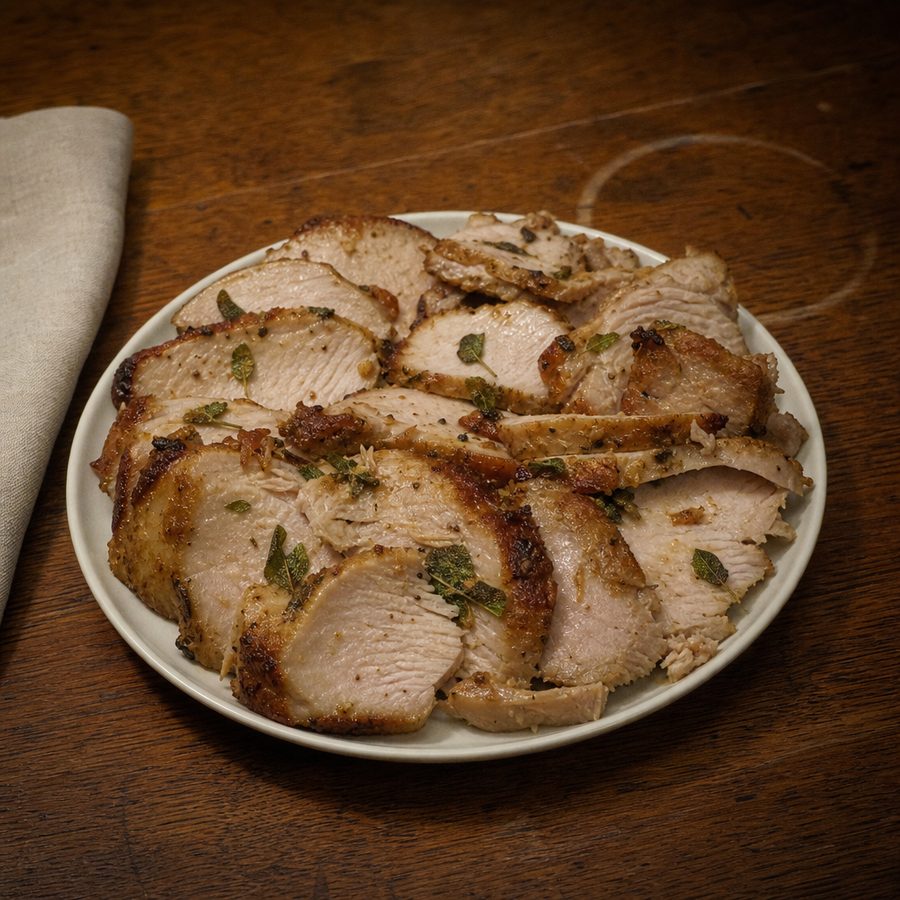
A whole pork loin, salted and seared until golden, then roasted until juicy at the center and finished with melted butter spooned over the sliced meat.
Why You'll Love This Recipe
This is a simple, hearty dinner built around a single cut of meat, made for anyone who wants a satisfying, protein-rich plate without a long list of ingredients or fussy technique. A pork loin is tender, mild, and forgiving, which makes it a good centerpiece for a weeknight roast or an unhurried weekend dinner when you want the oven to do most of the work.
A hot sear first, then a moderate oven. Browning the surface in butter first develops the deep, savory crust that plain roasting alone cannot, purely as a matter of flavor and texture on the outside. Pulling the roast at 145°F (63°C) and resting it keeps the interior rosy and juicy rather than dry, and the melted butter spooned over the slices at the end coats each cut with a richness that loin can otherwise lack.
Pork loin delivers a large amount of complete protein that supports muscle and keeps you full for hours. The butter adds richness and makes the meal more satisfying, while the salt seasons the meat and helps the crust form. A loin is also among the cheaper roasts at the counter, which is worth knowing when a piece this size will feed four people at dinner and turn up again in a lunch the next day. It is filling, clean-tasting food that leaves you comfortably full rather than heavy.
Ingredients
- 3 lb pork loin roast
- 5 tbsp butter
- 1 tsp salt
Instructions
- Season the pork: Pat the pork loin completely dry with paper towels, which helps it brown. Rub the roast all over with salt and let it sit at room temperature for about 20 minutes while the oven heats.
- Preheat the oven: Preheat the oven to 375°F (190°C). Choose an oven-safe pan large enough to hold the roast with a little room around it.
- Sear the roast: Melt a little of the butter in the oven-safe pan over medium-high heat. Add the pork loin, fat side down first, and brown it undisturbed for 3 to 4 minutes per side, turning until all sides are deep golden. This builds color and flavor on the surface.
- Roast to temperature: Transfer the pan to the oven and roast until an instant-read thermometer inserted into the thickest part of the center reads 145°F (63°C), about 45 minutes. Start checking early, since roast thickness matters more than the clock.
- Rest the meat: Move the roast to a cutting board and let it rest, loosely tented with foil, for 10 minutes so the juices settle and stay in the meat when sliced.
- Butter and slice: Melt the remaining butter in the warm pan or in a small saucepan. Slice the rested pork across the grain into even medallions, then spoon the melted butter over the top just before serving.
Variations
- Bone-in loin: Use a bone-in pork loin roast instead of boneless for a little more richness near the bone; add a few minutes of roasting time and check the temperature away from the bone.
- Brown butter finish: Cook the butter for the finish a bit longer until it turns golden and smells nutty, then spoon it over the slices for a deeper, toastier flavor.
- Hard cheese crust: In the last few minutes of roasting, press finely grated hard cheese onto the top of the roast so it melts into a savory crust; this adds dairy.
- Pork belly swap: Trade the loin for a fattier cut such as pork shoulder or pork belly for a richer, more marbled result; the cut is fattier, and slower, lower roasting suits it better.
- Egg-topped slices: Serve the buttered slices topped with a fried egg cooked in some of the pan butter; this adds egg.
Storage & Leftovers
Refrigerate leftover pork in an airtight container and eat within three to four days. Slicing it before storing makes it quicker to portion later, and keeping a little of the buttery pan juices with the meat helps keep the slices moist.
Reheat gently to avoid drying out the pork. Warm slices in a covered pan over low heat with a small pat of butter, or in a low oven until just heated through. Because the pork is already fully cooked, you only need to bring it back to warm, not cook it again.
To get ahead, salt the raw roast and keep it uncovered in the refrigerator for up to a day before cooking; the surface dries slightly and browns even better. You can also roast the pork a day early, chill it whole, and slice it cold for quick warm-ups through the week.
Notes & Tips
- Buy an even roast: Choose a loin of fairly uniform thickness so it cooks evenly; if one end tapers thin, tuck it under and tie the roast with kitchen twine for a more even shape.
- Know your cut: Make sure you have a pork loin, not a pork tenderloin. The tenderloin is much smaller and slimmer and would cook far faster and dry out at these times.
- Trust the thermometer: An instant-read thermometer is the difference between juicy and dry here. Pull the roast at 145°F (63°C), since the temperature climbs a few more degrees as it rests.
- Dry surface, better sear: The drier the surface, the deeper the browning. If you have time, leave the salted roast uncovered in the fridge for a few hours before cooking.
- Save the pan juices: Do not wash out the pan before finishing. Melt the butter in those browned drippings so the meat juices go back over the sliced pork.
- Slice across the grain: Look at the direction of the muscle fibers and cut across them into medallions. Slicing against the grain keeps each piece tender and easy to chew.
Nutrition & Mindful Eating
- Three things go into this and each one matters. The pork brings the flavor and the protein, the butter bastes it and browns it, and the salt draws moisture to the surface early so a crust can form.
- Pork loin is close-grained and mild, slicing clean and staying pale and juicy in the center when you pull it at the right moment, and the meat carries thiamin, B12 and selenium along with all that protein.
- Butter spooned over the roast as it cooks does two jobs. It keeps the surface from drying while the heat works inward, and the milk solids in it brown alongside the meat, which is where much of that roasted smell comes from.
- The roast keeps cooking after it leaves the oven, and resting it lets the juices settle back through the meat rather than running out onto the board on the first cut.
- A few slices of pork hold you for hours. The protein does most of that work, and the butter that came with it makes the meat taste round and full.
- As you eat, spend a moment with the browned crust before you get to the middle, notice how much the resting changed the texture, and keep the meal slow enough to feel when you have had enough.
Frequently Asked Questions
Why cook the pork only to 145°F (63°C) instead of well done?
145°F (63°C), followed by a rest, is the temperature at which pork loin is fully safe to eat while staying juicy and slightly pink at the center. Taking this cut much past that point dries it out, since the muscle tightens and squeezes out its juices.
My pork loin turned out dry. What went wrong?
The most common cause is overcooking. Loin is a delicate cut, so a few extra minutes past 145°F (63°C) firms and dries it quickly. Use an instant-read thermometer, pull the roast on time, and let it rest the full ten minutes before slicing.
Do I have to sear the roast first?
You can skip it, but searing is what builds the deep golden crust and much of the flavor on the outside of the roast. It only takes a few minutes and is worth doing while the oven heats.
Can I use a pork tenderloin instead?
They are different cuts. A tenderloin is much smaller and thinner and would cook in a fraction of the time, so it would overcook badly at this roast's timing. If you only have tenderloin, sear it and roast just until it reaches 145°F (63°C), which happens quickly.