
Roasted Eggplant Baba Ganoush
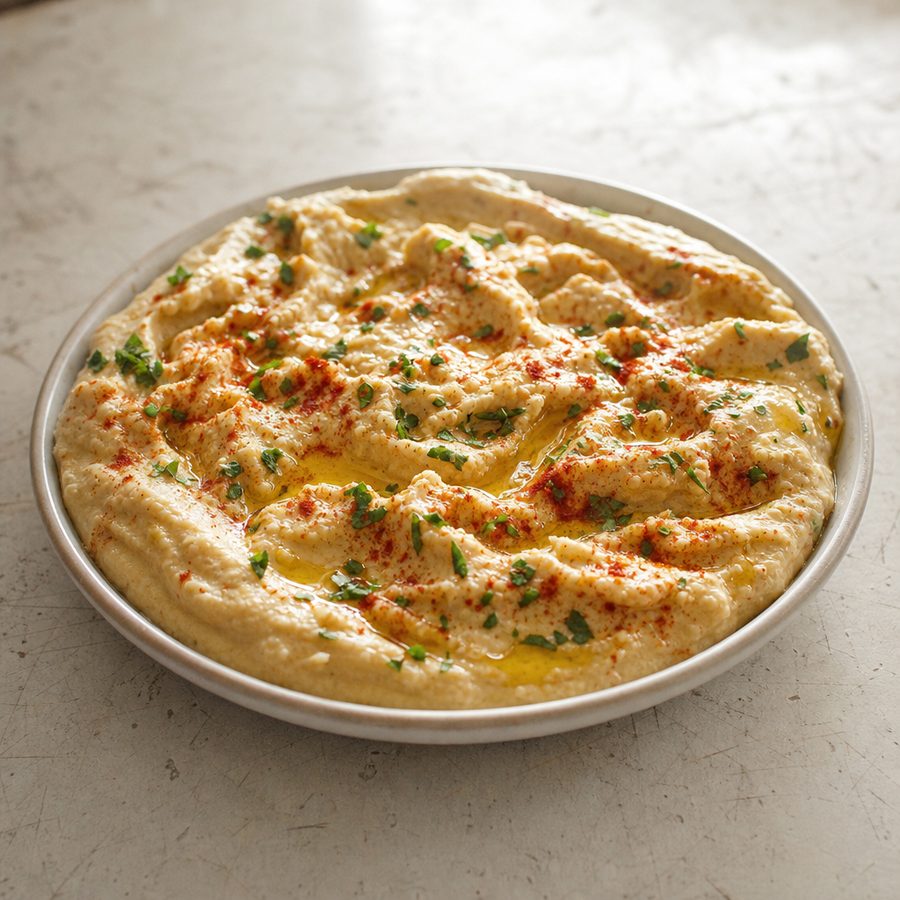
Silky oven-roasted eggplant blended with tahini, fresh lemon juice, garlic, olive oil, and cumin into a smoky, spoonable dip finished with a drizzle of olive oil.
Why You'll Love This Recipe
This is a smoky, garlicky eggplant dip meant for anyone who wants a snack that feels indulgent but is built almost entirely from vegetables and pantry staples. It comes together with one large eggplant and a handful of common ingredients, and it works equally well as an afternoon dip with raw vegetables, a spread for flatbread, or a savory anchor on a mezze plate. Because it is entirely plant-based and free of dairy and gluten, it suits a wide table of eaters without any special substitutions.
High, dry roasting heat is the whole of it. Roasting the whole eggplant until it fully collapses does two things at once: it concentrates the flesh into something meltingly soft, and it develops the gentle smokiness that gives this dip its character. Draining the roasted flesh before blending is the quiet step most people skip, and it is what separates a loose, watery dip from a thick, spoonable one. Tahini adds richness and body, lemon juice brightens and cuts through it, and cumin and garlic round out the smoky base.
Creamy texture, deep savory flavor, and real staying power behind both. Eggplant brings fiber, tahini and olive oil contribute healthy fats that make the dip feel rich and filling, and lemon and garlic keep every bite lively rather than heavy. It is the kind of snack that quiets an afternoon craving without weighing you down, and it pairs naturally with crisp raw vegetables or warm bread.
Ingredients
- 1 large eggplant (about 1 lb)
- 3 tbsp tahini
- 2 tbsp fresh lemon juice
- 2 cloves garlic, minced
- 1 tbsp olive oil, plus more to drizzle
- 1 tsp ground cumin
- 1/2 tsp salt
Instructions
- Roast the eggplant: Preheat the oven to 425°F (220°C). Prick the eggplant all over with a fork so that steam can escape, since a sealed eggplant at this heat will burst in the oven, set it on a baking sheet, and roast for 30 to 35 minutes, until the skin is wrinkled and browned and the whole eggplant has collapsed and feels soft when pressed. The flesh should be completely tender rather than rubbery, because an underdone eggplant will not blend smooth however long you work at it.
- Cool and drain: Let the eggplant sit until cool enough to handle. Slice it in half lengthwise, scoop the soft flesh away from the skin with a spoon, and transfer the flesh to a colander. Let it drain for about 5 minutes to release the excess liquid, which keeps the dip from turning watery. Discard the skin and the drained liquid.
- Prep the aromatics: While the eggplant drains, mince the garlic as fine as you can manage, since it goes into the dip raw and a coarse piece will be the only thing you taste in that scoop, and squeeze the fresh lemon juice, straining out any seeds.
- Blend: Add the drained eggplant flesh, tahini, lemon juice, minced garlic, olive oil, cumin, and salt to a food processor or bowl. Pulse in the processor, or mash with a fork, until the mixture is mostly smooth but still holds a little texture, because a dip run to a puree loses the point of having roasted a whole eggplant. Taste and adjust with more lemon or salt as needed.
- Finish and serve: Transfer to a serving bowl, smooth the top with the back of a spoon, and drizzle with additional olive oil just before serving, which keeps the surface from drying into a skin while the bowl sits out.
Variations
- Fire-roasted and smokier: Char the whole eggplant directly over a gas flame or under the broiler, turning until the skin is blackened all over, before finishing in the oven. This deepens the smoky flavor considerably.
- Herbed and fresh: Fold chopped fresh parsley or mint into the finished dip and sprinkle more on top. The herbs add color and a cooling, grassy note against the smoke.
- Spiced and warm: Stir in a pinch of smoked paprika or a little cayenne along with the cumin for gentle heat and a ruddy color.
- Extra bright and tangy: Add a little more lemon juice and a spoonful of the tahini for a looser, tangier dip that spreads easily on bread.
- Roasted red pepper swirl: Blend in a piece of jarred roasted red pepper for a sweeter, milder dip with a reddish hue.
Storage & Leftovers
Store the dip in an airtight container in the refrigerator, where it keeps well for up to four days. The flavors actually deepen after a few hours as the garlic and cumin settle into the eggplant.
This dip is served cold or at room temperature, so there is no reheating needed. Take it out of the refrigerator about 15 to 20 minutes before serving to let it lose its chill, then stir it well, since a little liquid may separate on top. A fresh drizzle of olive oil right before serving revives both the look and the flavor.
To make ahead, roast and drain the eggplant a day in advance and refrigerate the flesh, then blend with the remaining ingredients the day you plan to serve. This keeps the texture at its freshest and spreads the work across two shorter sessions.
Notes & Tips
- Pick a heavy, firm eggplant: Choose one that feels heavy for its size with smooth, glossy skin and no soft spots. A firm, fresh eggplant has fewer seeds and a milder, less bitter flesh.
- Roast it fully soft: Do not pull the eggplant early. It should collapse and feel completely soft when pressed. Underdone eggplant tastes spongy and slightly bitter, while a fully roasted one turns sweet and creamy.
- Do not skip the drain: Letting the scooped flesh sit in a colander removes the excess water that would otherwise make the dip thin. For an even thicker dip, press gently on the flesh to release more liquid.
- Stir the tahini first: Tahini separates in the jar, so mix it well before measuring. A well-stirred, smooth tahini blends evenly and keeps the dip from turning grainy.
- Season to taste at the end: Eggplant size and tahini brand both vary, so taste before serving and adjust the lemon juice for brightness or the salt for depth. A final squeeze of lemon often wakes the whole bowl up.
- Serve it with something crunchy: This dip shines against crisp raw vegetables like cucumber, bell pepper, and carrot, or scooped with warm flatbread. The contrast of cool, silky dip and crunchy dipper is the point.
Nutrition & Mindful Eating
- Eggplant and tahini are the two halves of this. The roasted flesh brings smoke and softness, the sesame brings richness and a little bitterness, and the lemon and garlic sharpen the line between them.
- Eggplant roasted until the skin blisters and the inside slumps takes on a silky texture that only long, direct heat gets you, and the flesh brings fiber while the deep purple skin carries its own pigments.
- Tahini gives the dip its body, thickening as you whisk lemon into it and turning it pale, and it carries the unsaturated fats of sesame along with calcium and magnesium.
- The smell is the first thing that happens, smoke and warm cumin and raw garlic all at once, and the olive oil poured over at the end pools in the ridges and makes the whole bowl glossy.
- Salt goes in at the end and by taste, because it is what pulls the smoke forward and stops something this soft from tasting flat, and a scoop of it on warm bread eats like a small meal.
- As you eat, let the smoke register before anything else, notice how little resistance the dip gives on the bread, and take the scoops slowly enough to feel when you are content.
Frequently Asked Questions
My dip turned out watery. What went wrong?
The most common cause is skipping or rushing the drain step. Roasted eggplant holds a lot of moisture, so let the scooped flesh sit in a colander and press gently to release the liquid before blending. Roasting the eggplant fully also helps, since properly cooked flesh releases its water more readily.
Why does my baba ganoush taste bitter?
Bitterness usually comes from an underripe eggplant or one that was not roasted long enough. Choose a firm, heavy eggplant with smooth skin, and roast it until it fully collapses and turns sweet and creamy. A little extra lemon juice at the end also balances any lingering bitterness.
Can I make this without a food processor?
Yes. Because the roasted flesh is so soft, you can mash everything together with a fork or a potato masher. The texture will be a little more rustic and less uniform, which many people prefer.
What should I serve it with?
It is excellent with crisp raw vegetables like cucumber, carrot, and bell pepper strips, or scooped with warm flatbread or pita. It also works as a spread in wraps and sandwiches or as a savory component on a snack plate.